


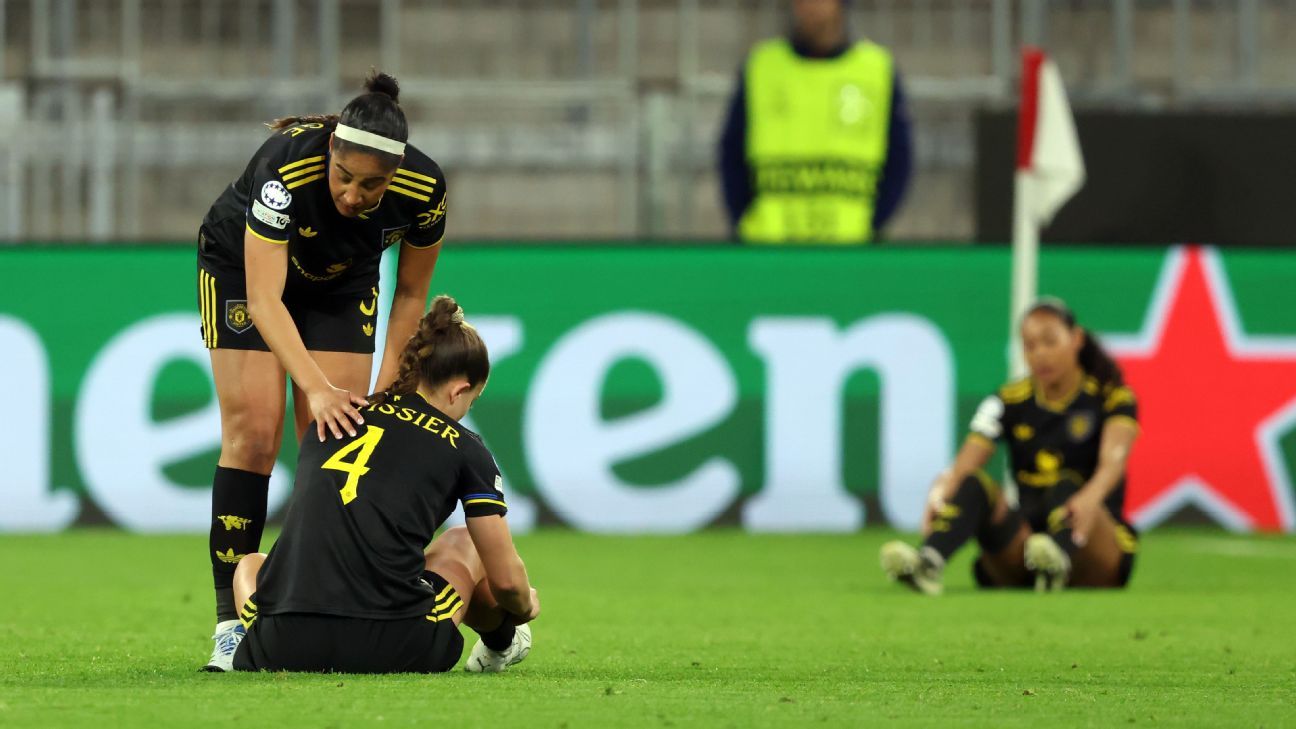
Manchester United Falls Short Against Bayern Munich in Champions League
Manchester United’s fairy-tale journey in the UEFA Women’s Champions League came to an untimely end in Munich, as a late double by Bayern Munich sealed their fate with a 2-1 defeat, resulting in a 5-3 aggregate loss. Having tasted European competition, United must now invest strategically to ensure they are not just a fleeting presence on the continent.
Despite the disappointing outcome, United managed to silence many critics by demonstrating their ability to compete with Europe’s elite. However, the match exposed significant gaps, including a lack of investment, persistent injuries within the squad, and the fact that the team has only been professional since 2018.
As praise for their efforts echoes, questions linger about how far United could have progressed with an investment that matched that of Europe’s top clubs. The visitors had a chance to penalize Bayern’s early nerves but failed to convert opportunities in a first half that initially showcased their ambitions.
Unlike the disastrous opening leg in Manchester—where they conceded after just 90 seconds—United managed a more stable start in Munich, displaying superior performance during the first half. Melvin Mallard’s goal, which stemmed from an insightful pass by Jade Riviere, was a highlight. However, a communication breakdown between Bayern’s defender Vanessa Gil and goalkeeper Ena Makhmutovic allowed Mallard to find space and score.
Bayern Munich, despite their earlier promising form, struggled to capitalize on their possession in the second half. The hosts appeared to be under pressure as United’s defense stifled their efforts. Bayern sought three penalties—two for fouls and one for handball—but none were awarded, adding to their frustrations.
Holding their lead until the 75th minute, United played as though they were in the advantageous position of a one-goal aggregate lead. However, with both teams level at 3-3, United’s inability to extend their lead when the momentum favored them proved detrimental. Rapid goals from Glodis Perla Vigosdóttir and Linda Dalman in the last ten minutes dashed their hopes of advancing to the semi-finals.
Despite a strong start, Bayern’s experience allowed them to weather United’s early storm. With limited substitution options, the hosts capitalized on United’s fatigue, leading to their breakthrough. Indeed, Manchester United has faced challenges late in matches; they have conceded six goals after the 80-minute mark in European competition this season, tying them for the most in that regard.
Regardless of the outcome, United has solidified its status as a contender, exemplifying resilience despite significant adversity. As debutants, their achievement of reaching the quarter-finals surpassed expectations, especially considering their recent history since reforming in 2018. Their performance in the league phase and qualification through the play-offs against Atlético Madrid underscored their potential to compete with established teams.
While the Manchester United name carries a rich history in football, the financial disparity between the women’s and men’s teams is stark. Their payroll costs last season were significantly lower than top competitors, such as Arsenal and Chelsea. Manager Mark Skinner acknowledged the challenges faced by a relatively young team eager to grow and meet high expectations.
United’s ascent to the Champions League salvaged what could have been a disappointing season, marking moderate success grounded in their European performance. However, their recent setbacks in domestic cups and the pressure from local rivals highlight the gaps they must address. With the experience gained this season, United now looks to refine its strategy to close the gap with the leading clubs in European football.
