


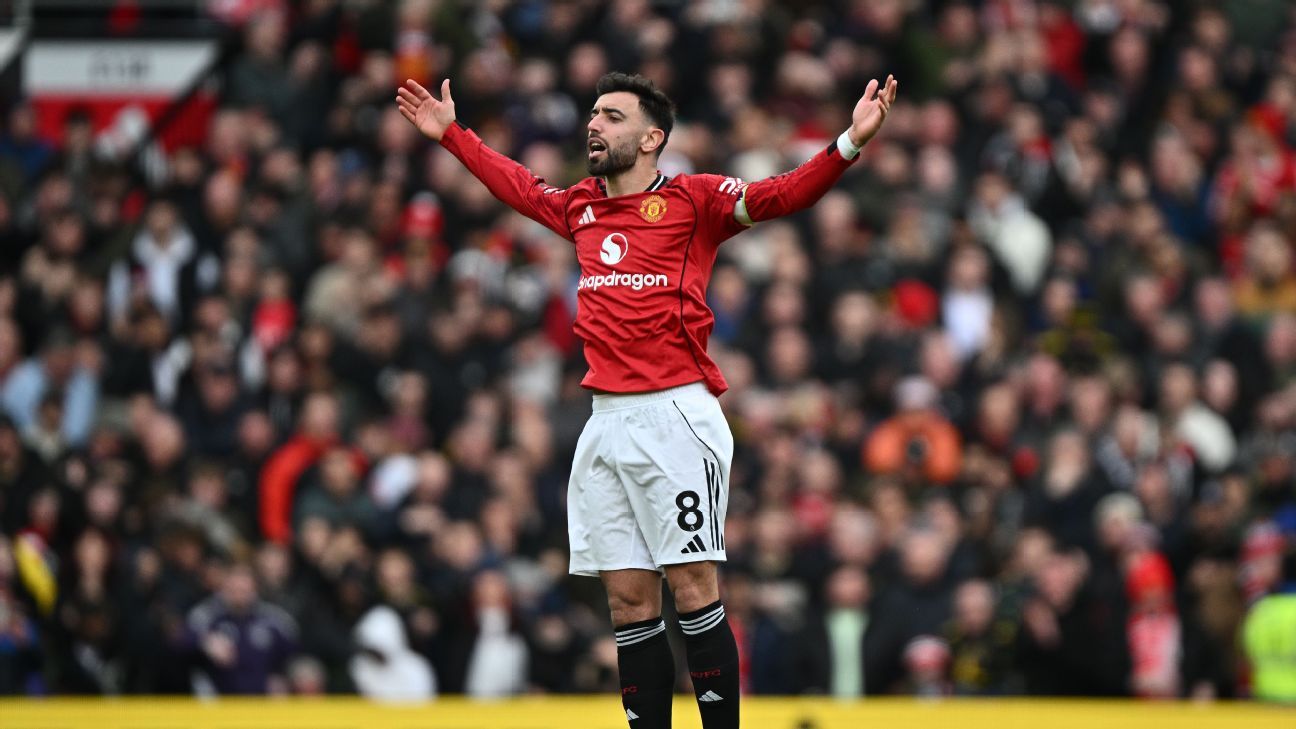
Currently, several players have surpassed Bruno Fernandes’ assist record in a single Premier League season. Notably, Kevin De Bruyne and Cesc Fabregas have achieved this feat twice, while Thierry Henry, Mesut Ozil, Frank Lampard, and Mohamed Salah have done so once each. In the conversation about the premier creative talents in Premier League history, these names stand out. While Eric Cantona never reached Fernandes’ current record, players like David Beckham, David Silva, Eden Hazard, and Steven Gerrard have all fallen short of the assist totals Fernandes has amassed this season with Manchester United.
Importantly, Fernandes still has seven matches remaining this season. If he continues at his current rate of approximately 0.6 assists per 90 minutes, he is poised to match Thierry Henry’s record of 20 assists from the 2002-03 season—a mark that Kevin De Bruyne also equaled in 2019-20. There is a realistic possibility that Fernandes could surpass that record, propelling him into the history books as the most creative player in Premier League history.
This remarkable performance has been a catalyst for Manchester United, positioning them to potentially finish third in the league, a significant improvement following their 15th place finish last year. The club boasts a plus-17 goal differential while Fernandes is on the pitch, underscoring his vital role; their goal tally dwindles when he is absent.
Bruno’s Crucial Role at Manchester United
The absence of Bruno Fernandes would place Manchester United in a precarious position, perhaps even in the Championship. While it’s true the club could explore alternative signings, none might replicate what Fernandes consistently delivers. Since joining in January 2020, Fernandes has:
- Scored 70 goals, far outpacing any other United player, who has tallied a maximum of 48.
- Delivered 67 assists, while no other teammate has surpassed 22.
- Attempted 610 shots, with others unable to match the 314 shot attempts.
- Created 638 chances, far exceeding the 190 chances generated by any other player.
- Executed 171 through balls, significantly more than the 38 completed by his peers.
- Made 1,887 passes into the final third, more than double any other player’s 909.
- Recovered possession 1,182 times, with the next closest player at only 781.
Given these statistics, it’s evident that Fernandes has been Manchester United’s most pivotal player over the past decade, with the exception of specific roles such as goalkeeping and defending.
Concerns regarding “Bruno Dependencia” have emerged, questioning whether reliance on his abilities limits the team’s broader potential. However, this becomes less significant when considering United’s struggles, particularly evident in their average goal difference of +0.38 when Fernandes plays, compared to scoring 0.11 more goals per 90 minutes when he is absent. The notion that the team could effectively manage without him looms large.
Understanding the Age Curve in Football
The “age curve” typically highlights the playing time of attacking midfielders in the Premier League, revealing the peak performance age range to be between 22 and 29, followed by a pronounced decline. As Fernandes approaches 32 in September, the question of sustainability arises. While he is currently a top performer, the weight of past performances by other aging players, like Mohamed Salah, informs the conversation. Each top player faces challenges as they age, with their performance often dipping in the years that follow their prime.
Fernandes’ consistent performance over the past three years has positioned him among the most durable athletes in his position. In fact, since 2020, he has logged more minutes than any other midfielder or attacker, with 2,000 additional minutes compared to his closest rival, Declan Rice. Yet, the reality remains that age can be unforgiving, and it’s uncertain how much longer he can maintain his peak form.
Lessons from Mohamed Salah’s Trajectory
The trajectory of Mohamed Salah’s performance provides valuable insights. Although he entered last season in excellent physical condition, his form notably declined in the latter part of the season. Liverpool, much like Fernandes at United, faces uncertainty around contract renewals and performance longevity. Salah’s significant drop in goal contributions this season compared to the last suggests that even the best players are not immune to the effects of age and external pressures.
In contrast to their players competing in less physically demanding leagues, UK players face an intense schedule. This might explain the fluctuations in Salah’s performance, further illustrating the difficult balance between maintaining form and aging in a competitive environment.
As Manchester United contemplates the future of Bruno Fernandes—who has one season left with a release clause of £57 million—they must weigh the lessons learned from Salah’s recent decline. Understanding whether Fernandes can defy the odds and continue performing at an exceptional level will be integral to the club’s strategy moving forward.
Will Fernandes defy typical athlete aging dynamics, or will he eventually face the challenges that accompany all athletes as they progress into their 30s? The future remains uncertain, but the dialogue around his longevity is crucial for Manchester United’s planning.
