


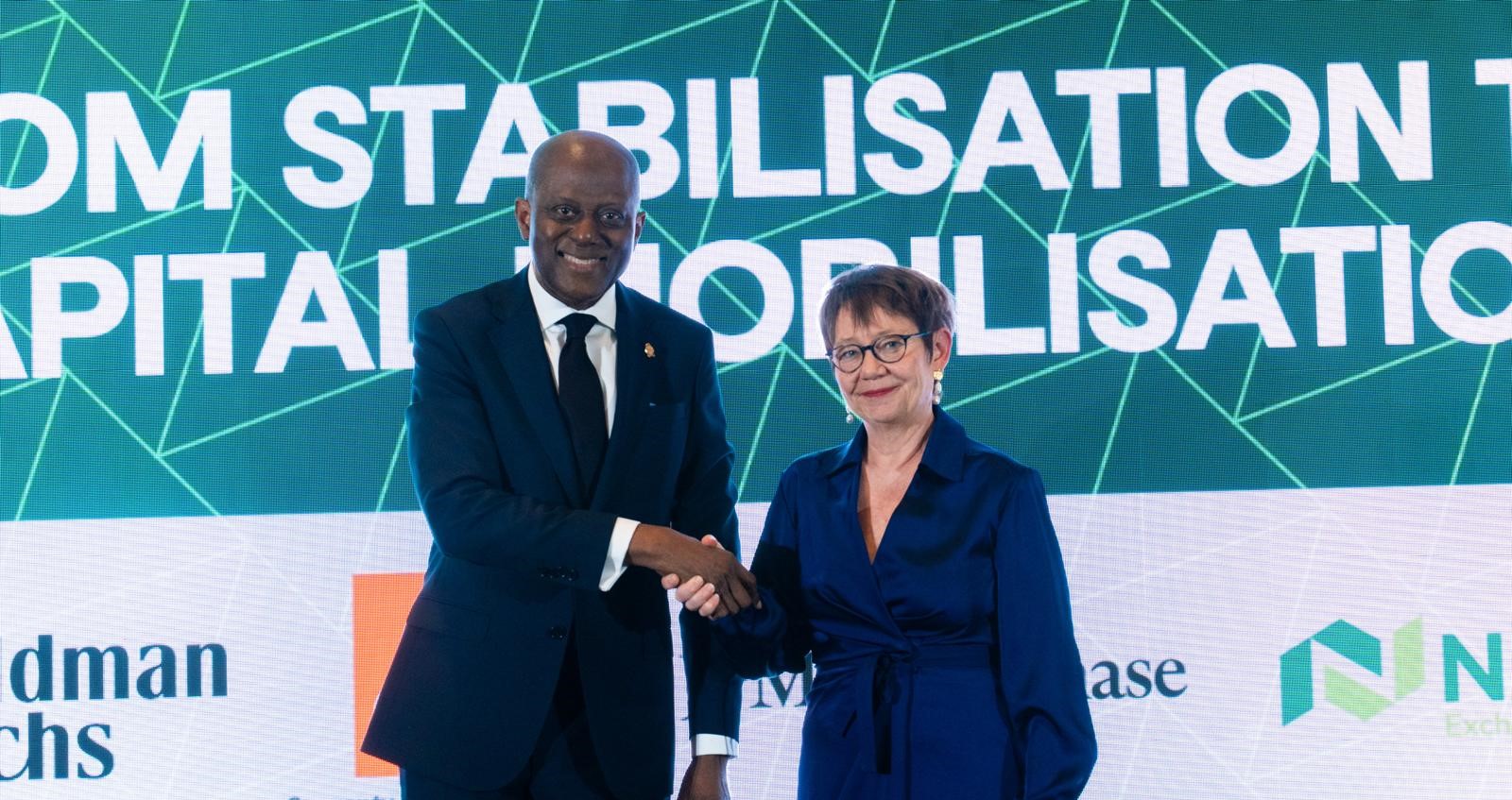
Nigeria’s Commitment to Economic Reform Exceeds Challenges
Olayemi Cardoso, the Governor of the Central Bank of Nigeria (CBN), has announced a fundamental shift in Nigeria’s economic landscape, aimed at moving away from what he termed a deeply flawed system. He reassured foreign investors that ongoing reforms are creating a more transparent, stable, and investment-friendly environment.
A Forum for Economic Assessment and Opportunities
Cardoso made these comments during a discussion with Odile Renaud-Basso, President of the European Bank for Reconstruction and Development (EBRD), at the African Capital Forum in London on March 17. The event, themed “From Stabilization to Capital Mobilization,” convened key stakeholders including policymakers, institutional investors, development finance institutions, fintech leaders, and members of Nigeria’s diaspora to evaluate the progress of Nigeria’s reforms and identify pathways for unlocking long-term capital.
Nigeria’s Economic Crisis and Signs of Recovery
In addressing the investors present, Cardoso acknowledged that Nigeria has been grappling with significant macroeconomic challenges. He described the current crisis as the worst the nation has faced, highlighting issues like soaring inflation, excess liquidity, and capital flight. However, he noted that the situation is starting to improve.
Positive Trends in Inflation and Economic Stability
Inflation, which once reached alarming heights, has reportedly been halved over the past year, with 11 consecutive months of decline. Cardoso emphasized that the previous economic system, characterized by dysfunction, has been cast aside in favor of one that prioritizes liquidity, openness, and transparency.
A New Era of Monetary Policy and Banking Systems
A critical focus of the reforms is the dismantling of opaque practices within the central bank, aimed at restoring public confidence. Cardoso assured stakeholders that doing business with the CBN will not require personal connections, marking a significant shift toward a more equitable financial environment. He underscored that monetary policy will now be evidence-based and shielded from political influences.
Growth of Nigerian Banks and Regulatory Improvements
The CBN governor also highlighted the expansion of Nigerian banks on a global scale, noting that seven banks are currently operational in the UK, with one recently opening a new branch in Manchester. Cardoso praised these institutions as vital ambassadors for Nigeria’s economic potential, emphasizing that 23 banks have met regulatory recapitalization requirements to fortify the financial sector, and others are in the process of verification. Furthermore, he expressed the CBN’s commitment to developing a rules-based regulatory framework to enhance governance and minimize discretionary decision-making.
Encouraging International Investment and Future Prospects
Cardoso invited the EBRD and other multilateral institutions to consider investments in local Nigerian businesses. In response, Renaud-Basso expressed optimism about Nigeria’s economic trajectory and mentioned plans for future investments, citing the country’s potential and the ongoing macroeconomic reforms focused on institutional development and the rule of law.
The forum was part of President Bola Ahmed Tinubu’s broader efforts to promote Nigeria’s economic reset to global investors during his state visit to the UK. The discussions included high-level panels examining Nigeria’s macroeconomic landscape, the role of Nigerian banks in international markets, and the transformative potential of fintech in enhancing remittance flows and expanding financial access. Organizers remarked that these dialogues reflect a growing confidence in Nigeria’s shift from macroeconomic stabilization to sustained growth and capital mobilization.
