


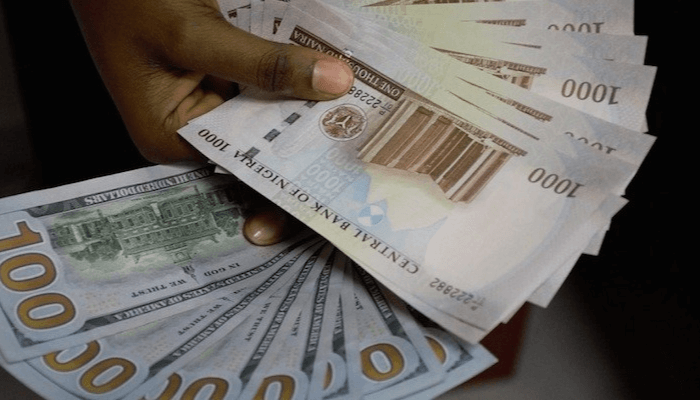
Naira Strengthens Amid Central Bank Interventions
Bolstered by aggressive liquidity initiatives through open market operations (OMO) from the Central Bank of Nigeria (CBN), the naira has shown remarkable strength over the past week. This uptick has successfully attracted foreign capital inflows while boosting demand for the local currency.
Recent Performance at the Nigerian Foreign Exchange Market
CBN data reveals that the naira appreciated by 23.90 naira this past week, closing at 1,356.89 naira to the dollar at the Nigerian Foreign Exchange Market (NFEM) on Friday. Prior to the Easter holiday, the naira was valued at 1,380.79 naira, marking a 1.76% increase over the week.
Daily and Weekly Gains
On a day-to-day basis, the naira gained N12.43 (0.92%) from its previous value of N1359.32 on Thursday. Through the trading sessions, the naira advanced from 1,386.66 naira on Tuesday to 1,356.89 naira by Friday, reflecting an overall rise of 29.77 naira or 2.19%.
Parallel Market Dynamics
The currency also showed appreciation in the parallel market, gaining 10 naira week-on-week to close at 1,400 Naira to the dollar on Friday, down from the 1,410 Naira recorded the prior week. On a daily basis, the price rose by 5 naira from Thursday’s closing of 1,405 naira.
Market Disparities Persist
Despite the gains, the gap between the official market rate and the parallel market rate widened to 44 naira to the dollar, up from 30 naira the previous week. Market analysts attribute this performance in part to the robust OMO auction conducted by the central bank, which sold N2.31 trillion during the week. This tightening of liquidity has traditionally encouraged foreign portfolio investors to inject dollars into the market, thereby supporting the naira.
Foreign Exchange Reserves Under Pressure
The recent rise in the currency value coincides with ongoing pressure on Nigeria’s foreign exchange reserves, which serve as a critical buffer for currency stability. According to CBN data, reserves decreased by $1.14 billion to $48.88 billion as of April 8, 2026, marking a 2.28% decline from the $50.02 billion recorded on March 11.
Future Market Trends and Potential Risks
A macroeconomic report from Comercio Partners indicates that Nigeria’s foreign exchange market remained relatively stable throughout March, even in the face of moderate downward pressure. The naira fluctuated within a narrow band, opening at 1,376 naira to the dollar and closing at 1,387 naira, which reflects a limited volatility decline of 0.79%. The report highlighted that ongoing external debt obligations and sustained central bank interventions aimed at liquidity management significantly influenced market behavior.
Outlook for Foreign Exchange Reserves
Looking ahead, analysts at Comercio Partners anticipate that the naira may experience mild to moderate downward pressure throughout April, predicting a continued correction phase influenced by buyer-seller dynamics. Key risks loom, particularly regarding potential oil price fluctuations and sustained import demand. A recent policy allowing international oil companies to repatriate all export earnings, while intended to promote transparency and attract investment, has contributed to short-term foreign exchange outflows and added strain on reserves. However, analysts express optimism that foreign exchange reserves may stabilize or gradually recover, aided by rising oil prices, although production constraints remain a critical limiting factor for inflows into Nigeria.
