


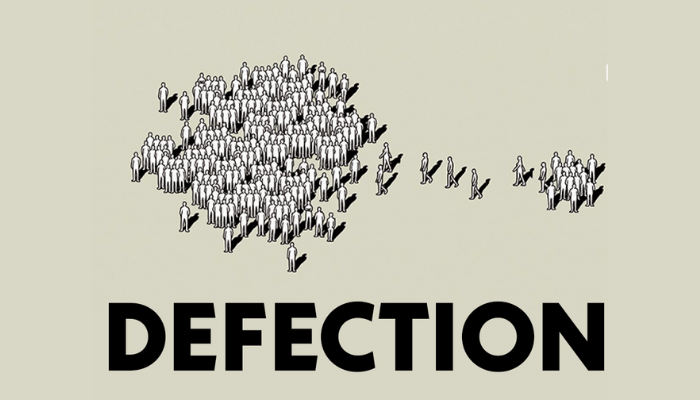
Senate Blocks Defection Attempt, Raising Political Concerns
The recent Senate rejection of Senator Einanya Abaribe’s defection attempt has sparked significant turmoil in Nigeria’s political landscape. This unexpected turn of events has particularly unsettled opposition members, as Abaribe was compelled to retract his resignation or face the loss of his seat.
Historical Context of Political Defections
In a nation where political cross-carpeting is deeply embedded in its history, tracing back to the First Republic, this new complication for opposition politicians—especially those wishing to switch affiliations away from the ruling party—raises troubling inquiries. Over the past year, numerous opposition figures have defected to the ruling party with minimal resistance. What has changed to prompt this recent shift?
The Legacy of Defections in Nigeria
The trajectory of Nigerian politics can be understood through its history. The 1952 actions of NCNC members, which created a vacant seat within the AG of the Western Parliament, set a precedent for the defection waves that have characterized the nation’s democracy for over six decades. Paradoxically, despite constitutional provisions aimed at curbing such behaviors, the manipulation of these laws undermines the fundamental duties of legislators and raises questions about the genuine objectives of the National Assembly leadership.
Manipulation of Constitutional Provisions
While the Constitution appears to have a clear stance on defections, its interpretation has often been skewed, particularly by the ruling party, which seems to maintain an understanding with the judiciary. This entanglement not only provides an artificial legislative advantage but also bolsters the ruling party’s standing as elections approach.
Implications of the Abaribe Incident
The Abaribe episode unravels a complex web of political dynamics, exposing the ruling party’s growing intolerance towards opposition voices. As the party expands its influence, the systematic dismantling of opposition structures signifies a perilous decline in an already fragile democratic system.
Changing Political Landscape After Recent Elections
In the wake of the 2023 gubernatorial elections, the political climate has undergone a significant transformation. A substantial number of opposition governors have joined the ruling party, extending its control to over 30 states. The composition of the 10th Senate illustrates this shift: the ruling party now boasts a commanding majority with 59 APC senators compared to 37 from the PDP, alongside representation from smaller parties.
Path Toward a One-Party State
Concerns are mounting that Nigeria is drifting toward a one-party state, either intentionally or inadvertently. The ruling party denies such claims, yet even within its ranks, assertions of freedom of association seem paradoxical. This contradiction raises doubts about the political machinery at play and the opposition’s viability as a credible alternative.
Urgent Need for Constitutional Reforms
To safeguard against the risks associated with a one-party dominance, critical questions arise regarding the Constitution’s role in maintaining the state’s integrity. Specifically, can the rule of law and the principle of separation of powers hold if the judiciary is compromised by executive influence? Strengthening constitutional provisions pertaining to political defection is imperative. Proposed amendments should ensure that elected officials cannot switch parties without resigning first, thus protecting the electorate’s mandate.
The Call for Independent Political Candidacy
Nigeria’s slow movement toward allowing independent candidacy also warrants attention. Such reforms would empower individuals to demonstrate their electoral viability outside party affiliations, nurturing a more competitive and responsible political environment. It is crucial that Nigeria addresses these systemic shortcomings to foster a healthier democratic process.
