


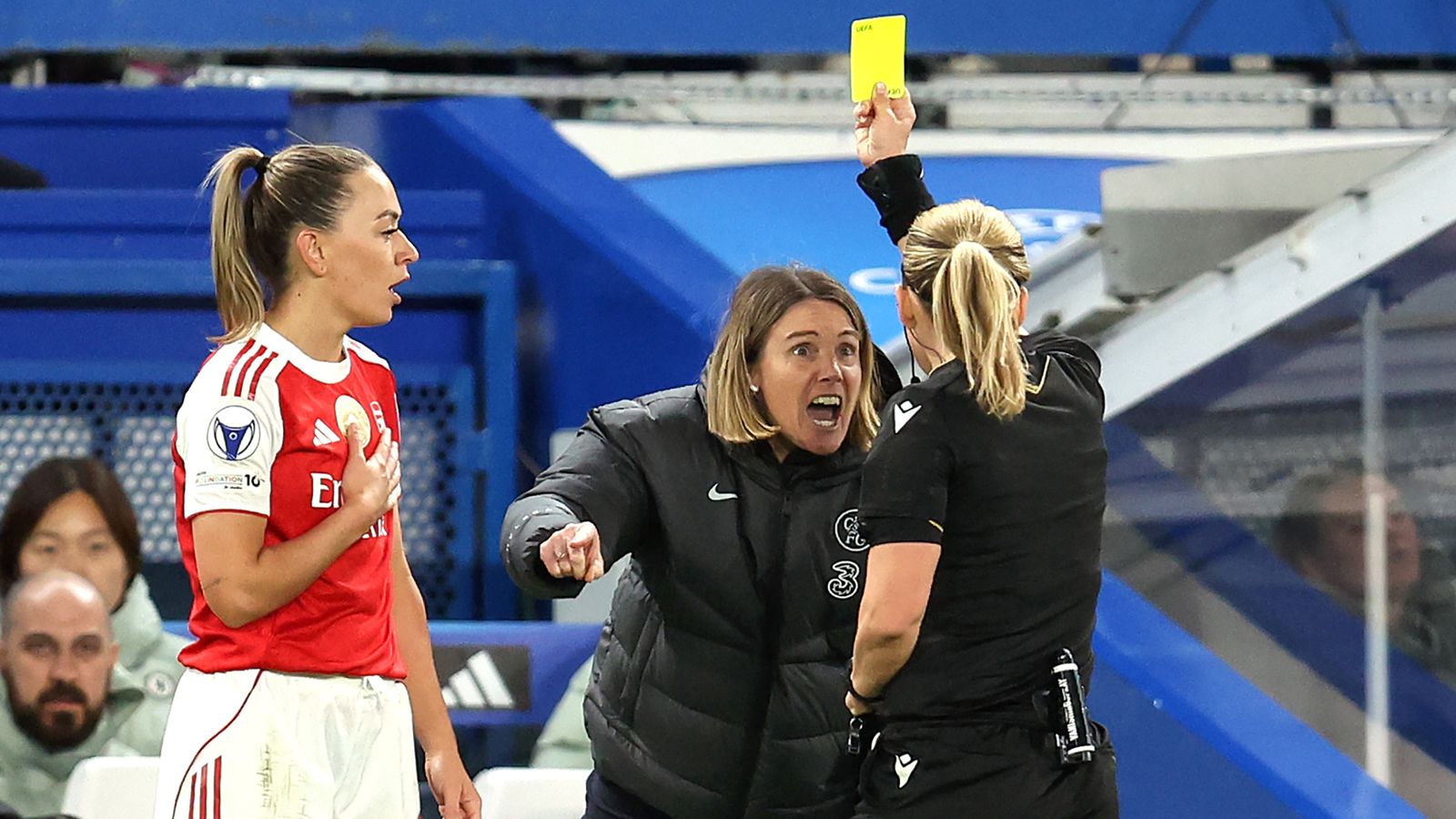
Bompastre Criticizes VAR Following Red Card Controversy
Coach Sonia Bompastre directed her ire towards VAR after the technology failed to review Katie McCabe’s red card for pulling Alyssa Thompson’s hair, an incident that resulted in Bompastre being booked and subsequently sent off. The Chelsea manager received a yellow card late in the match for her vehement protests, evident as she waved the card and voiced her displeasure to the referee when McCabe was not awarded a penalty. Although VAR would typically review such incidents, it would have concluded that the on-field decision was justified.
Manager’s Discontent with VAR Procedures
Less than a minute after her first yellow card, Bompastre was issued a second caution for encroaching onto the pitch in an attempt to retrieve the ball. While she refrained from commenting on her dismissal, she expressed her firm belief that the hair-pulling incident warranted VAR examination. This sentiment echoed her previous remarks questioning the technology’s role in women’s soccer following their first leg encounter.
Emotional Impact on Players
Bompastre articulated her frustration, stating, “It’s understandable that the referee might miss certain situations, but I cannot fathom why VAR didn’t investigate this incident.” She emphasized the emotional toll on Thompson, mentioning, “She was shaken, visibly upset, and in tears after the incident.” Bompastre remarked that incidents like hair-pulling should not take place in soccer, underscoring the need for comprehensive technology use in the sport.
Disputed Intentions and Reactions
In a counter to the uproar surrounding the situation, McCabe took to social media to assert that the hair-pulling was unintentional, explaining, “I was reaching for my shirt and never intended to grab anyone’s hair. Kudos to Thompson for her efforts.” Meanwhile, former WSL striker Ellen White shared her astonishment that VAR did not prompt the referee to review the hair-pulling, highlighting its severity and the potential consequences of the match.
Potential Game-Changing Moments
White noted that with so little time left in the match, the incident could have drastically altered the outcome. “What if Thompson had crossed the ball and Chelsea had scored? We may never know the full impact,” she stated, reflecting on the volatility of such moments in high-stakes matches. Bompastre chimed in, insisting that the responsibility for checking on key situations lies with VAR, questioning, “If you have VAR, why are these incidents being overlooked?”
Broader Concerns on Refereeing Standards
Arsenal manager Lenny Sleggers remarked on the incident, stating that while he hadn’t witnessed it live, he perceived McCabe’s actions as unintentional. Bompastre also took the opportunity to highlight past mistakes involving refereeing and VAR in crucial matches, pointing to previous errors made by referee Frieda Klarlund that affected Chelsea’s performance in the Champions League. She asserted that the same officials should not officiate games amidst historic controversies, stressing the need for consistency in refereeing standards.
Looking Ahead to the Semi-Finals
The Women’s Champions League quarter-final ended with Arsenal advancing 3-2 on aggregate, even as Chelsea claimed a 1-0 victory on the night. The Gunners will compete against either Lyon or Wolfsburg in the semi-finals later this month, showcasing the competitive spirit and high stakes in European women’s soccer.
