


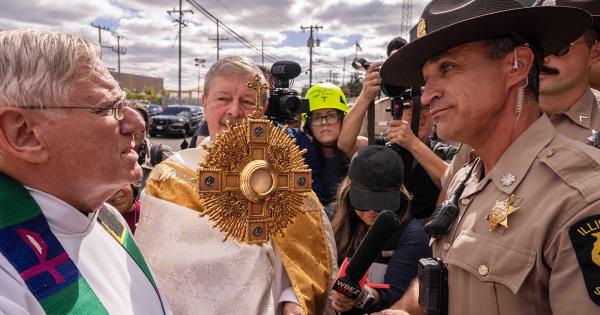
Religious Leaders Conduct Services for Immigrant Detainees in Chicago Area
On April 2, Fr. Paul Joseph Keller, along with two Catholic priests and a nun, arrived at the Broadview Immigration and Customs Enforcement facility in suburban Chicago, where they witnessed a deeply moving scene. Immigrant detainees were being escorted, restrained in shackles, to an adjacent area. When Keller inquired about the necessity of the shackles, a private security guard explained it was due to insufficient manpower. Despite the grim atmosphere, Keller and his colleagues connected with the detainees, leading a 15-minute Maundy Thursday service that included prayer, Bible readings, and reflections. The service culminated in a traditional foot-washing ritual, symbolizing compassion and humility.
Gaining Access Amid Ongoing Restrictions
This marked the second occasion that religious leaders were granted access to the Broadview facility since the Trump administration had enforced restrictions on clergy visits, amidst a backdrop of intensified deportation efforts. The issue of clergy access has become particularly contentious in states like Illinois and Minnesota, where federal authorities have repeatedly denied faith leaders the opportunity to provide pastoral care to detainees. Following significant protests and public outcry, including a notable response from Pope Leo, access was finally granted to select areas of the facility, a point of contention for many, including members of Congress.
Faith Leaders Speak Out on Religious Freedom
This government, which claims to be the champion of religious freedom, is violating the religious freedom rights of many of us so that we can answer Jesus’ call to care for prisoners of war.
—Pastor Susie Hayward
Judicial Intervention Allows Faith Leaders To Provide Care
A federal court ruling on March 20 ordered that faith leaders be allowed to enter the Bishop Henry Whipple Federal Building near Minneapolis, enabling pastors, including Susie Hayward and Kelly Gallagher, to provide essential spiritual care. During their initial visit, they encountered five men facing deportation, all of whom were shackled. Hayward observed that many detainees were in “emotional distress,” particularly those separated from their families. “We were able to pray with them, celebrate their stories, and share in their grief,” she shared, emphasizing the deeply human connections forged in such trying circumstances.
Discrepancies in Detention Reports Raise Concerns
On April 2, as faith leaders gathered outside the Whipple facility to offer Maundy Thursday services, they faced a stark contrast to previous visits. Upon entering, they were informed that there were no detainees present, prompting leaders to pray with the officials instead. Outside, they found families awaiting immigration court appointments and opted to stay and provide support. The reasons behind the absence of detainees remain unclear. Historical context reveals that during a time of heightened deportation efforts, significant discrepancies in reported detainee numbers have raised alarm among clergy and advocates.
Religious Leaders Demand More Access and Transparency
Keller and his colleagues are determined to return to the Broadview facility daily throughout Easter, seeking to make the most of the limited access granted by a court order. However, Keller emphasizes that these conditions are inadequate, stating, “We should be able to go into their cells, approach them individually, and offer prayers and Bibles. This is standard practice in detention ministry.” The Department of Homeland Security has maintained that clergy visits are not standard at processing centers, arguing that detainees are in transit rather than being held long-term.
Continued Advocacy for Immigrant Rights
As discussions around faith leaders’ access to detainees unfold, the broader narrative questions the government’s commitment to religious freedom. Gallagher notes evidence that many of those detained had no criminal history, countering characterizations of these individuals as “the worst of the worst.” Furthermore, leaders like Hayward argue that denying access to religious leaders is a violation of their rights and a contradiction to claims of advocating for religious freedoms.
Efforts to Highlight the Plight of Migrants
This visit by faith leaders coincided with related initiatives aimed at bringing attention to the struggles facing migrants during Holy Week. On April 3, approximately 150 activists, including faith leaders, completed a 16-mile pilgrimage from Montclair, New Jersey, to the Delaney Hall ICE detention center in Newark. This public demonstration aimed to spotlight issues concerning marginalized communities. Meanwhile, in Minnesota, faith leaders remain committed to supporting detainees, emphasizing the moral imperative of their mission, regardless of the season.
