


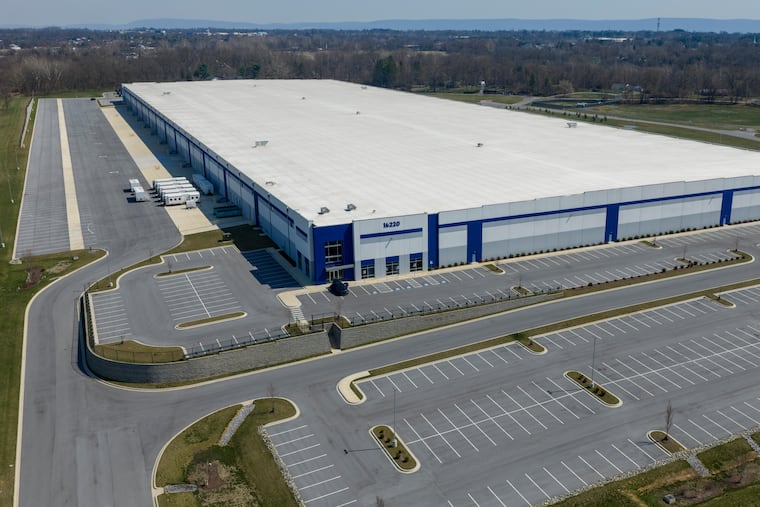
Homeland Security Secretary Mark Wayne Mullin is evaluating a strategy to convert warehouses nationwide into holding facilities for tens of thousands of immigrants.
So far, immigration authorities have allocated $1.074 billion for the acquisition of 11 warehouses, facing significant opposition along the way. Shortly after Mullin’s appointment, the Department of Homeland Security (DHS) halted new warehouse purchases for migrants and is currently reviewing contracts signed under the previous administration led by Kristi Noem.
The impact of these decisions can be seen across several states, including Pennsylvania and New Jersey.
Pennsylvania
In Pennsylvania, DHS acquired a warehouse in Tremont Township for $119.5 million and another in Upper Barn Township for $87.4 million. However, Democratic Governor Josh Shapiro has expressed strong opposition to the DHS plan. The state’s Department of Environmental Protection has currently prohibited the provision of water and sewage services in these areas.
New Jersey
Following the DHS purchase of a 470,044-square-foot warehouse in Roxbury for $129.3 million, local government and state officials filed a lawsuit against federal authorities, alleging a lack of transparency. “While state and local officials lack veto power over DHS decisions, the absence of communication violates federal law,” the lawsuit claims.
Arizona
In Arizona, the local authorities were not informed until an ICE purchase of a 418,000-square-foot warehouse in Surprise for $70 million was finalized. Documents revealed that DHS awarded renovation contracts worth at least $313.4 million to enhance the facility, which is designed to accommodate between 1,000 to 1,500 people daily. Surprise Mayor Kevin Sartor confirmed that DHS has since revised its plans, starting with 250 individuals per week and limiting occupancy to 542 beds.
Florida
In January, local reporters in Orlando observed federal officials and private contractors touring a 439,945-square-foot warehouse. During the exploratory tour, ICE senior adviser David Venturella indicated to WFTV that discussions were still in preliminary stages, but by April, the city had received no further communication.
Georgia
ICE also acquired a large warehouse in Social Circle for $128.6 million, with the city confirming the federal government’s intention to house between 7,500 and 10,000 people on-site. Due to water scarcity concerns, local officials locked the water meters, while DHS suggested a plan to transport drinking water and waste, which has drawn skepticism among state representatives.
Indiana
In Merrillville, the city expressed concerns about ICE operations at a newly purchased 275,000-square-foot warehouse. The property owner, Opus Holding LLC, clarified that it had not engaged in negotiations with federal authorities and was restricted from sharing additional details due to legal constraints.
Maryland
DHS’s acquisition of a warehouse in Washington County for $102.4 million, which includes a $113 million renovation contract, is currently delayed due to a lawsuit from Maryland’s attorney general. The community has been divided on the issue, with some county commissioners passing resolutions in support of ICE during contentious meetings.
Michigan
In Michigan, state and local governments have filed lawsuits following DHS’s purchase of a warehouse in Romulus for $34.7 million, situated in a floodplain where the sewage system cannot adequately service 500 occupants. The lawsuits criticize DHS for failing to consider abandoned state prison facilities as alternatives and not consulting local officials before proceeding.
Minnesota
Following public outcry, owners of warehouses in the Minneapolis suburbs of Woodbury and Shakopee have retracted their interest in potential dealings with ICE.
Mississippi
Republican Senator Roger Wicker indicated that Noem had agreed to seek alternative sites after facing opposition from regional officials against establishing a detention center in Byhalia.
Missouri
Public pressure led developer Platform Ventures to withdraw its plans for the sale of a large warehouse in Kansas City amid significant community concerns.
New Hampshire
New Hampshire Governor Kelly Ayotte announced in March that DHS would not proceed with the proposed ICE facility in Merrimack, following vigorous discussions after plans were revealed to invest $158 million for a 500-bed processing center. The controversy flared when an ICE official misrepresented agreements with the governor’s office regarding the project’s economic impact.
New York
ICE acknowledged an error in announcing the purchase of a vacant warehouse in Chester, with State Representative Brian Marr later clarifying that the facility would no longer be under consideration.
Oklahoma
Oklahoma City Mayor David Holt reported in January that the property owner decided against engaging with DHS about the potential lease or purchase of a warehouse.
Tennessee
In Tennessee, ICE incorrectly announced the completion of the purchase of a warehouse in Lebanon. Sheriff Robert Bryan noted that such a facility, housing between 14,000 to 16,000 detainees, would impose a considerable burden on local law enforcement resources. Local leaders voiced their opposition, and Senator Marsha Blackburn later confirmed that the agreement had been abandoned.
Texas
In Texas, ICE invested $122.8 million in three warehouses totaling 826,780 square feet in Socorro, and $66.1 million in a 639,595-square-foot facility in San Antonio. The mayors of both locations opposed these initiatives amidst ongoing concerns about adequate water supply for the planned detention centers. In the Dallas suburb of Hutchins, a real estate entity indicated it had been approached regarding one of its properties but would not sell or lease it to DHS.
Utah
DHS acquired an 833,280-square-foot warehouse in Salt Lake City for $145.4 million without notifying local Democratic leaders, the state’s Republican governor, or Congressional representatives. Mayor Erin Mendenhall later learned from ICE officials that the facility could house between 7,500 and 10,000 individuals, leading the city to implement water use restrictions significantly below operational requirements for a detention center.
Virginia
Facing threats of boycotts, Jim Pattison Developments announced in January it would not proceed with plans to sell a warehouse located in suburban Richmond, clarifying that he was unaware of the intended use of the property prior to the sale discussions.
