


Impact of Immigration Concerns in Eastern Washington’s Religious Community
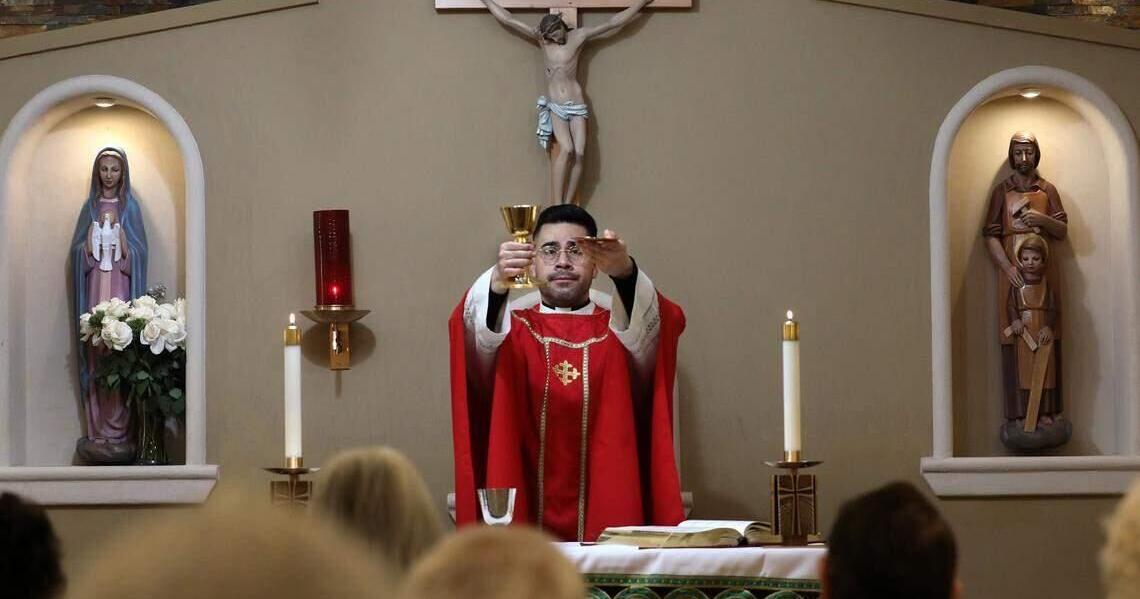
As immigration fears escalate across Eastern Washington, religious leaders are grappling with the consequences. Pastor Cesar Izquierdo is set to leave the United States and his parish in the coming days due to an expired religious visa, which prevented him from securing a pending green card in time. Staying in the U.S. could have exposed him to potential deportation.
Izquierdo serves at St. Rose of Lima Catholic Church in Ephrata, located roughly 100 miles north of Kennewick. Originally from San Luis Potosi, a city in central Mexico, he faces significant upheaval as his congregation expresses deep concern over the immigration crackdown’s impact on families in their community.
Paul Moreno, a parishioner, expressed the sentiment shared by many, stating, “He is our connection to God.” The Catholic Diocese of Yakima is actively engaged in assisting immigrant priests, seminarians, and religious workers as they navigate the complexities of the legal immigration system to ensure the continuation of their vital ministries.
With around 75% of the parish’s 190,000 population being Hispanic, the church communities across central and eastern Washington often conduct Mass in Spanish. To cater to this need, most parish priests, seminarians, and religious workers are required to be bilingual, fluently speaking both English and Spanish. Many of these clergy members are immigrants residing on temporary visas.
Church Leaders React to Growing Immigration Crackdowns
Despite a steady attendance at Sunday Mass, Catholic leaders within the Diocese of Yakima report a decline in participation in other religious activities due to widespread fear and confusion associated with increasing immigration enforcement. Bishop Joseph Tyson remarked on the situation, noting, “Overall, people still feel pretty safe coming to church, and there have been no enforcement actions that I’m aware of on or near church property.” The church aims to foster a sense of freedom and openness amid the fear surrounding immigration issues.
Despite this, some parishioners in central and eastern Washington have been detained or voluntarily left the country. Izquierdo highlighted the tangible effects of immigration policies, stating, “Immigration affects people’s faith and family life.” In November, the United States Conference of Catholic Bishops reiterated its stance against indiscriminate deportations, emphasizing respect for national borders while acknowledging the detrimental impact on hard-working individuals.
Bishop Tyson added that the majority of those deported are not criminals, asserting, “Most of the people who are deported have not committed a (criminal) crime.” He criticized the indiscriminate nature of current deportation policies, urging for a more humane approach that protects workers who have contributed to their communities for years.
Visa Challenges Faced by Clergy Members
The Catholic Church in the region continues to confront issues surrounding immigration policy as religious leaders, like Izquierdo, find themselves at risk. Working on a temporary R-1 visa, which is designated for nonimmigrant religious workers, Izquierdo saw his visa expire last June. Following the structure of R-1 visas, which are valid for up to five years, Izquierdo was in the process of applying for a green card but faced complications that may have forced him to leave the country.
To assist, the Diocese of Yakima collaborated with immigration attorneys from Roach & Bishop law firm to file for an F-1 student visa, allowing Izquierdo to stay in the U.S. for another five years to complete religious studies. Following a recent announcement of his departure, the church community expressed overwhelming emotion as many parishioners held back tears in response.
Fortunately, shortly after the announcement, Izquierdo’s student visa became active, offering a temporary solution within a complicated legal landscape. About one in five priests and seminarians in the Yakima Diocese currently live under some form of visa. Eamon Roach, an immigration attorney, highlighted that monitoring cases for those most at risk is crucial, given the complicated nature of visa renewals.
Legal experts indicate that recent changes in federal policy, which now allow religious workers to reapply for visas without having to leave the country for a year after their initial five-year term, may alleviate some stress. However, the green card acquisition process still typically exceeds a decade, prolonging uncertainty for religious workers dedicated to serving American communities.
This report is part of a broader examination of immigration and its intersection with religion, developed in collaboration with the Tri-City Herald, The Wenatchee World, Northwest Public Broadcasting, and the Murrow News Fellowship.
