


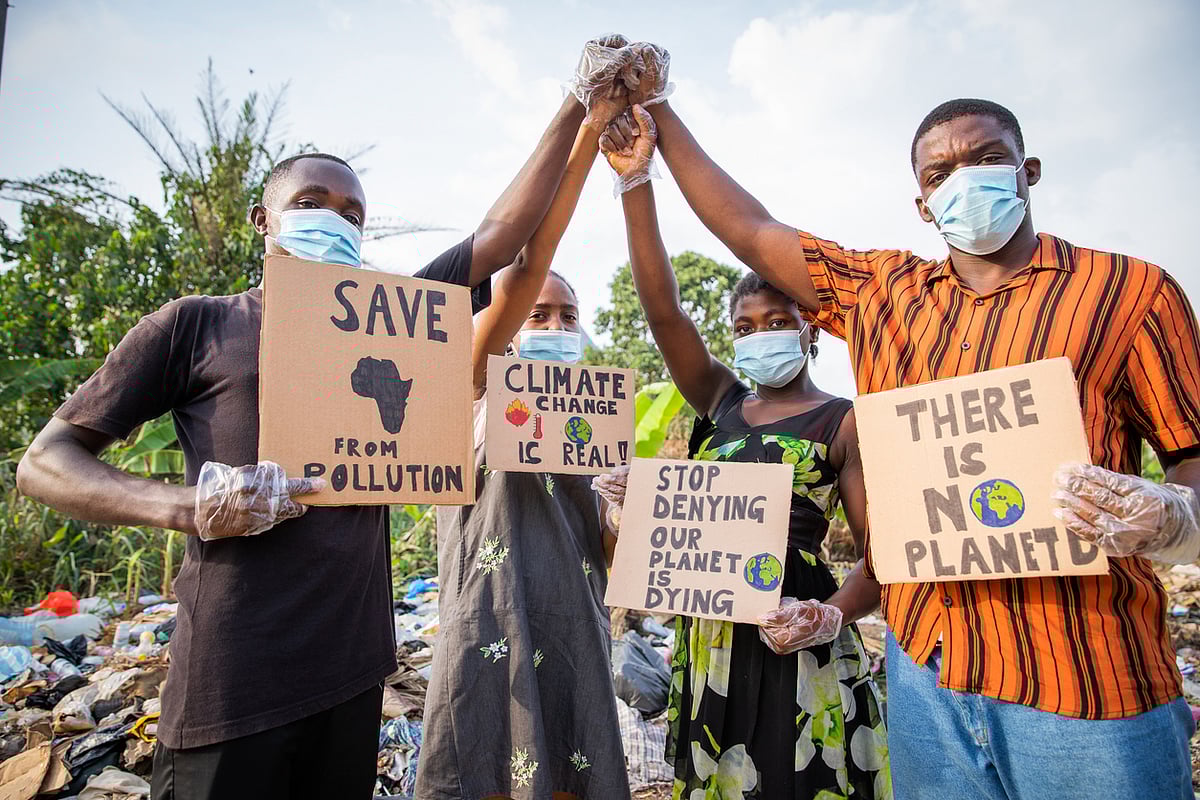
Climate change poses a significant threat to millions across Africa, a continent that contributes minimally to global emissions but faces the brunt of its consequences. Increasingly frequent extreme weather events—such as floods, heatwaves, and droughts—are intensifying issues like hunger, insecurity, and displacement. Despite being rich in essential minerals needed for the transition away from fossil fuels, Africa often exports these resources in their raw form, allowing foreign companies to profit from the manufacturing of low-carbon technologies and digital infrastructure. To address this disparity, sustainable development economists Michael Adetayo Olabisi and Howard Stein have proposed the establishment of a green bank tailored for Africa.
A Vision for an African Green Bank
The envisioned green bank would be established by African governments and operate as a jointly owned national institution across the continent. This structure would enable access to international financing that individual countries typically struggle to secure. Governance, capital allocation, and voting rights would remain under the control of African nations, mitigating challenges faced by other pan-African organizations that often rely on donor aid, which can compromise sovereignty. For instance, non-African countries currently hold 42% of the African Development Bank’s voting power.
In line with Japan’s banking framework, African green banks could take equity stakes in the projects and companies they finance. This approach allows for both oversight and income generation from the bank’s investments.
The proposal includes the creation of seven specialized divisions within the bank, each designed to address specific sectors and gaps in capability. These departments would encompass green energy production, agriculture utilizing sustainable technology, processing critical minerals like lithium and cobalt, and climate-smart manufacturing, particularly for solutions such as solar-based drip irrigation systems in drought-prone areas. An investment arm would focus on attracting foreign investments in key green sectors, while a green extension service would offer expert consultations on effective renewable energy transition initiatives, a model inspired by Taiwan.
Transforming the Current Climate Finance Landscape
African green banks would not only provide loans but also act as key players in the continent’s industrial policy, driving the transition to a renewable energy-based sustainable economy.
Despite regional development banks and international financial institutions’ involvement, there has been limited success in promoting green energy and industrialization across Africa. The need for a dedicated green banking institution is critical for breaking free from the historical pattern of exporting raw materials without benefiting the continent.
Furthermore, the existing international financial architecture, characterized by a hierarchical currency system, complicates access to climate finance, particularly for Africa’s poorer nations. For example, sub-Saharan Africa will only manage to secure 9% of the financing required for climate change mitigation between 2024 and 2030—the lowest among all regions. The continent also lacks dedicated development banks focused on promoting green industrialization, creating a vacuum that green banks could fill by aggregating expertise and resources.
Redefining Global Climate Financing Mechanisms
High-income countries have made commitments to provide climate adaptation finance to those nations most impacted by climate change, yet the mechanisms for distribution often fall short. It is proposed that these countries channel transition costs into African green banks, establishing a capital base in hard currency to stabilize funding flows. Additionally, African countries could contribute to the banks in proportion to their GDP, creating a diversified financial foundation from both local and foreign currencies.
Gold deposits might also serve as a substitute for hard currency, while bonds could be issued domestically and internationally to finance green initiatives. Loans from the green bank would be extended in both African and foreign currencies, enabling the funding of green manufacturing projects. This multi-currency strategy could facilitate repayment terms that allow for greater financial flexibility.
Such a bank would not only drive green industrialization but also help stabilize local currencies, potentially reducing dependence on the US dollar for international transactions. By establishing local manufacturing for green energy components, African countries could increase export opportunities, thereby diminishing the dominance of the dollar over time.
Collaboration Among Development Banks
In addressing climate finance, skepticism exists among high-income countries regarding the capabilities of governments perceived as corrupt or technologically challenged. However, African green banks could serve as transparent intermediaries, enhancing accountability and facilitating co-financing opportunities with institutions like the World Bank. Leading African financial institutions are beginning to align with climate priorities, but tangible results in climate adaptation finance remain elusive.
The proposal advocates for collaboration between green banks and other development entities as shared objectives evolve, maintaining a keen focus on leveraging industrial policy to adapt to climate challenges.
Challenges Ahead for the African Green Bank Initiative
Establishing a new bank to tackle the continent’s industrial, financial, and climate issues is undeniably complex. It requires consensus among African nations, along with a commitment from the Global North to allocate climate finance toward these emerging organizations.
As the international order undergoes significant changes amid rising tensions among global powers, there is a timely opportunity for Africa to forge new alliances aimed at creating a sustainable and independent future.
