


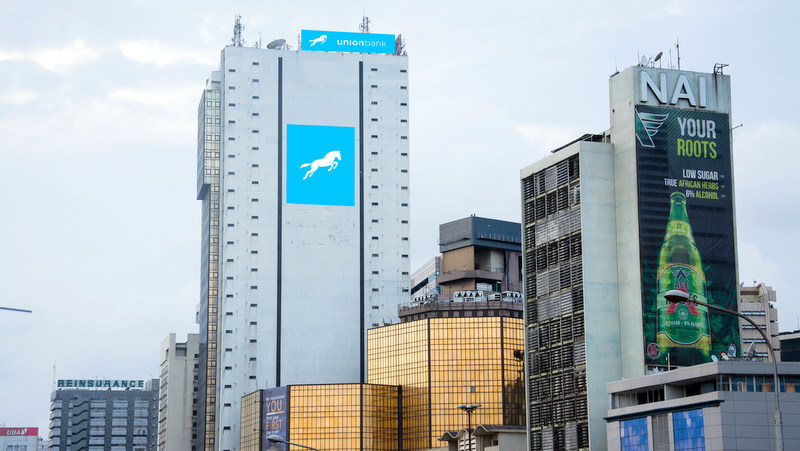
Lagos Court Rules Against CBN Intervention in Union Bank Management
A Federal High Court in Lagos has determined that the Central Bank of Nigeria (CBN) overstepped its statutory authority when it dissolved the board and management of Union Bank of Nigeria, declaring the intervention unlawful as of January 2024.
In a judgment delivered on Wednesday, Justice Chukwujekwu Aneke criticized the CBN’s actions as egregious and non-compliant with the provisions of the Banks and Other Financial Institutions Act, 2020 (BOFIA). The court’s ruling was registered under case number FHC/L/MISC/1377/2025.
According to court documents, Titan Trust Bank Limited, along with Luxis International DMCC and Magna International DMCC, claimed to be the primary beneficiaries of Union Bank. They contested the CBN’s decision to dissolve the bank’s board of directors and appoint a new management team, asserting that it led to the dilution of their shares and hindered their ability to participate in key decision-making processes.
The court subsequently nullified the CBN’s entire regulatory intervention, granting relief to the applicants. Justice Aneke set aside the CBN’s announcement about the board’s dissolution and invalidated all actions taken by the management appointed by the regulator.
Furthermore, the court mandated the immediate reinstatement of the former board and management team, led by Farooq Gumel. Justice Aneke also barred the CBN and other parties from exerting any control over the governance of the bank—this includes restructuring share capital or altering ownership structures. The ongoing recapitalization process and investor selection program initiated by the CBN-appointed board were also suspended.
The court asserted that the applicant’s rights to a fair hearing were violated, noting that the bank had not been allowed to respond to allegations of regulatory violations during a special investigation. It ruled that the applicant’s shareholding was unjustly reduced from 100% to 40%, effectively barring them from participating in the recapitalization exercise without legal justification.
While the CBN defended its actions as part of prudent oversight in light of the bank’s dire financial situation—characterized by a negative capital adequacy ratio, a capital shortfall exceeding N224 billion, and a high level of non-performing loans—the court maintained that such regulatory powers must be exercised strictly in accordance with the law. The ruling emphasized that Article 51 of BOFIA does not shield the CBN from judicial review when it acts beyond its statutory capacity.
Context of the Conflict
The dispute originated from the CBN’s intervention in January 2024, during which it disbanded the boards and management teams of Union Bank, Keystone Bank, and Polaris Bank, citing alleged regulatory violations and governance failures. At that time, the apex bank referenced BOFIA provisions as the basis for its actions, which included addressing non-compliance with bank licensing conditions and safeguarding financial stability.
Since this intervention, the CBN has appointed interim management teams to oversee the affected banks and initiated several corrective measures, including recapitalization and restructuring efforts. This action forms part of a broader initiative by the CBN aimed at enhancing regulatory compliance within Nigeria’s banking sector.
Notably, this is not the first time the CBN has intervened in banking operations; in 2021, it removed the board of First Bank of Nigeria Holdings over governance issues, and similar actions were taken against Skye Bank in 2016 due to prudential violations, ultimately leading to the revocation of its license and the transfer of its operations to Polaris Bank. Under BOFIA, the CBN is authorized to intervene in troubled banks, including the removal of directors if “serious circumstances” are evident.
