


California Professor Acquitted in Border Patrol Protest Case
Jonathan Caravello, a professor at California State University Channel Islands, expressed a sense of “righteous indignation” following his acquittal by a federal jury on Thursday. The jury found him not guilty of assaulting federal officers during a protest against large-scale immigration raids at marijuana farms in Southern California last summer.
Details of the Acquittal
The jury in downtown Los Angeles cleared Caravello, 38, of the charge which could have led to a maximum sentence of 20 years in federal prison. Caravello, a U.S. citizen and a faculty member in the mathematics and philosophy department at CSUCI, made headlines last year when he rejected a plea deal early in the judicial process, opting instead to fight the charges head-on.
Defense Strategy and Perspective
In a personal statement, Caravello maintained that he acted out of necessity rather than aggression. “I knew I hadn’t assaulted anyone, so I wasn’t going to defend myself,” he stated, emphasizing his belief that his academic standing and privilege compelled him to seek justice through trial. He reflected, “If I had gone to prison, I wouldn’t have regretted going to trial.”
Defense Attorney’s Remarks
Knute Johnson, Caravello’s attorney, asserted that his client aimed to protect those around him rather than harm federal agents. Johnson argued that the use of tear gas by law enforcement was indiscriminate, stating, “John removed tear gas canisters from everyone,” while criticizing the prosecution for bringing the case to trial.
Union’s Support for Caravello
The California Teachers Association, which represents faculty in the California State University system, lauded the jury’s decision in a social media statement. The union highlighted that the ruling affirmed Caravello’s right to protest, adding, “The beatings, surveillance, and trauma that John and others have had to endure cannot be ignored.”
University’s Position on the Acquittal
CSU Channel Islands stated that Caravello’s employment status remained unchanged throughout the legal proceedings. The university acknowledged the jury’s decision and conveyed its respect for the legal process, describing the situation as complex and challenging for its community members.
Background of the Incident
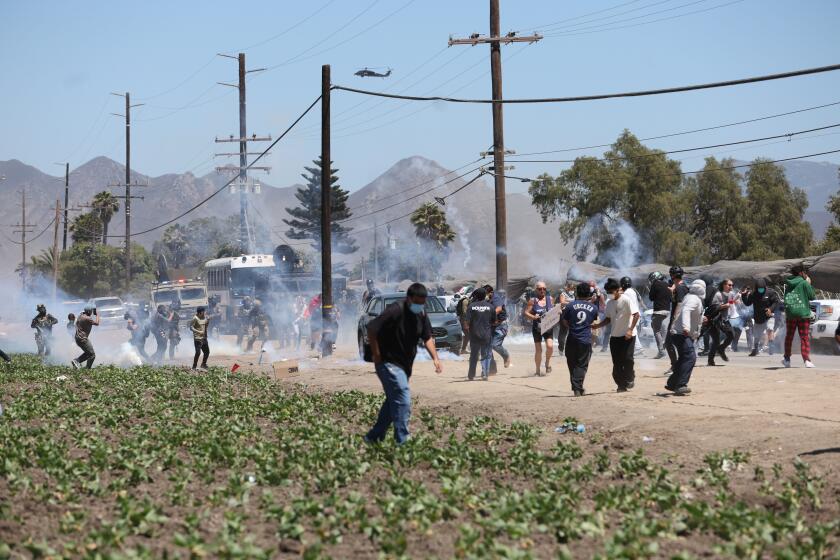
Caravello’s case originated from a protest that took place on July 10 at Glass House Farms in Camarillo. Federal agents executed a high-risk search warrant at the 160-acre marijuana cultivation site, which was preceded by simultaneous immigration raids in the area that led to the arrest of over 300 undocumented workers. Court documents allege that during crowd dispersal efforts involving tear gas, Caravello attempted to intervene by engaging with the canister.
Reflections on the Protest and Legal Process
Despite the acquittal, Caravello urged caution for those participating in similar protests. He noted, “While I was acquitted of removing tear gas canisters, I believe in the importance of standing up at protests.” The journey to trial was not straightforward; Caravello initially faced felony charges, which were later downgraded to a misdemeanor before being reinstated by a federal grand jury. His case has sparked discussions about the treatment of protesters and the rights of individuals standing against perceived injustice.
