


Cuba’s President Diaz-Canel Defends Government Against U.S. Pressures
President Miguel Diaz-Canel has expressed steadfast support for Cuba’s government, dismissing suggestions for a regime change amid increasing pressure from President Donald Trump’s administration. In recent statements, he underscored the resilience of the Cuban leadership against what they perceive as aggressive U.S. tactics.
Military Invasion Unjustifiable, Says Diaz-Canel
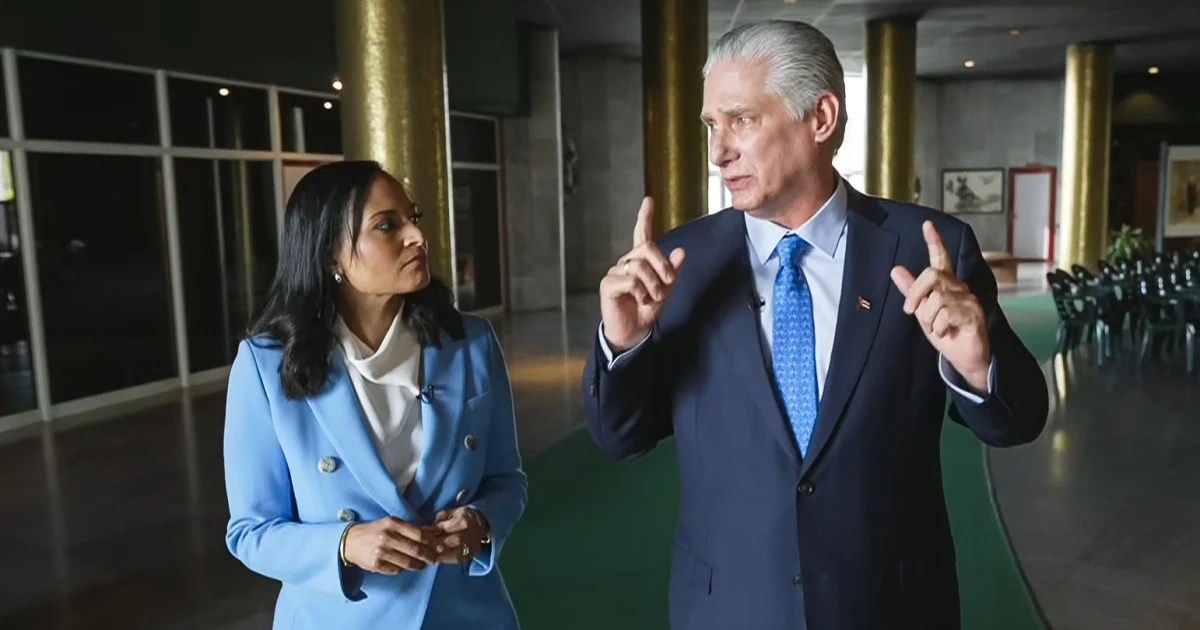
During a detailed interview with NBC News’ Kristen Welker in Havana, Diaz-Canel categorically rejected the notion that the U.S. has justifiable grounds for a military incursion into Cuba. He emphasized the potential dire consequences such an action would have, not just for Cuba but also for the U.S. and the broader region, asserting that “invading Cuba would be costly.”
Commitment to Defense and Dialogue
In his first U.S. broadcast interview, Diaz-Canel stated that any military aggression would be met with significant resistance from the Cuban people. He asserted, “If we have to die, we will die,” echoing sentiments from the national anthem, highlighting a commitment to defend the nation. Furthermore, he presented a case for dialogue, advocating for discussions to foster understanding rather than confrontation.
Response to U.S. Demands
When pressed on whether Cuba would address key U.S. demands, including the release of political prisoners and the establishment of multiparty elections, Diaz-Canel firmly stated that these matters are non-negotiable and characterized the demands as manipulative. He articulated that both his country’s political structure and constitutional order are foundational and not up for discussion with Washington.
Political Prisoners and Human Rights Concerns
Welker specifically highlighted the case of Michael Osorbo, a renowned Cuban rapper imprisoned since 2021 for his protest song condemning governmental inaction during the pandemic. While human rights organizations, including PEN International and Amnesty International, have called for his release, Diaz-Canel refrained from agreeing to the release of political prisoners and dismissed the narrative that dissenting voices face imprisonment, labeling it a distortion of the truth.
Impact of U.S. Economic Policies
A significant element of the discussion centered on the economic struggles facing Cuba, which Diaz-Canel attributes largely to the longstanding U.S. embargo imposed since 1962. He described the embargo as “genocidal and cruel” and a barrier to essential resources, particularly during the ongoing pandemic, while also boasting about Cuba’s capabilities in vaccine development.
Cuba’s Energy Crisis and Future Opportunities
Amid economic hardship and energy shortages, Diaz-Canel extended an invitation for U.S. investment in Cuba’s oil sector, despite existing U.S. legal restrictions. He suggested that opportunities remain for American businesses to engage in energy exploration and emphasized the potential for cooperation in areas like medical research and drug trafficking prevention, indicating an openness to dialogue while recognizing the complexities of U.S.-Cuba relations.
Diaz-Canel’s remarks reveal a determination to preserve Cuba’s sovereignty while navigating a challenging geopolitical landscape, calling for mutual respect and understanding in the face of ongoing tensions. His dialogue with the U.S., while fraught with difficulties, signals an attempt to find common ground amidst division.
