


Nigeria Faces Resurgence of Violence Amid Ongoing Insurgency
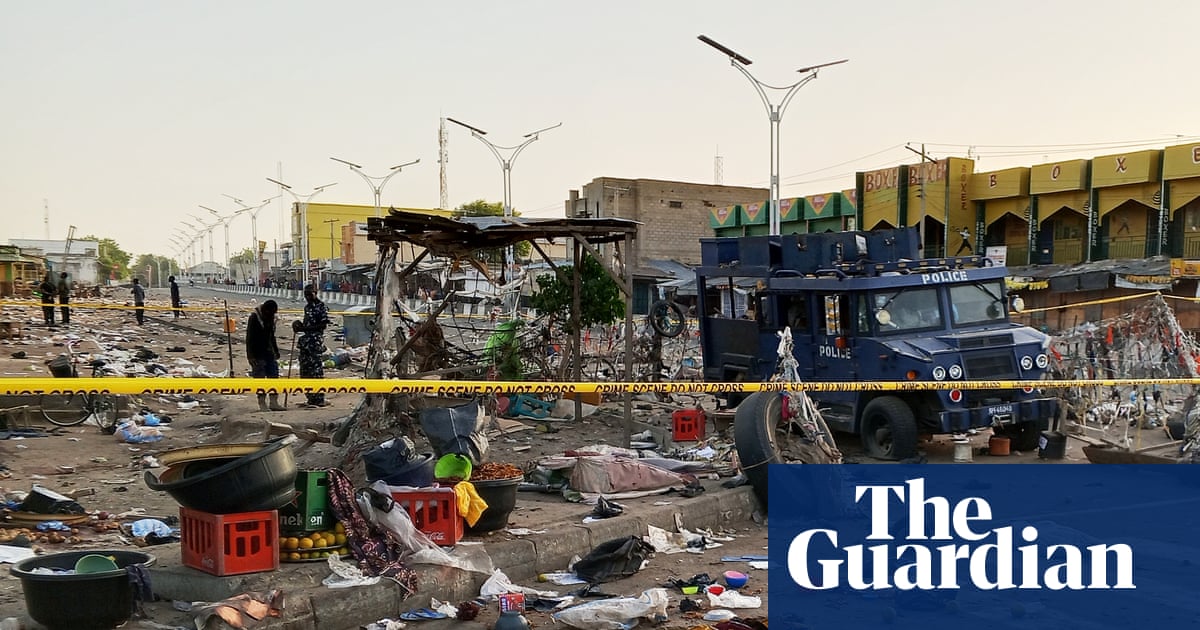
Nigeria’s image as a relative bastion of stability has been significantly undermined in recent years, particularly following a series of suspected suicide bombings that resulted in the deaths of at least 23 individuals and injuries to over 100 in the northeastern city of Maiduguri. This incident marks a disturbing escalation in a protracted insurgency that has increasingly encroached upon rural areas.
The explosions occurred on Monday night during Iftar, the traditional breaking of the fast observed during Ramadan, targeting the post office, market area, and the entrance of the University of Maiduguri Teaching Hospital.
Historically, Maiduguri has been a focal point for violence, especially at the peak of the Boko Haram insurgency, when both the post office and market areas frequently fell victim to suicide attacks. Ten years ago, a series of four suicide bombings at these locations resulted in 58 fatalities and injured more than 140 people, marking one of the deadliest days in the city’s history.
This recent attack followed an earlier assault on a military outpost near the capital of Borno State that occurred between Sunday night and Monday morning. Although no group has officially claimed responsibility, Nigerian authorities suspect that the explosions were orchestrated by a “suspected Boko Haram suicide bomber” utilizing an improvised explosive device.
Military spokesman Sani Uba characterized the incident as a “cowardly attack” targeting a crowded public area, aimed at generating mass casualties and spreading panic throughout the region.
The ongoing conflict has displaced over two million people and claimed hundreds of thousands of lives as Boko Haram, along with the Islamic West Africa Province (ISWAP) and other factions, continues to challenge the Nigerian state in pursuit of establishing an Islamic caliphate.
Boko Haram, founded in 2002, saw a spike in violence following the extrajudicial execution of its former leader, Mohammed Yusuf, in July 2009. Under the more aggressive leadership of Abubakar Shekau, the group subsequently fragmented, leading to ISWAP emerging as a dominant force engaged in lethal territorial conflicts with rival factions.
Much of the violence has unfolded in the rural regions surrounding Maiduguri, which is recognized as the birthplace of the insurgency. The city itself had remained largely unaffected by major attacks since 2021 until a bombing at a mosque on Christmas Eve last year resulted in five deaths and numerous injuries. This mosque attack coincided with the United States’ collaboration with Nigeria in launching airstrikes against Islamic State militants in the northwest.
In April of last year, Borno State Governor Babagana Zulum raised alarms about a resurgence of jihadist activity, cautioning that the attackers were regaining strength. Many observers believe that his warnings went unacknowledged by federal authorities, leading to grave concerns about a potential escalation in violence.
In response to the recent attacks, President Bola Tinubu, currently on a state visit to the United Kingdom, announced his directive for security chiefs to relocate to Maiduguri with the aim of “taking control of the situation” and actively confronting insurgents in an effort to bring an end to the ongoing violence.
