


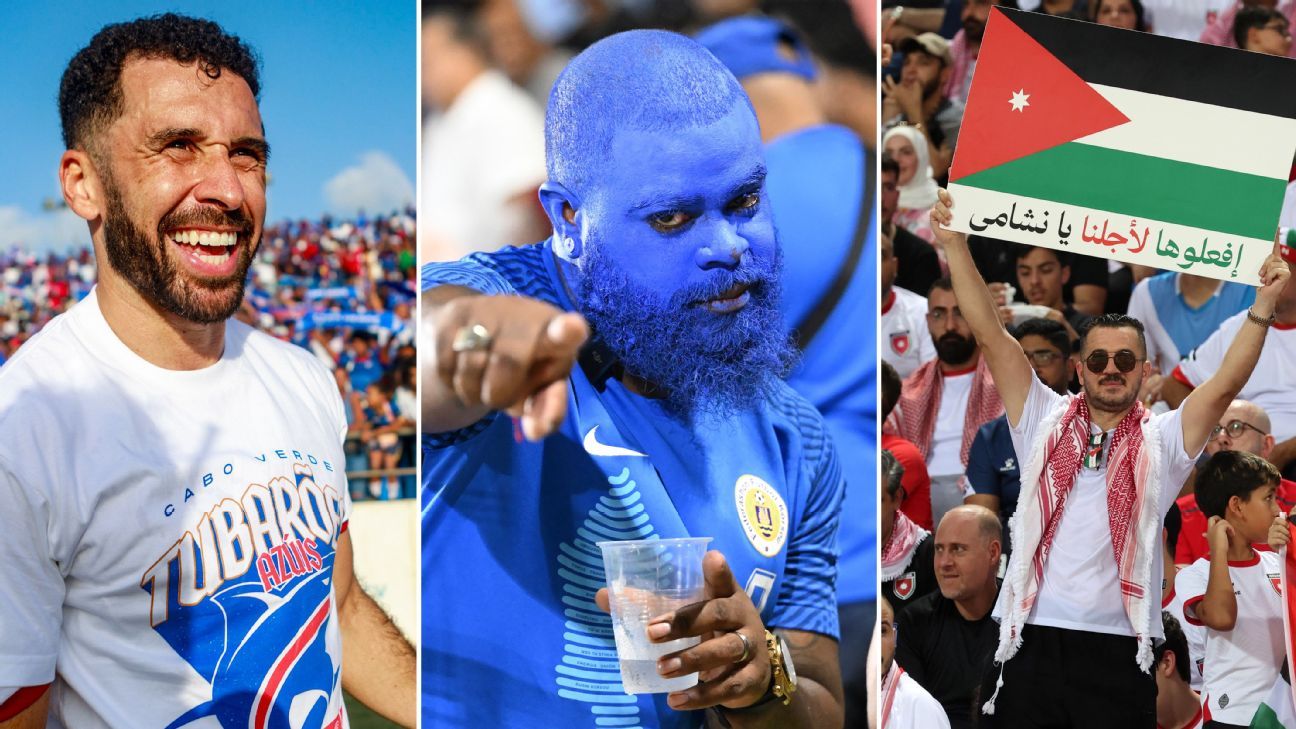
Every soccer fan aspires to see their nation compete in the World Cup, yet for many of FIFA’s 211 member associations, this dream has remained elusive. However, with the 2026 tournament, co-hosted by Canada, Mexico, and the United States, set to expand the event to 48 teams, there are new opportunities for countries that previously struggled to qualify. Some nations are poised to make their debut at this pivotal moment, led by a generation of players eager to achieve unprecedented success.
The record for most nations making their World Cup debut (excluding the inaugural tournament in 1930) stands at six, with Angola, Ivory Coast, Ghana, Togo, Trinidad and Tobago, and Ukraine all making their first appearances in 2006. For the upcoming event, as many as nine teams have been identified as potential newcomers for March playoffs, though only four will actually vie for glory starting June 11.
Cape Verde, Curaçao, Jordan, and Uzbekistan have qualified, but what more do we know about these nations both on and off the pitch? For the majority of soccer enthusiasts watching this summer, these teams might be lesser-known, prompting an exploration of the underdogs at the 2026 World Cup, informed by insights from experts in each country.
Cape Verde, a volcanic archipelago consisting of ten islands off the west coast of Africa, clinched a place in Africa’s Group D by defeating Cameroon. Despite a population of just 525,000, Cape Verde now ranks as the third smallest nation by population to qualify for the World Cup, following Iceland in 2018 and Curaçao this year. Following a decisive victory on October 13, when Cape Verde topped Eswatini 3-0 at home, celebrations erupted in the capital city of Praia.
Roberto “Pico” Lopez, a defender for Cape Verde, recalled the electric atmosphere preceding the game against Eswatini: “We were planning on taking a nap before the game, but one of the other players started playing music. We all began dancing, and it was like we knew everything was going to be okay. This had to be our day.” Music and food have historically played a key role in uniting the Cape Verdean diaspora, creating a vibrant atmosphere during international matches.
While the national pride in soccer is palpable, Cape Verde has made its mark in other major competitions, reaching the quarter-finals of the African Nations Cup in 2013 and 2023. As they prepare for their World Cup debut against formidable teams like Spain, Uruguay, and Saudi Arabia, Lopez expressed a mix of excitement and ambition: “The boy in me wants to play in Brazil. They are the epitome of the World Cup, but we’ve got work to do!”
Jordan, an Arab country bordered by Syria, Iraq, Saudi Arabia, Israel, and the Palestinian West Bank, has gained recognition as a popular tourist destination. The ancient city of Petra, a UNESCO World Heritage site, often attracts visitors. Zaid al-Atiyat, a devoted Jordanian fan, noted, “Jordan has become a place where dreams can take root, especially after our spectacular run in the 2023 AFC Asian Cup.” Jordan’s gastronomic culture, particularly its national dish, mansaf, has even sparked controversy during games, adding to the national identity on and off the field.
Meanwhile, Curaçao, a self-governing island in the Caribbean, achieved a historic milestone as the smallest nation ever to qualify for the World Cup. With a population of around 156,000, the island secured its place by capitalizing on the absence of several traditional CONCACAF powerhouses. Brenton Valentian, a former youth international and president of the supporters’ group, reflected on the emotions leading to their qualification: “When we beat Jamaica at home, we knew this was our year.” Curaçao’s diverse culture, showcased through its multilingualism and culinary delights, ensures a lively atmosphere, regardless of the tournament outcomes.
Uzbekistan also celebrates a landmark achievement as the first Central Asian nation to qualify for the World Cup. Jarolidin Mahmudov, a supporter, highlighted the historical significance of Uzbekistan, which once served as a central hub on the Great Silk Road. “Soccer is the most loved sport here, and our qualification is a tremendous opportunity for the country.” Uzbekistan’s coach, Fabio Cannavaro, along with players like Manchester City’s Abdukkodir Kusanov, are preparing to make their mark on the world stage. The national enthusiasm is palpable, with many fans hoping to finally exorcise the ghosts of past near-misses.
