


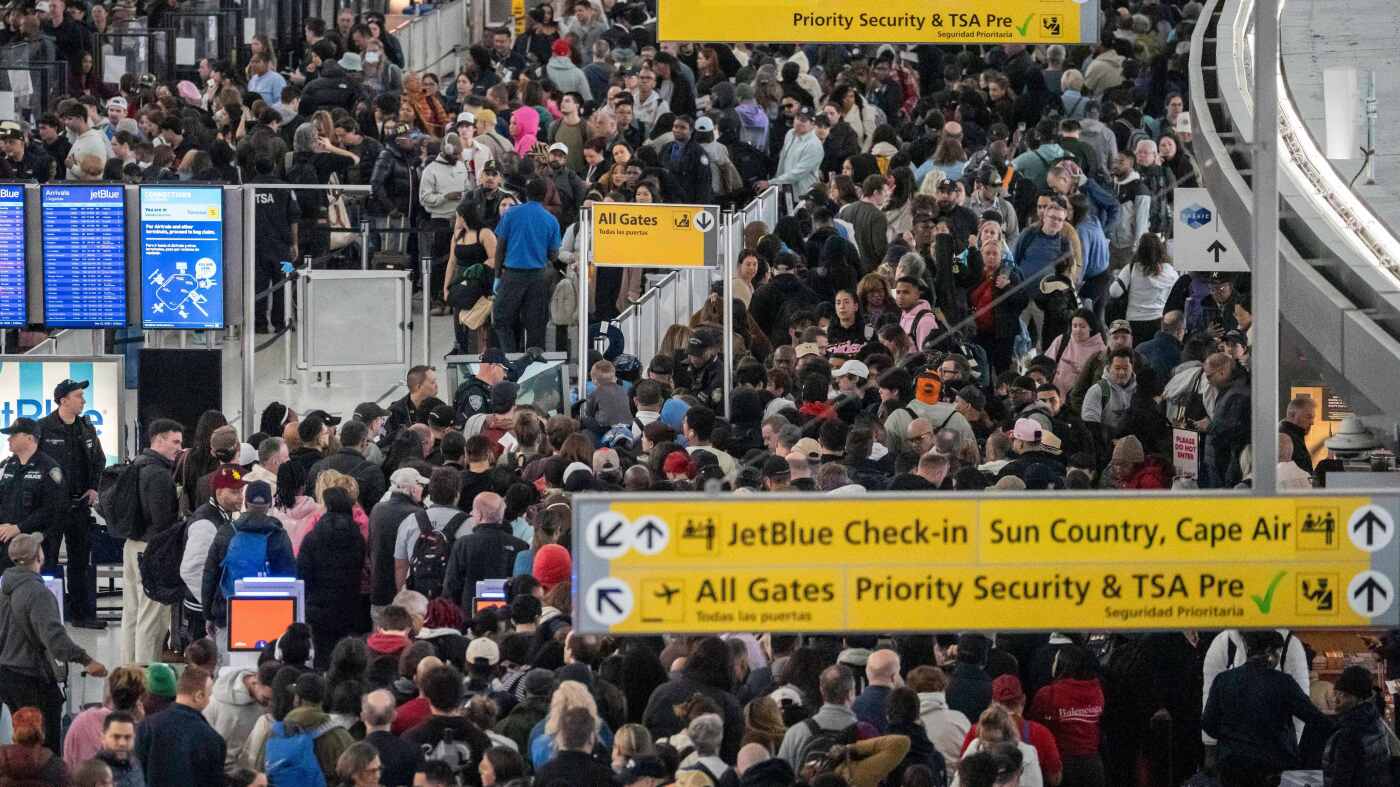
ICE Deployment Aimed at Alleviating TSA Delays Amid Ongoing Shutdown
In response to the challenges posed by the partial government shutdown, President Trump has announced plans to deploy Immigration and Customs Enforcement (ICE) officers to U.S. airports. The shutdown has resulted in longer security lines, creating frustration for air travelers nationwide.
Trump conveyed via social media that ICE would assist Transportation Security Administration (TSA) employees, who have been working without pay due to the ongoing issues affecting the Department of Homeland Security (DHS). “On Monday, ICE will be at the airport to help our amazing TSA employees who are continuing to do their jobs,” he stated.
The administration has attributed the shutdown, now entering its sixth week, to a stalemate with Democrats regarding funding for the DHS, which also oversees the TSA. Lauren Biss, acting assistant secretary at DHS, pointed out that the shutdown has forced over 400 TSA employees to retire, while many others have opted to take unpaid leave, further exacerbating delays for travelers.
To mitigate the situation, the administration plans to dispatch “hundreds” of ICE officers to key airports experiencing significant disruptions. However, concerns have been raised regarding the suitability of ICE personnel for security roles. Everett Kelly, president of the American Federation of Government Employees, criticized the decision, highlighting that ICE agents lack aviation security training, which TSA officers acquire over months of specialized instruction.
House Minority Leader Hakeem Jeffries echoed these concerns, arguing that the introduction of untrained officers could lead to increased tensions and violence at airports. “The last thing Americans want is to see untrained ICE agents stationed at airports across the country,” he stated, emphasizing the potential risks involved.
While Trump indicated that Tom Homan, the White House border czar, would oversee the deployment, the exact operational parameters remain uncertain. Homan described the initiative as a “work in progress,” suggesting that ICE could take over certain security tasks to relieve TSA agents at terminal entrances.
Uncertainty Surrounds ICE’s Role in Airport Security
Homan acknowledged the limitations of ICE’s training in aviation screening but suggested that their presence could potentially free up TSA employees for more critical tasks. However, Transportation Secretary Sean Duffy offered a contrasting perspective, asserting that ICE agents, operating under DHS jurisdiction, should be capable of utilizing X-ray machines effectively.
Duffy also cautioned that if Congress fails to secure funding for DHS soon, ongoing delays could worsen dramatically, with TSA workers potentially facing further financial strain. He projected that, without immediate action, the agency could see an escalation in workforce attrition rates.
Stalled Negotiations and Funding Implications
Negotiations in Congress have not yielded progress in securing funding for DHS, illustrating the ongoing legislative impasse that has led to the current crisis for TSA and other agencies. Meanwhile, ICE remains well-funded following the allocation of billions in resources from Congress last summer, raising questions about the distribution of financial resources within the DHS framework.
The shutdown was instigated by public outcry following several high-profile incidents involving ICE officers, which intensified calls for reforming the agency’s practices. Although ICE is expected to maintain enforcement of immigration laws during its airport missions, the deployment raises significant concerns about the implications for passenger safety and security.
In the wake of these developments, the administration will continue to explore solutions to bolster TSA operations and minimize disruptions for travelers, while the long-term impact of these policy decisions remains to be seen.
