


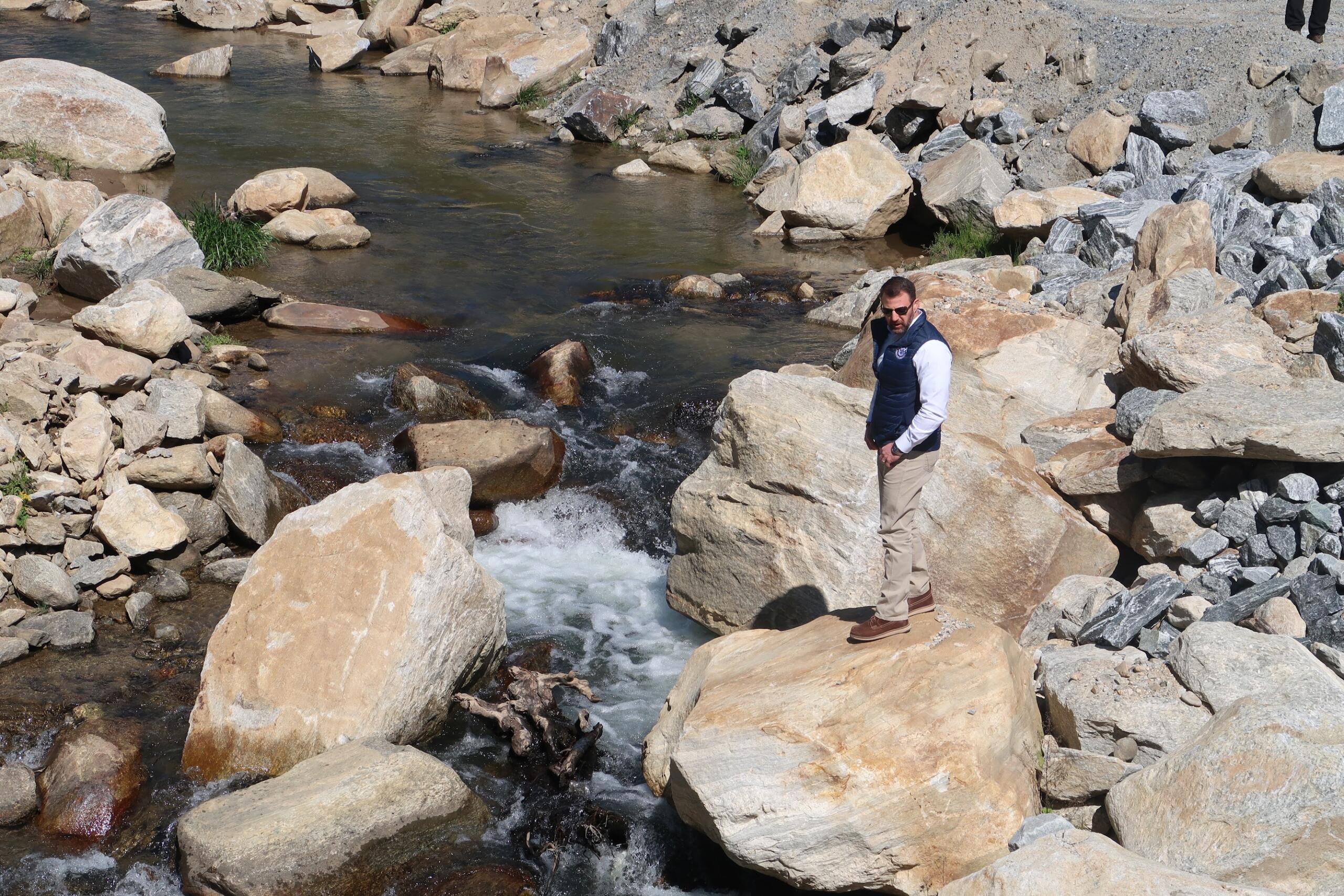
In his inaugural visit since assuming office on March 24, Secretary of Homeland Security Mark Wayne Mullin traveled to Chimney Rock and Lake Lure, North Carolina, to evaluate the damage caused by Tropical Storm Helen and engage with local officials.
CHIMNEY ROCK, N.C. — Secretary Mullin’s trip included meetings with U.S. Senator Ted Budd, Congressman Chuck Edwards, and Congressman Tim Moore. The day began at Lake Lure City Hall, extended to the riverbed at the temporary entrance to Chimney Rock State Park, meandered through Chimney Rock Village’s shopping district, and concluded with a roundtable discussion at the Chimney Rock Volunteer Fire Department, focusing on recovery efforts and FEMA initiatives.
Insights from Local Leaders on FEMA
During his visit, Mullin engaged with a host of local officials, including Mayor Peter O’Leary of Chimney Rock, Fire Department Chief Steve Freeman from Bat Cave, and Fire Chief Chris Melton of Chimney Rock. Additional participants at the roundtable discussion included North Carolina State Senator Tim Moffitt, Henderson County Manager John Mitchell, and Lake Lure Mayor Pro-Tem David DiOrio.
The conversation heavily centered around the future of FEMA and ongoing funding for the Helen Recovery Project. Participants shared heartfelt personal stories regarding the storm’s impact, as well as pressing inquiries about FEMA’s policy directions.
An emotional moment arose when Mullin inquired about a damaged American flag displayed in the fire station. Chief Melton revealed that it had been retrieved from the river by a police officer and expressed his desire to honor its significance, highlighting the resilience of the community.
Changes to FEMA and Local Collaboration
As the dialogue progressed, Mullin listened attentively to inquiries concerning FEMA’s operational strategies, especially the backlog of funding associated with the storm recovery. He proposed a significant shift in FEMA’s role, advocating for the agency to transition from direct involvement in disaster areas to providing critical financial support for state and local infrastructure.
“FEMA should not be the first in and the last back,” Mullin stated. He emphasized that local and state agencies are often better equipped to manage disasters, asserting that FEMA’s role should primarily focus on initiating support to help communities rebuild. The Secretary stressed an intention to prioritize funding for infrastructure recovery post-disaster.
Policy Discussions Extend Beyond Recovery
The visit also touched upon broader immigration issues. Mullin expressed interest in potential restrictions on international flights to “sanctuary cities,” aiming to enhance the efficiency of DHS operations. He remarked that if sanctuary cities are not enforcing immigration laws, it raises questions about processing and releasing immigrants in those areas.
Mullin elaborated that these airport restrictions were merely among various ideas he is considering as part of his strategic overhaul of DHS. He underscored the urgency to prioritize customs and border control, particularly in light of perceived hesitation from some Democratic lawmakers to adequately fund these critical operations.
