


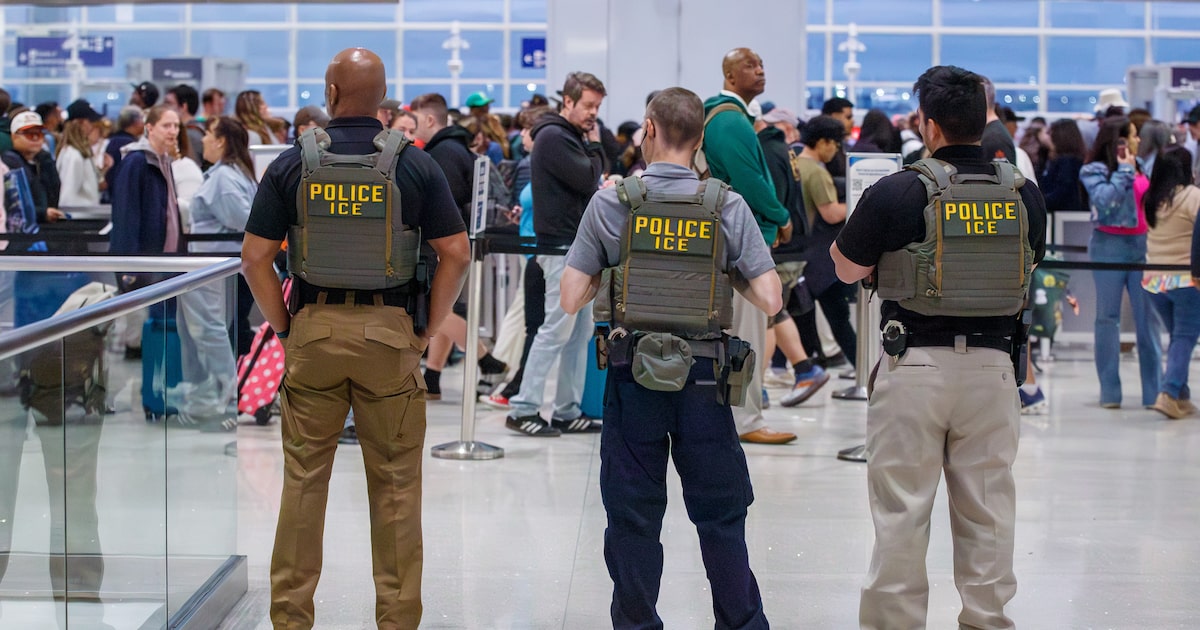
Trump Deploys ICE to Address TSA Delays at Airports
President Donald Trump has dispatched Immigration and Customs Enforcement (ICE) officers to select U.S. airports beginning March 23, aiming to alleviate extensive security delays stemming from the ongoing partial government shutdown.
During an event in Memphis, Tennessee, Trump remarked on the accountability of ICE, stating that the agency is providing support to Transportation Security Administration (TSA) personnel. However, the specific functions of ICE at the airports remain uncertain. Trump indicated he may also consider deploying the National Guard if the situation necessitates additional assistance.
Unlike TSA officers, who have gone unpaid for over a month, ICE agents continue to receive their salaries. This disparity has raised concerns among TSA staff, many of whom work under strenuous conditions during the shutdown.
The funding stalemate is further complicated by recent incidents involving federal agents that resulted in the deaths of U.S. citizens Renee Good and Alex Preti in Minnesota, prompting Democrats to call for reforms. Among these reforms is a proposal to require immigration agents to wear body cameras instead of masks to enhance accountability.
While both ICE and TSA operate under the Department of Homeland Security (DHS), they are funded differently during partial shutdowns. The two political parties have agreed to negotiate a compromise regarding DHS funding while addressing the budget needs of the rest of the federal government.
ICE Receives Funding While TSA Faces Shutdown Challenges
Under President Trump’s One Big Beautiful Bill Act, ICE agents continue to be funded and paid. The Tax and Spend Act of 2025, signed by Trump, allocates approximately $75 billion to ICE over four years, which includes provisions for building new immigration detention facilities and hiring additional staff.
In contrast, TSA remains unfunded during the shutdown, leaving employees without pay, even those classified as essential workers. This situation has triggered a wave of resignations and job departures among TSA staff, with about 95% of the agency’s 60,000 employees considered essential.
A law enacted in 2019 ensures that employees will be compensated once funding is reinstated. Following the 43-day government shutdown in fall 2025—the longest in U.S. history—then-Secretary of Homeland Security Kristi Noem awarded TSA employees bonuses for their exemplary service during the crisis.
Demands for Changes to ICE Regulations
In a letter addressed to Republican leaders in Congress, Democratic officials outlined ten proposed reforms aimed at revising the tactics employed by ICE. Among the most significant demands is the requirement for immigration officials to secure a judicial warrant before entering private residences, display identification, refrain from enforcement actions near sensitive locations like hospitals and schools, and utilize body cameras for transparency.
In response, Border Czar Tom Homan and White House Legislative Affairs Director James Blade suggested actions, including enhancing body camera usage and limiting operations in sensitive areas. However, some Congressional Democrats deemed these proposals inadequate, stating they fail to codify necessary changes into law.
Bipartisan Efforts to Fund TSA Amidst Ongoing Negotiations
A recent motion proposed by Democrats to fund key components of DHS, including TSA and the Coast Guard, was blocked along party lines. Concurrently, Senator Ted Cruz (R-Texas) introduced an initiative to separate TSA funding from the broader DHS spending bill, allowing it to proceed independently.
Cruz suggested that Republicans might fund ICE and Customs and Border Protection using a budget reconciliation process to avoid a Democratic filibuster. Although ICE is currently utilizing funding from the One Big Beautiful Bill during the shutdown, further appropriations will be required to secure ongoing support.
In a post on Truth Social, Trump advised Republicans against compromising with Democrats until they pass the Save America Act, which seeks to reform the federal voter registration process.
ICE’s Role at Airports Remains Ambiguous
The deployment of ICE officers at airports has raised questions about their intended roles. Homan acknowledged on March 22 that he is formulating a strategic plan. He noted that ICE officers typically lack training in utilizing X-ray machines, suggesting their presence may involve other tasks related to airport safety.
Trump clarified that while ICE agents could arrest undocumented immigrants at airports, this was not their primary purpose. Instead, he emphasized that their deployment is designed to provide support during the current operational challenges.
Ultimately, Customs and Border Protection (CBP) officials are responsible for determining the legal eligibility of individuals traveling to the United States.
María Ramírez Uribe, PolitiFact Staff Writer
