


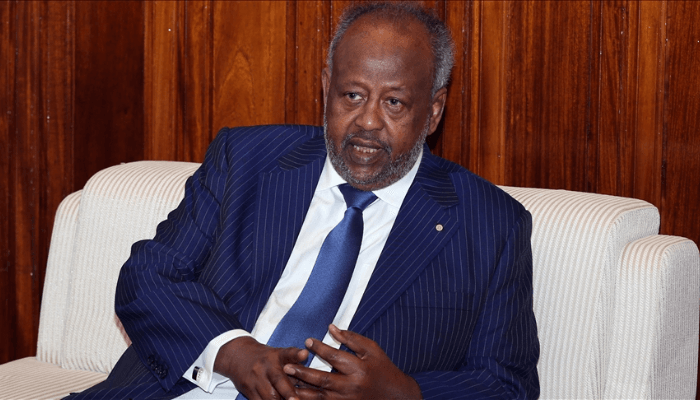
Guelleh Secures Sixth Term in Djibouti’s Controversial Election
Ismail Omar Guelleh, the President of Djibouti, achieved a commanding 97.8 percent of the vote in a tightly controlled election, marking his sixth term in office. This election has once again underscored Guelleh’s dominance over the strategically significant Horn of Africa nation.
Preliminary Results and Voter Engagement
According to preliminary results published by the state news agency, Guelleh, 78, led decisively against his only rival, Mohamed Farah Samatar, who managed to garner just over 2 percent of the vote. Voter turnout exceeded 80 percent, with approximately 256,000 registered voters in a nation housing around 1 million people.
Uncontested Election Landscape
The election unfolded with minimal opposition, as most prominent opposition figures opted to boycott the vote, continuing a stance they adopted back in 2016. Samatar, who is supported by the United Democratic Center, has no parliamentary representation and struggled to gain visibility during the campaign.
Voter Perspectives on the Election
“I don’t even know what the other person looks like,” remarked voter Deka Aden Mohamed, illustrating the stark imbalance in public exposure between the candidates.
Constitutional Changes Paving the Way for Guelleh
Guelleh’s tenure, which began in 1999, positions him among Africa’s longest-serving leaders. His latest campaign is a result of a constitutional amendment that eliminated the 75-year age limit for presidential candidates, allowing him to run again, despite previous indications that he might step aside.
Campaign Messaging and Stability
After casting his vote at the capital’s city hall, Guelleh expressed optimism, stating, “By the grace of God, we have arrived here. We hope this ends in victory.” His campaign predominantly focused on the theme of stability. Djibouti’s location along the Bab al-Mandeb Strait serves as a crucial juncture between the Red Sea and the Gulf of Aden, making it a critical passage to the Suez Canal, one of the world’s busiest shipping routes. The nation also hosts military bases from numerous countries, including the United States and China, amplifying its geopolitical significance.
Critiques of Democratic Erosion
While supporters argue that Guelleh has maintained stability in a volatile region—encompassing Eritrea, Ethiopia, and Somalia—critics highlight a steady decline in democratic competition. The abolition of term limits in 2010 and the presidential term reduction from six to five years, alongside the recent removal of age restrictions, have further solidified Guelleh’s power.
Contrasting Campaign Atmospheres
The disparities during the election campaign were stark. Guelleh’s rallies attracted thousands, with his campaign materials dominating the capital’s landscape. In contrast, Samatar’s events reportedly drew only a modest crowd, according to the AFP news agency. Despite this, opposition candidates campaigned in areas such as Tadjoura and Obock, advocating for change under the slogan “Another Djibouti is possible.” However, the election results predominantly indicate a trajectory of continuity rather than transformation.
Geopolitical Importance and Future Outlook
Given Djibouti’s strategic location, Guelleh is expected to maintain firm control over a country that continues to draw international attention. The implications of his prolonged leadership extend beyond domestic governance, bearing significance on a global scale.
