


Nigeria Experiences Soaring Gasoline Prices Amid Economic Strain
Nigeria has recorded the world’s second-highest increase in gasoline prices since the onset of the Iran conflict, significantly impacting countless households and businesses. The situation is further aggravated by persistent heat waves and widespread power outages, forcing many into a struggle for survival. Adeze Nwosu, a fabric shop owner on Lagos Island, now faces daily darkness in her store, as she can only afford to run her generator during the night for her children’s studies. The recent spike in gasoline prices, which have climbed nearly 40% in just a month, has compelled her to conserve fuel.
The challenges faced by Nwosu resonate with millions of Nigerians who are grappling with the fallout from a crippling crisis. As Africa’s largest oil producer, Nigeria is caught in a vicious cycle of rising fuel costs, an unreliable national power grid, and excessive heat, deepening the ongoing cost-of-living crisis. The economic pressures are palpable, forcing small business owners and industrial manufacturers alike to adjust their spending patterns in response to heightened energy costs driven by geopolitical tensions linked to the U.S.-Israel-Iran situation.
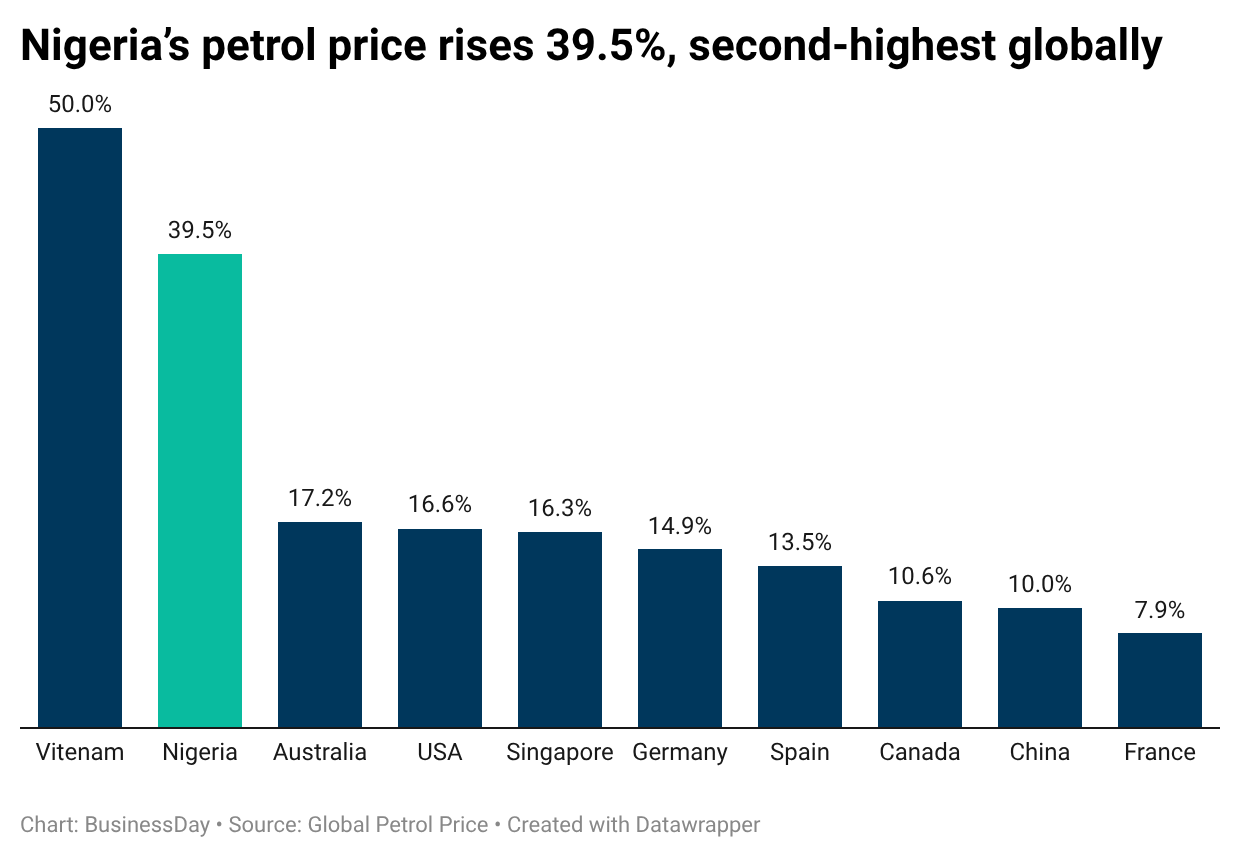
According to data from World Gasoline Prices, Nigeria has seen a staggering 39.5% increase in gasoline prices since the beginning of the Iran war in late February, placing it only behind Vietnam, which experienced a 50% surge. For many families in Nigeria, this rise translates into tangible limitations on fuel usage, generator operation, and spending on essential goods. With the national power grid frequently failing to provide a consistent electricity supply, dependence on gasoline generators becomes a defining aspect of daily life, making fuel prices a critical factor influencing living standards.
Businesses Grapple with Decreased Profitability
The ramifications of soaring fuel prices are evident across all sectors. Cold chain logistics operators, essential for transporting food and pharmaceuticals, report that diesel price increases have nearly doubled their operational costs. Business Day’s analysis reveals a trend where fresh produce is now often transported in smaller batches or not at all due to prohibitive expenses. Poultry farmers in Ibafo have been compelled to sell their stock prematurely at a loss, unable to afford the necessary cooling and feeding costs.
The construction and manufacturing sectors, both heavily reliant on fuel, are experiencing a slowdown in projects. A building materials supplier based in Ogun State remarked that several clients have halted orders due to skyrocketing transportation costs, opting instead to wait for potential price decreases that have yet to materialize. This atmosphere of uncertainty is especially burdensome for the informal economy, where the majority of Nigeria’s workforce is employed. Motorcycle taxi operators are raising fares and scaling back services, while street food vendors are hiking prices and reducing portion sizes.
Charles Ogbeide, owner of a bakery in Lagos, reports that the rising costs of flour alongside increasing fuel prices have forced him to rely on diesel generators. His production has plummeted by nearly 30%, as customers are unable to absorb the resulting price hikes. The ongoing crisis extends beyond individual businesses, casting a shadow over the wider Nigerian economy as households and enterprises navigate these turbulent waters.
Prolonged Heatwaves and Power Supply Challenges Worsen the Situation
Compounding these issues is a relentless heatwave sweeping across West Africa, which has further strained Nigeria’s already fragile power grid. In the first two months of 2026, the national grid suffered two major collapses, causing households and businesses to crank up their reliance on generators, all while fuel prices are at unprecedented levels. Frequent power outages have made it increasingly difficult for residents to stay cool, with many now forced to choose between comfort and affordability while grappling with the high costs of generator fuel.
Energy experts argue that the long-term solution lies in enhancing domestic refining capacities, improving electrical infrastructure, and diversifying energy sources. While reinstating previously abolished fuel subsidies might alleviate some immediate pressures, such measures could potentially jeopardize Nigeria’s hard-earned credibility with international creditors and institutions like the IMF. Discussions around implementing targeted cash transfers to assist the poorest households continue, though existing payment infrastructures pose substantial challenges in ensuring widespread coverage.
