


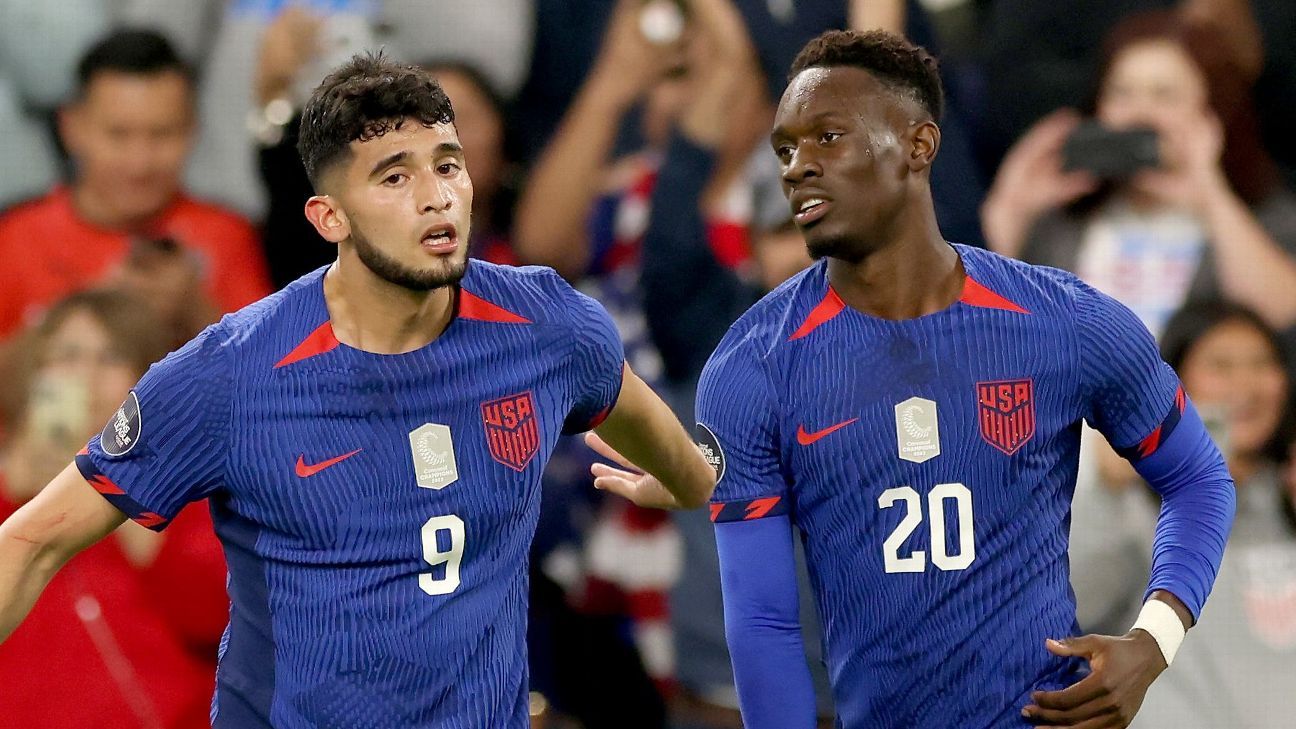
As the FIFA World Cup approaches in under three months, U.S. men’s national team coach Mauricio Pochettino faces critical decisions ahead of the tournament, which the United States will co-host alongside Mexico and Canada.
Pochettino’s first challenge is to narrow down the extensive list of players to 26 who will represent the U.S. in this renowned event. While the United States may not boast the depth of talent seen in World Cup heavyweights like Spain, France, and England, recent years have witnessed a surge in skilled American players making their mark in international leagues.
Among the nation’s strikers, several American talents have demonstrated their prowess in competitive European leagues. Noteworthy players include Folarin Balogun from AS Monaco, Ricardo Pepi of PSV Eindhoven, Haji Wright from Coventry City, and Derby County’s Patrick Agyemang. Their performances have not only solidified their spots within the national team but have also prepared them for the upcoming World Cup. This positive trend is encouraging for both Pochettino and U.S. soccer enthusiasts, especially considering the challenge the country faced in reliably scoring from the No. 9 position since Brian McBride’s retirement in 2006. The question now is: how do these players compare to their predecessors?
To evaluate the current state of American strikers, we will analyze their club performance leading up to the World Cup, utilizing data from TruMedia and StatsPerform. While some players, like Clint Dempsey, may not fit the traditional striker profile, their extensive experience still warrants consideration.
Analyzing the Current Generation of U.S. Strikers
When examining the efficiency of strikers across different World Cup cycles (2014, 2018, 2022, 2026), Pepi stands out with impressive statistics from his time in the Netherlands. He has tallied 10 goals for the 2025-26 season, tying with Agyemang, though trailing behind Wright, who has scored 16 goals. Notably, Pepi leads in goals per 90 minutes and expected non-penalty goals per 90.
Key Performance Metrics for U.S. Strikers
1. Ricardo Pepi (2026) – 0.87
2. Jozy Altidore (2018) – 0.59
3. Dom Dwyer (2018) – 0.57
4. Haji Wright (2026) – 0.56
5. Jesus Ferreira (2022) – 0.56
Pepi’s movement within the penalty area and finishing ability have been praised by McBride, general manager of USL Championship side Brooklyn FC. While his numbers may fluctuate based on playing time, his ability to generate interest from Premier League clubs like Fulham tells a compelling story about his potential.
Jozy Altidore ranks second in goals per 90 and expected goals without penalties. Wright’s versatility also makes him a valuable asset, capable of playing both as a forward and a winger, enhancing his candidacy for the summer squad.
Folarin Balogun, recognized for his all-around skill set, has established himself as a top contender for the starting position. With eight goals in Ligue 1 and 14 in total across competitions, he also leads in big chances created per 90 minutes. His comprehensive scoring and assisting capabilities make him a favorite among selectors.
Derby County’s Agyemang, standing at 6 feet 4 inches, has matched Pepi’s regular season goal tally and has had a notable impact in the 2025-26 season, netting 34 goals. His height provides a unique advantage, contributing a strong aerial threat that could be crucial in tight matches.
Metrics on Goal-Scoring Opportunities
1. Folarin Balogun (2026) – 0.40
2. Clint Dempsey (2018) – 0.40
3. Jesus Ferreira (2022) – 0.31
4. Jozy Altidore (2018) – 0.29
5. Aaron Johansson (2014) – 0.28
Agyemang’s effective hold-up play has also caught McBride’s attention, indicating both offensive and defensive contributions. The statistics suggest that the current 2026 generation includes a collection of American strikers who not only possess higher-than-average growth potential but also have the ability to make a significant impact on the World Cup stage.
Most of these players are still refining their skills; the oldest among them, Wright, is 27, while Agyemang, Balogun, and Pepi are all under 25. This youthfulness, paired with the previous stellar performances of Altidore and Johansson, raises the stakes for emerging strikers seeking to capitalize on their opportunities.
With the U.S. men’s national team missing the 2018 World Cup, the depth of talent available for the upcoming tournament renews hope for establishing a reliable No. 9. According to McBride, the combination of various factors such as injuries and competition have made this position a challenge for the team, but the potential remains strong.
The World Cup is on the horizon, and one of these promising strikers seems poised to seize their moment. Whether it’s Balogun’s balance, Pepi’s finishing, or Agyemang’s aerial prowess, the future of American soccer appears bright.
