


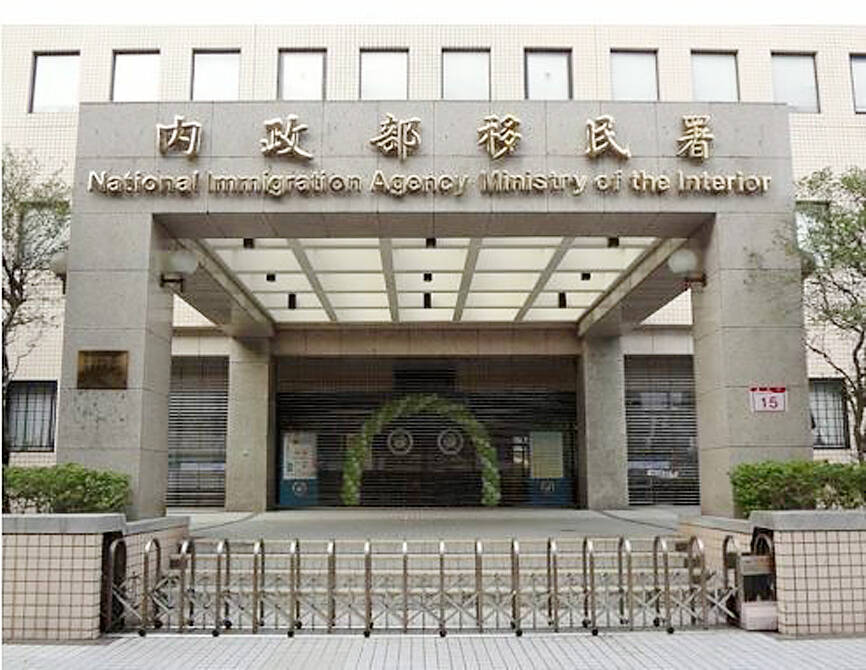
Concerns Over Potential Exploitation of Immigration Loopholes
By Guanren Wang and William Hetherington / Staff reporter, staff writer
Experts have raised alarms regarding the potential for the Chinese government to exploit Taiwan’s immigration policies by introducing large numbers of undocumented immigrants. Immigration officials indicated that the current framework could allow these individuals to operate freely once their initial detention periods conclude, creating significant national security risks.
Officials highlighted that the existing system does not facilitate the re-detention of Chinese nationals who have already violated immigration regulations upon their release. This gap raises serious concerns about national security, especially as many detainees are released with conditions that include reporting obligations and residency restrictions, or they must provide a surety for their exit from the country.
For instance, Ruan Fangyong, claiming to be a former member of the People’s Liberation Army Navy, illegally crossed into Taiwanese waters on June 8 of last year. He navigated a speedboat from Fujian province to a dock on the Tamsui River in New Taipei City. Due to the complexities in cross-Strait relations, Ruan’s detention period lapsed before he could be deported, leading to media controversy following his release.
Similarly, a Chinese influencer known as Yang swam from Xiamen, China, to Kinmen County in May 2023. After being sentenced to three months in prison and subsequently held by immigration authorities for five months, he was released and posted videos on social media claiming to have traveled throughout Taiwan. His case underscores the potential for individuals to effectively evade oversight, further complicating immigration enforcement within Taiwan.
Data from the National Immigration Authority (NIA) shows that in the previous year, over 20,000 foreign nationals were detained, with 19,000 deported before the expiration of their detention. Among the roughly 1,000 individuals released from detention, more than a dozen were Chinese nationals who had entered Taiwan illegally but could not be promptly deported.
The NIA operates dual detention systems—one for foreign nationals governed by the Immigration Act and another for Chinese nationals under laws pertaining to relations between Taiwan and Mainland China. While amendments to the Immigration Control Act three years ago authorized the re-detention of some foreign nationals after their release, Chinese nationals merely receive warnings without further enforcement unless they meet strict criteria.
Experts warn that should the Chinese Communist Party deliberately facilitate large-scale unauthorized entries into Taiwan, these individuals might remain within the country indefinitely if China does not respond to deportation requests. In response to these concerns, the NIA has presented a draft amendment aimed at granting the agency enhanced powers to detain Chinese nationals identified as national security threats, allowing for separate assessments of their detention periods. This legislative proposal is currently under review.
Meanwhile, the Homeland Affairs Council has pointed out that the NIA has several enforcement avenues available under existing laws. There are scenarios where a Chinese national perceived as a national security risk could be re-detained without the need for new legislation.
