


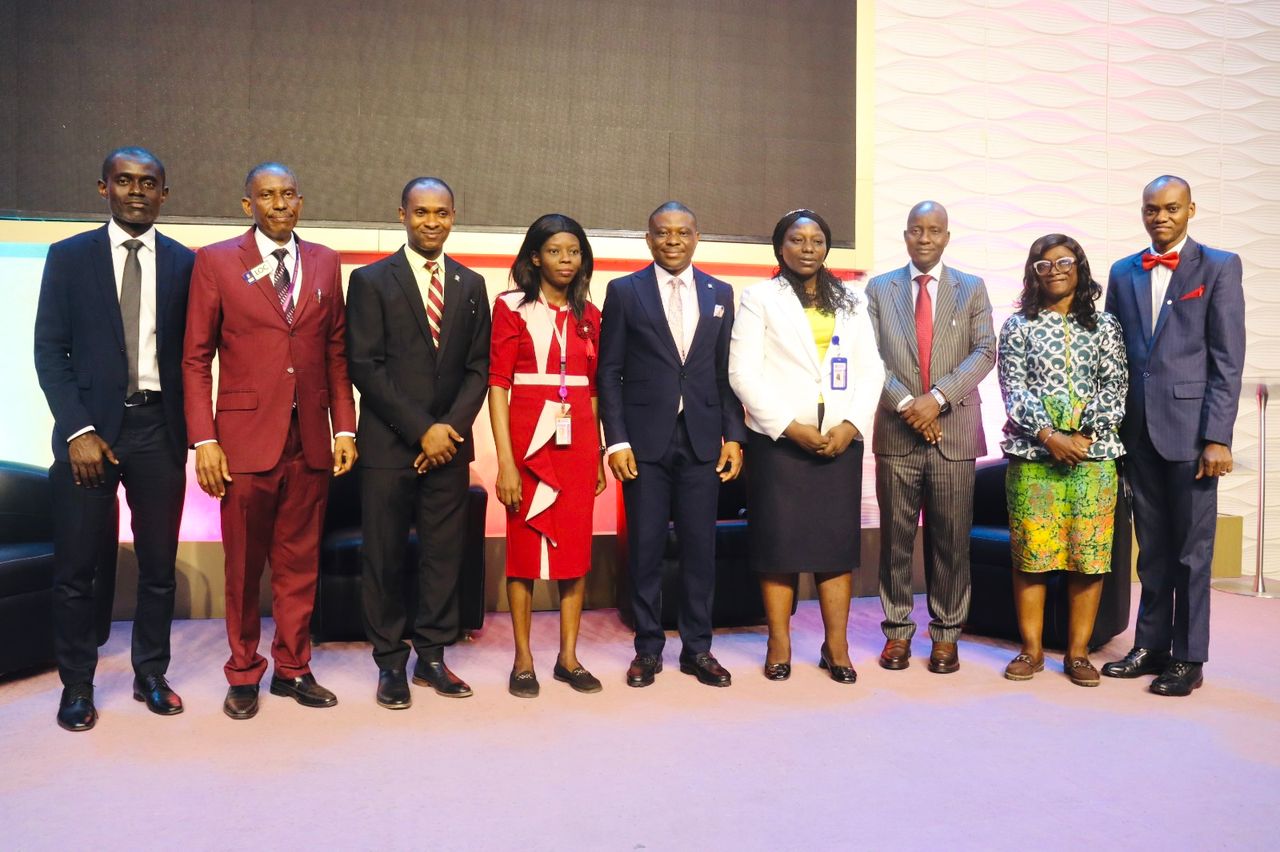
Covenant University Hosts 2026 National Budget Roundtable
As Nigeria grapples with mounting economic challenges, experts are advocating for a comprehensive reassessment of national budgeting that places artificial intelligence and human capital development at the forefront of decision-making processes.
Stakeholders from academia, government, and the private sector convened at Covenant University in Ota, Ogun State, for the 7th National Budget Roundtable (NBR) organized by the Center for Economic Policy and Development Research (CEPDeR). The attendees underscored the urgent need to strategically integrate artificial intelligence (AI) and human capital development into Nigeria’s national budget framework to foster sustainable economic growth.
In her address, CEPDeR Chair Busayo Aderawunmu noted that the center was founded in 2018 by the University’s Faculty of Economic Development with a mission to bridge the gap between research, policy, and practical implementation. She emphasized that the center aims to enhance Nigeria’s national budget framework, making it a pivotal tool for inclusive growth, structural transformation, and sustainable development.
During the 2026 roundtable, themed “National Budgeting, Artificial Intelligence, and Human Capital Development,” Aderawunmu highlighted the ongoing induction of new fellows into the center, which will include approximately 20 members this year, ranging from graduate researchers to principal investigators. This focus illustrates a commitment to integrating fresh ideas and research into national budgeting discussions.
Aderawunmu further pointed out that this year’s event presents an opportunity for Nigeria to rethink the collaboration between technology and fiscal policy in crafting a more skilled, productive, and future-ready populace. As she stated, the rapid advancements in AI, automation, and digital systems are transforming productivity, labor markets, public services, education models, and even national competitiveness.
Timothy Anake, Vice Chancellor of California State University, emphasized that national budgeting transcends being merely an annual financial exercise; it serves as a clear reflection of national priorities and developmental intentions. He argued for the necessity of evolving budgeting systems beyond traditional frameworks to adopt data-driven, transparent, and technology-enabled approaches. According to Anake, AI presents transformative opportunities to enhance fiscal forecasting, improve efficiency in spending, minimize leakage, and bolster accountability, while stressing the importance of responsible AI governance frameworks to ensure ethical deployment and national security.
Uche Uwaleke, Director of the Institute of Capital Markets, elaborated on the importance of national budgeting as a systematic effort to allocate, monitor, and evaluate public resources aimed at achieving socio-economic objectives. He noted Nigeria’s challenging federal structure, which is characterized by fluctuating revenues, substantial recurrent expenditures, and ongoing deficits. Uwaleke described AI as a vital tool that can analyze extensive datasets, predict outcomes, and optimize decision-making processes, highlighting its potential to bolster fairness and predictability in budgeting. He pointed out that investing in education, health, and skills development can significantly impact human capital development and overall productivity.
Uwaleke proposed adopting an AI-driven budgeting system and establishing dedicated AI departments within government ministries, noting the current lack of AI infrastructure in many ministries. He mentioned that in parallel with implementation challenges of the 2023 and 2024 budgets, over-reliance on oil revenues further complicates Nigeria’s fiscal landscape.
During the panel discussions, experts such as Olaytan Adigun, Director of Economic Strategy at the Chartered Bankers of Nigeria, and Olufunke Oladipupo, a professor of AI and data management, shared insights on the impact of human capital development. Funmilayo Ayeni, Country Director of Innovation Against Poverty (IPA) Nigeria, discussed the “Japa” wave—the trend of talent migration—and its effects on the banking sector, stressing the need to harness AI’s capabilities to improve educational outcomes amid resource shortages. Oladipupo reinforced the importance of basing budgets on data-driven insights to effectively assess needs and allocate resources accordingly. She highlighted that AI’s effectiveness hinges on collaborative involvement across all sectors.
