


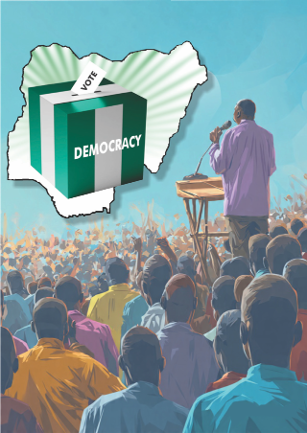
The Importance of Transparency in Candidate Selection
The emergence of candidates for political positions must be both reliable and transparent. In well-functioning democracies, the nomination process by political parties is seen as a vital method of leadership recruitment. Unfortunately, Nigeria’s current democratic landscape is plagued by widespread fraud, monetization, a lack of accountability, and the manipulation of electoral processes by influential figures known as godfathers. As Nigeria’s major political parties prepare for conventions to nominate candidates for the 2027 general election, it is crucial that they adhere to the principles of democracy.
Major Parties Seek to Reform Candidate Selection
Amid significant internal conflicts, which have sometimes escalated to judicial involvement, the four leading political parties—the ruling All Progressives Congress (APC), African Democratic Congress (ADC), Peoples Democratic Party (PDP), and the Labor Party (LP)—are currently organizing or planning national conferences. While we commend these gatherings, it is essential to underscore that, especially at this critical juncture, the methods through which candidates are selected must be free from adverse practices.
INEC’s Call for Credibility in Elections
Joash Ampitan, chairman of the Independent National Electoral Commission (INEC), stated that credible elections begin long before polling day. In a consultative meeting in Abuja last week, he emphasized that transparency in the candidate generation process is fundamental. We echo his sentiment and urge his committee to ensure internal integrity and accountability within its ranks.
Need for Transparent Party Primaries
As free and fair elections form the backbone of democratic governance—serving as a preventive measure against civil unrest—it is imperative that political parties base their candidate selection on transparent public engagement, ensuring equitable conditions for all candidates. If the primaries within parties continue to be marred by flaws, chaos, and turbulence, it is little wonder that their outcomes do not support effective governance.
Calls for Review of Election Law and Primary Selection Processes
Some political parties, under the Inter-Party Advisory Committee (IPAC), are advocating for a reassessment of the recently enacted 2026 Election Law. They seek to revisit the mandate for direct primaries and to reintroduce the option for indirect primaries, stressing that candidate selection should remain under the purview of political entities rather than subject to unwarranted legislative interference. INEC has agreed to a two-week extension on the deadline for submitting membership registers in response to these calls.
Concerns Surrounding Direct Primaries
While the discussion of direct primaries raises legitimate fears about potential issues such as ballot box tampering and violence, these concerns must be addressed thoughtfully. Ensuring that the rules governing candidate nominations are transparent and reliable is essential for fostering trust in political institutions, thus deepening democratic values across the spectrum.
Political Commitment to Upholding Democratic Principles
During the fourth National Electoral Conference of the APC, President Bola Tinubu reaffirmed his administration’s dedication to the rule of law and credible electoral practices. He cautioned party members, reminding them that political failure stems not solely from electoral losses but from a failure to adhere to ideological principles and discipline.
Internal Struggles in Major Opposition Parties
The ADC, currently the principal opposition party, has scheduled a national congress for April 14. Bolaji Abdullahi, the party’s National Communications Director, confirmed that the conference will validate decisions made by the party’s various bodies in recent months. Meanwhile, the PDP continues to grapple with internal contradictions as its National Working Committee, led by Tanim Turaki, engages in negotiations with a faction led by FCT Minister Nyesom Wike, whose role within the party remains contentious. The Labor Party is also experiencing divisions, with factions led by Julius Habre and an interim committee under Nenadi Ousmane vying for influence.
Addressing Flaws in the Primary System
The previously utilized indirect primary system has been criticized for permitting candidates to be selected through intermediaries, leading to corruption and manipulation. Allegations of financial incentives skewing results in indirect primaries prompted widespread calls for reform. The recent amendments aligning the primary process with democratic voting standards signify progress. Nevertheless, it is crucial for the political class to minimize the need for judicial intervention in candidate selection and to diminish the transactional nature of these processes, as responsible governance within a party reflects its overall commitment to democracy.
