


Six Civil Servants Receive Automatic Promotion Following Kidnapping Incident
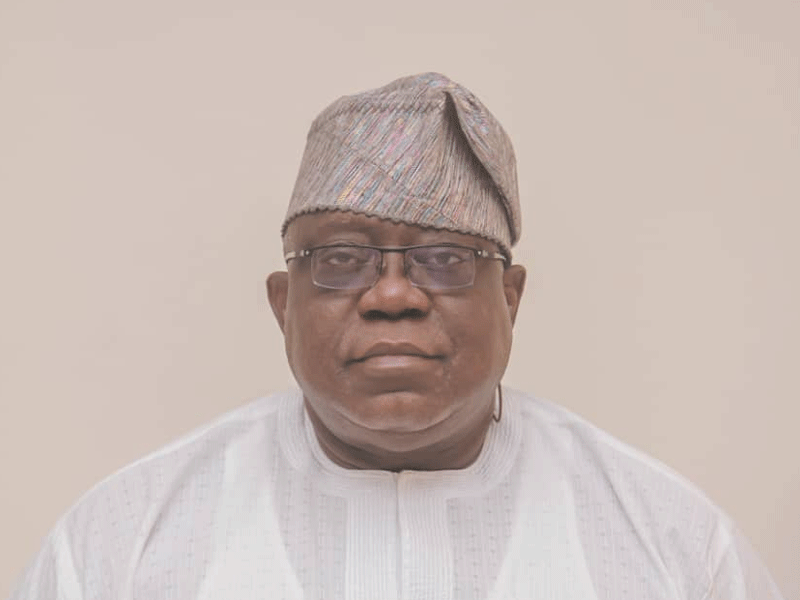
In a move reflecting compassion and support, six civil servants from the Ministry of Defense, who were abducted while traveling from Lagos to Abuja for their 2025 promotion examination, have been granted automatic promotion. This announcement was made by Professor Tunji Olaopa, Chairman of the Federal Civil Service Commission (FCSC), during a statement in Abuja.
Olaopa expressed his condolences to the victims on behalf of the Head of Civil Service of the Federation (HCSF), commissioners, and all Nigerian civil servants, describing the kidnapping as a deeply unfortunate event. He stated, “The committee grants automatic promotion to the next grade as education personnel in the Ministry of Defense to six candidates on compassionate grounds, having due regard to the trauma experienced by the victims of kidnapping.”
Emphasis on Technological Solutions to Enhance Safety
Addressing concerns regarding the safety of civil servants, Olaopa highlighted the FCSC’s commitment to leveraging technology to create a more decentralized promotion examination process. This initiative aims to allow candidates to complete their assessments remotely, reducing the need for travel to Abuja.
His remarks came during the “Award Dinner” hosted by the Director General of the Federal Civil Service, Mrs. Esther Wolson Jack, in honor of newly promoted Directors within the Federal Services. Olaopa commended Wolson Jack for her initiatives and achievements, expressing a desire for more time to expand these reform efforts beyond 2026.
Transitioning to Computer-Based Testing
Olaopa shared insights on the FCSC’s recent transition from paper-based to computer-based testing (CBT). He noted that the new board members are pioneering this shift, which has shown nearly 100% success in evaluations. He praised the Directors for their professionalism and disciplined approach during the 2025 Directorate level promotion training, affirming that CBT enhances the credibility and transparency of the evaluation process.
The introduction of CBT has also contributed to cost reductions and time efficiencies. “CBT demonstrated reliability, accuracy, and expedited result processing, establishing a solid foundation for future promotion activities,” Olaopa stated.
Addressing Systemic Weaknesses in the Civil Service
Reflecting on broader challenges facing the commission, Olaopa acknowledged persistent systemic weaknesses that require renewed focus. He expressed concern that, while striving to modernize administrative systems, the introduction of advanced technologies must not compromise foundational structures that are already fragile. He emphasized the need for a robust framework to integrate modern practices without undermining established norms.
Moreover, he highlighted the critical importance of enhancing professional intelligence within the civil service, particularly in shaping the quality of promotional examination questions. Ensuring that assessments align with the competencies expected of public managers is vital, especially considering the declining foundational skills among civil servants, including adherence to civil service rules, financial regulations, and effective communication.
The Path Forward for Workforce Planning
Olaopa identified that years of hiring restrictions have exacerbated workforce challenges, diminishing the effectiveness of formal employment channels within government. He pointed out the complications arising from weak workforce planning, including issues with talent management and succession planning. These complications contribute to officer morale issues and stagnation during promotion exercises.
Looking forward, he expressed hope that the ongoing human resources audits conducted by the Office of the Head of Civil Service of the Federation (OHCSF) would provide solutions to these critical structural weaknesses. Olaopa envisions a comprehensive performance management system to enhance evaluation processes and overhauling the currently unreliable Annual Performance Evaluation Report (APER) method.
Encouragement for New Leadership
In closing, Olaopa congratulated the newly appointed board members, urging them to embrace their roles as agents of change. He encouraged a spirit of patriotic dedication, reminiscent of his own journey 31 years ago during his active service, emphasizing the importance of deferred gratification in driving meaningful reforms within the civil service.
