


Federal Appeals Court Allows Construction of White House Ballroom to Continue
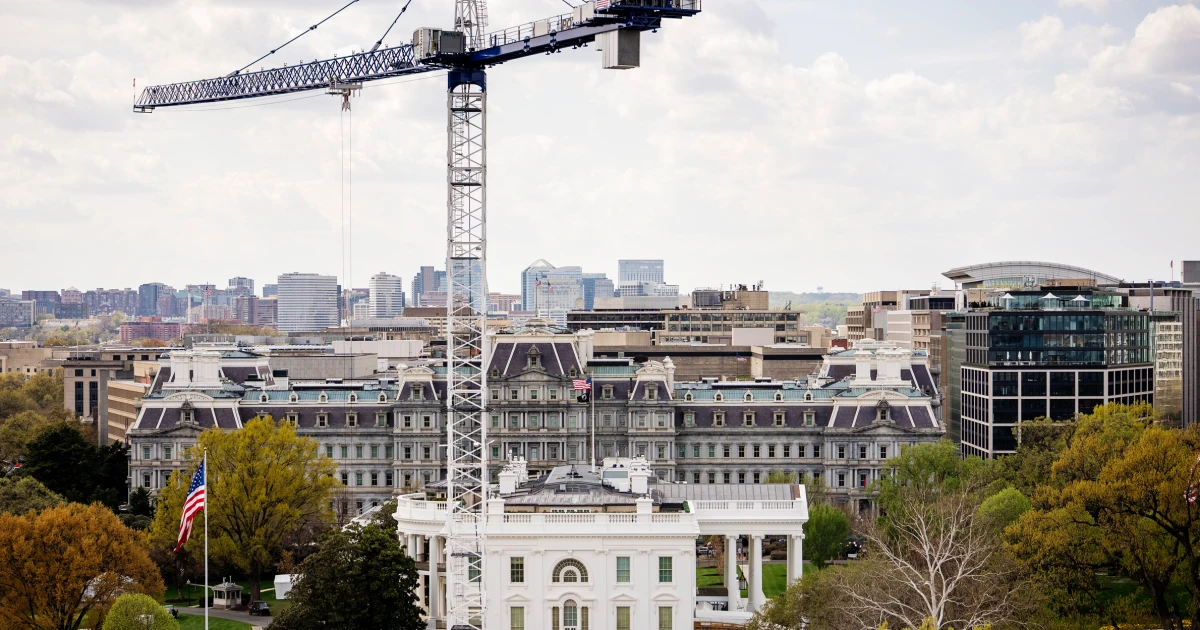
A federal appeals court has temporarily permitted construction work on President Donald Trump’s ballroom at the White House, challenging a lower court ruling that stated the project exceeded the president’s authority. This decision allows work to proceed until April 17, while the court further examines the case.
The ruling, made by a three-judge panel of the U.S. Circuit Court in Washington, D.C., arrives after a previous judge ordered construction to halt by April 14. The administration’s lawyers argued that the ballroom and associated temporary measures are essential for ensuring the “safety and security” of the president and his family.
However, the appellate court noted that it was unable to adequately assess “based on this hurried record” how these security issues might influence the case’s outcome. Consequently, the matter has been remanded to the lower court for clarification.
U.S. District Judge Richard Leon had previously sided with preservation groups that opposed plans to demolish and reconstruct the White House’s east wing, asserting that the president required congressional approval for the $400 million initiative. In a legal filing, the administration emphasized that moving forward with the project is crucial for national security, claiming that the ballroom is a significant component in safeguarding the White House and those within it.
The administration contends that the construction does not involve taxpayer funding. They highlighted that no public resources were used to finance the proposed banquet hall, which has spurred debates regarding the scope of presidential authority and federal oversight.
Proponents of the preservation effort, including the National Trust for Historic Preservation, argued that any construction on federal land necessitates congressional approval. They also suggested that the administration’s security concerns were overstated, asserting that preventing the construction was not a national security emergency.
Construction of the ballroom is expected to span at least two years, with the Trust indicating that the absence of a large ballroom does not hinder the president’s ability to live and host events at the White House. In response to the appeals court’s decision, National Trust President Carol Quillen expressed gratitude for the swift action and reiterated the importance of preserving the historical integrity of the White House.
Leon, who was appointed by President George W. Bush, issued a preliminary injunction, stating that no legal precedent supports the president’s claims to outright authority in this matter. He emphasized the president’s role as a caretaker of the White House for future generations rather than a property owner.
The ballroom has been a personal project for Trump during his administration, intended to accommodate foreign leaders and large events without reliance on temporary structures. The Department of Justice highlighted the various advanced security features and construction materials already procured to underscore the project’s importance to national safety.
