


By Sergio Olmos and Wendy Fry, CalMatters
A federal court hearing in Fresno this week showcased the Trump administration’s defense of a controversial policy that diminishes wages for immigrant workers. During the proceedings, an administration lawyer admitted there are insufficient American workers to fill these agricultural jobs.
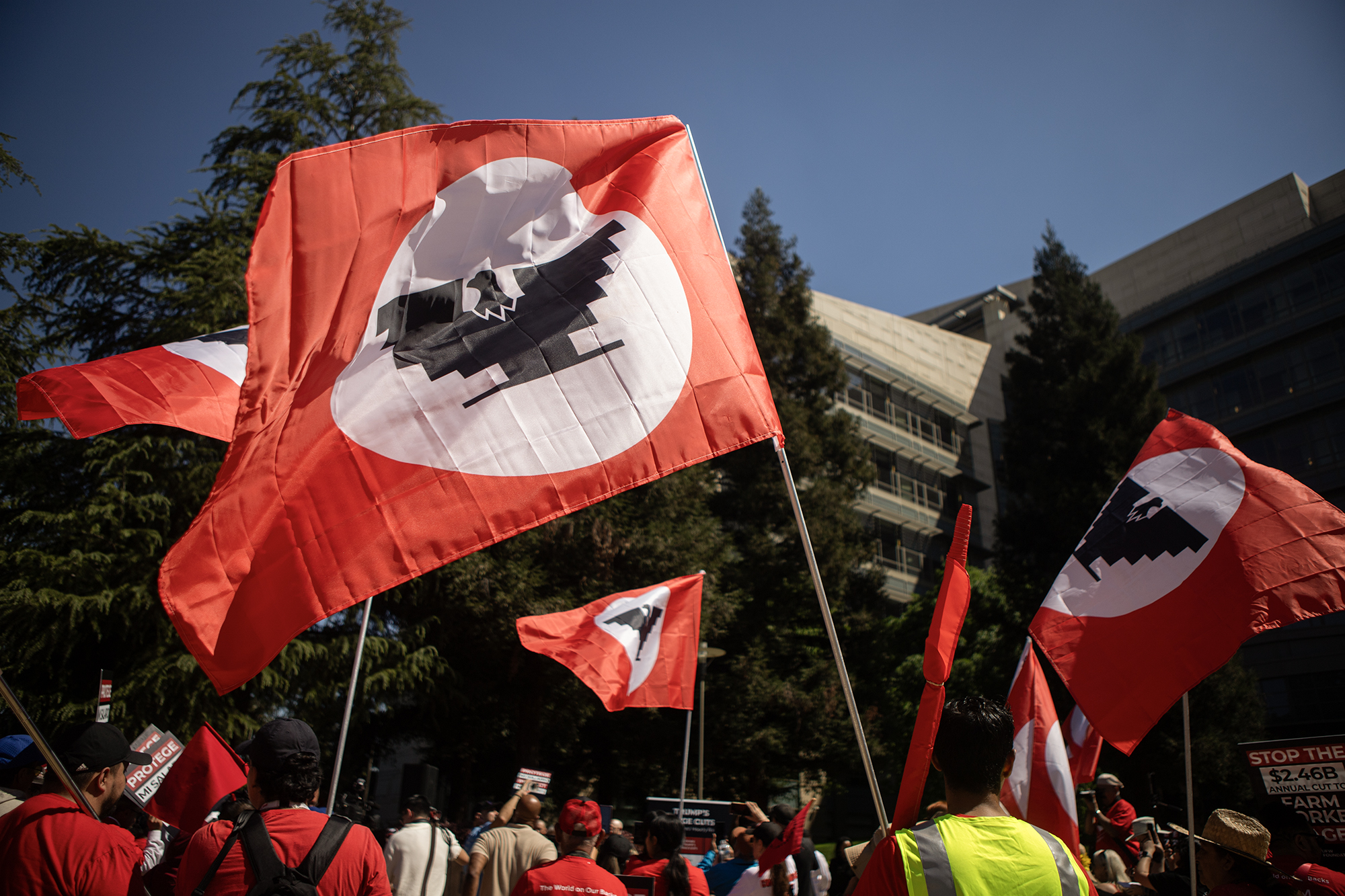
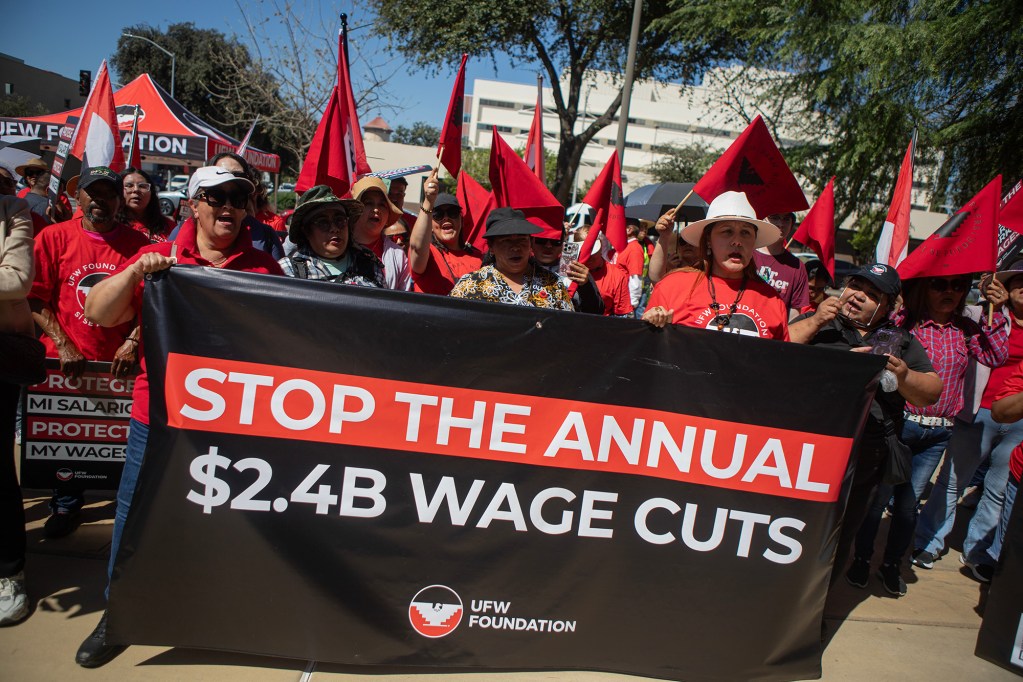
The lawsuit, initiated by the United Farm Workers in the U.S. District Court for Eastern California, contests new federal wage regulations tied to the H-2A agricultural visa program. This program permits U.S. employers to hire temporary workers from abroad, predominantly from Mexico, to address agricultural labor shortages unable to be filled by domestic workers.
The crux of the matter revolves around whether the revised rules will suppress wages in a manner that negatively impacts the broader workforce, ultimately affecting American workers. Federal mandates stipulate that H-2A wages must meet or exceed domestic wage levels.
This case emphasizes the agricultural sector’s reliance on migrant labor amid an era when the Trump administration adopts military-style measures to curb immigration while simultaneously attempting to lower the hiring costs for temporary foreign labor.
Producers contend that labor expenses have seen a significant rise over the years, with some warning that without intervention, farms could face closure. Unions representing farm workers argue through court documents that these wage reductions could extend to all farm laborers, including U.S. citizens.
U.S. District Judge Kirk Sherif indicated his intent to release a written ruling soon, determining whether these policies will remain in effect. The interim rule would categorize H-2A workers into two tiers, classifying 92% as “unskilled” and establishing their wages at the 17th percentile of national averages. This implies that nearly all farm workers would earn wages similar to the lowest-earning 17% of Americans.
According to the Economic Policy Institute, many farm workers could see their minimum wage plummet to $13.70 an hour, a stark contrast to last year’s average of $17.43. In California, the minimum wage currently stands at $16.90.
Alexandra McTague Schulte, representing the U.S. Department of Labor, insisted that the government bears a responsibility to protect American workers from the potential adverse effects of H-2A wages. However, the Department did not concede that lowering wages for foreign workers would adversely impact American laborers. Schulte maintained that the proposed wage cuts for H-2A visa holders would not influence the market dynamics, as farmers already struggle to find adequate labor, suggesting that demand outstrips supply.
During the proceedings, Judge Sherif appeared skeptical, questioning whether setting wages significantly lower than those for comparable American laborers wouldn’t ultimately harm the labor market. In response to his inquiry, Schulte deflected with humor, downplaying the mathematical implications.
Outside the courtroom, UFW President Teresa Romero highlighted the vulnerabilities of immigrant workers in negotiating better wages, citing language barriers and intimidation leading to job insecurity. She emphasized that many workers feel compelled to accept less favorable conditions due to their undocumented status.
The United States has long wrestled with balancing workforce needs and immigration policies, a challenge rooted in practices dating back to the 1950s and the controversial Eisenhower-era initiatives. The H-2A program itself is a descendant of the Bracero Program, which addressed labor shortages by facilitating the entry of millions of temporary workers during World War II.
Currently, temporary workers in California are engaged in a variety of roles, from cattle ranching to selling refreshments. Records show a dramatic increase in certified H-2A workers entering California in 2022, followed by a 7% decline in 2023, with approximately 88,000 entering the state that year.
Contradictory Signals from the Administration Regarding Farm Labor
The Trump administration has publicly pledged that a large-scale deportation initiative will yield better job prospects and wages for American workers. Yet, behind the scenes, officials have been conversing with farmers to address labor shortages exacerbated by immigration enforcement efforts. This dual approach has led to increased acknowledgment that crackdowns are further intensifying workforce shortfalls.
In October, the Labor Department revealed in a regulatory filing that immigration actions were complicating the search for agricultural labor. The filing noted, “The near-total cessation of illegal immigration, coupled with the lack of available legal labor, has significantly disrupted production costs and threatens domestic food production and price stability for U.S. consumers.” It also indicated a lack of interest among American workers in agricultural positions, citing skill mismatches.
This stance seems at odds with the assertions of U.S. Secretary of Agriculture Brooke Rollins, who has expressed confidence in achieving a fully American agricultural labor force in the future. Trump’s sweeping immigration policy changes, initiated almost immediately upon taking office, have created confusion in legal proceedings and uncertainty for temporary workers at the border.
In 2025, a group of H-2A workers legally entering through the San Ysidro Port to participate in harvest activities found themselves ensnared in immigration court proceedings, mistakenly categorized for deportation. This left many fearing grave consequences, including potential imprisonment in their countries of origin.
In June, President Trump announced plans to develop a “temporary pass” for immigrants unauthorized to work but engaged in essential roles in agriculture and hospitality.
