


Florida’s Immigration Enforcement Funding Surprises Analysts
Florida’s commitment to the Trump administration’s immigration policies is evident through its financial support for local law enforcement. Recently, the state allocated additional funds to streamline the process of arresting and detaining individuals. However, the distribution of this funding has raised eyebrows, as the list of agencies receiving support and those left out doesn’t match expectations.
Funding Applications Highlight Unexpected Trends
An analysis by the Orlando Sentinel reveals that many of Florida’s largest law enforcement agencies, including the Orange County Sheriff’s Office, have yet to apply for a share of the $250 million grant program approved by state legislators last year. Instead, the majority of applications are coming from smaller agencies that are primarily seeking to purchase essential equipment, such as handcuffs and body cameras, as well as advanced technology that was previously unaffordable.
Minimal Oversight Raises Concerns
The Sentinel’s review indicates that the requests from these agencies face little public scrutiny by review boards. Although the inner workings of the application process remain unclear, it is evident that Florida is directing substantial tax dollars toward what has often been considered a federal responsibility regarding immigration enforcement.
Funding Allocations Disproportionately Favor Smaller Agencies
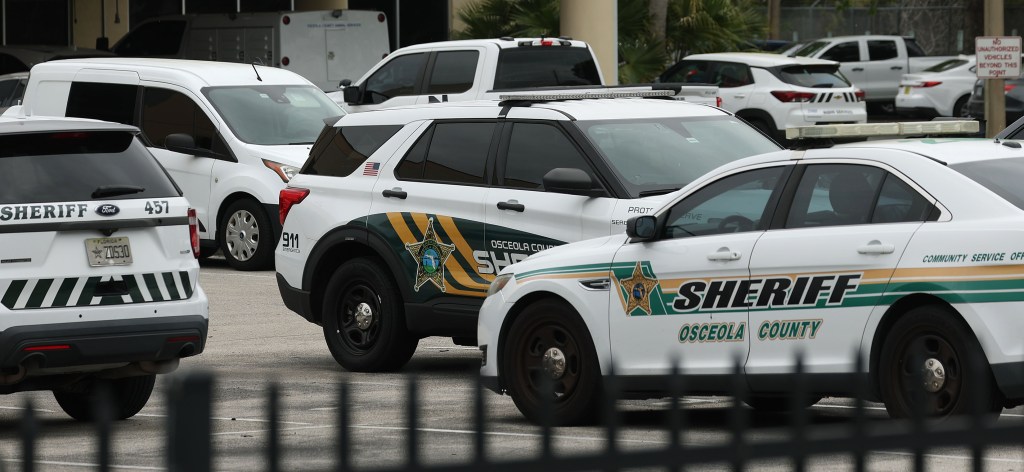
So far, the largest allocations have gone to sheriff’s departments in Lee County ($9.9 million), Polk County ($9.7 million), Osceola County ($9.4 million), and Escambia County ($5.9 million). Notably, none of these departments rank among the state’s largest by staffing and each serves counties that are not in the top tier by population. Interestingly, the Jackson County Sheriff’s Department, which serves a community of fewer than 50,000, has also received significant funding, totaling $3.8 million.
Majority of Funds Directed Towards Equipment Purchases
With over 75% of the approved funding earmarked for equipment, law enforcement agencies are also utilizing these grants for officer bonuses and to cover transportation costs associated with detainees for U.S. Immigration and Customs Enforcement (ICE). Among the leading spenders, the Osceola County Sheriff’s Office has notably allocated funds for essential gear, citing the heightened risks associated with immigration detentions.
Expanded Funding Processes and Applications
The Osceola Sheriff’s Office stands out in Central Florida for receiving the most funding requests approved thus far. However, smaller departments such as those in Fruitland Park and Altamonte Springs also obtained grants for equipment aimed at enhancing their immigration enforcement capabilities. In total, the state’s Immigration Committee has approved over $60 million in funding applications since September, representing approximately 24% of the total available grants.
Diverse Funding Needs Across Agencies
Additional funding requests demonstrate varied needs among law enforcement bodies. For instance, while the Osceola County Sheriff’s Office has made strides in technology with purchases like new radios and body armor, Seminole County requested substantial reimbursement to cover transportation costs related to detainees. These varying levels of funding highlight a broader challenge for local agencies as they seek to adapt to an environment increasingly focused on immigration enforcement.
