


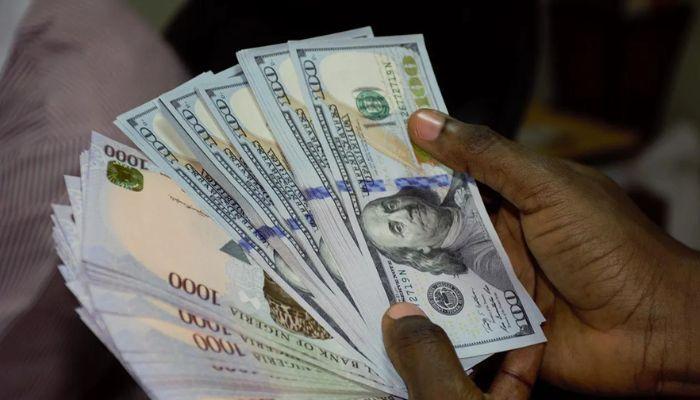
Naira Sees Slight Depreciation as Foreign Exchange Reserves Continue to Decline
The naira experienced a minor depreciation against the dollar in the official foreign exchange market on Monday, marking the 10th consecutive day of decreased foreign exchange reserves in Nigeria.
Official Exchange Rate Updates
Data from the Central Bank of Nigeria (CBN) revealed that the naira fell by N3 to reach N1,383.58 per dollar, compared to N1,380.58 per dollar on Friday. This translates to a loss of 0.22% on the Nigerian Foreign Exchange Market (NFEM).
Parallel Market Trends
In the parallel market, the naira remained stable at 1,415 naira to the dollar, maintaining the same rate observed since last week. The gap between the official and parallel exchange rates slightly narrowed from 35 cents on Friday to 32 cents on Monday.
Declining Foreign Exchange Reserves
CBN data shows that Nigeria’s foreign exchange reserves continued their downward trajectory, standing at $49.44 billion as of March 27, 2026. This marks a decline of $580 million (1.16%) from the $50.02 billion recorded on March 11.
Challenges in External Payments
Recent statistics indicate that Nigeria’s external payments are facing constraints. Total international remittances in January 2026 were reported at $405.3 million, down 16% from the previous month and a sharp 39% from the same period last year. This decline is largely attributed to a significant drop in remittance outflows, which fell to $107.5 million from $200.3 million in December. Moreover, letter of credit debt decreased from $75.5 million in December to $41.5 million.
Rise in External Debt Repayments
Contrarily, external debt repayments surged by 25% month-on-month, amounting to $256.8 million. This uptick reflects the usual seasonal pattern of sovereign debt repayment observed at the start of the year.
Analysts’ Perspectives on Future Trends
Analysts at Quest Merchant Bank suggest that reduced foreign currency payments might slow the depletion rate of reserves. However, they note that diminished demand for dollars could alleviate some pressure on the naira. Recent growth in foreign exchange reserves has been supported by portfolio inflows, enhanced export earnings, and strong diaspora remittances, alongside lower import activities that have led to decreased foreign exchange demand.
CBN’s New Policy Measures
On the policy side, the CBN has implemented new measures aimed at bolstering transparency and liquidity within the foreign exchange market. Starting May 1, 2026, all international money transfer operators will be required to open naira payment accounts, which is expected to boost formal capital inflows and enhance regulatory oversight.
Changes for International Oil Companies
Furthermore, the CBN has lifted foreign exchange restrictions on international oil companies, allowing them full repatriation of export proceeds and access to 100% of exchange proceeds through authorized dealer banks. This represents a significant shift from previous policies that imposed partial restrictions and delayed access to funds.
Future Implications for the Currency
Analysts argue that while these policy changes may increase currency liquidity pressure in the short term amidst global risk aversion, they are likely to enhance investor confidence and attract new capital to Nigeria’s oil and gas sector in the long run.
