


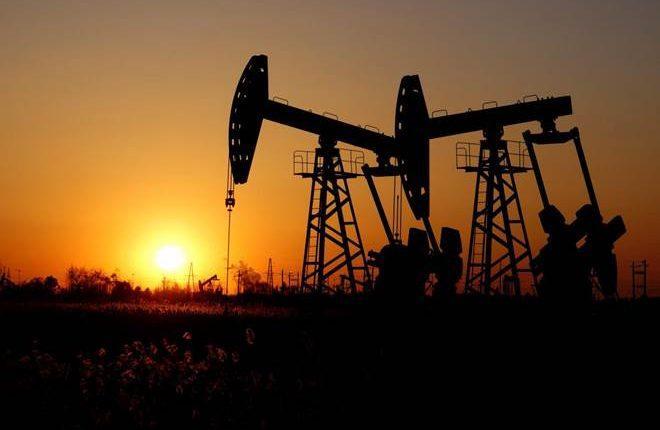
…Brent hits five-year low
Nigeria’s ambitious spending plans for 2026 are under increasing pressure as a looming global oil glut threatens to push prices well below the government’s fiscal estimates, risking a deepening fiscal crisis for Africa’s most populous nation.
On Wednesday, international benchmark Brent crude fell 2.86% to $58.83 per barrel by 4pm WAT. The US West Texas Intermediate (WTI) price fell by 2.88% to $55.04 per barrel, and crude oil prices fell below the $60 mark for the first time since February 2021.
Investment banks and energy analysts now predict oil prices will average below $60 per barrel next year, calling into question Nigeria’s 2026 budget framework that relies on the oil price benchmark of $64.85 per barrel.
Oil revenues account for the bulk of the government’s foreign exchange earnings, and the widening gap between fiscal projections and market reality could force Abuja to make tough choices between cutting spending or increasing borrowing.
On December 3, Nigeria’s Cabinet approved a medium-term fiscal plan that projects spending in 2026 at 54.5 trillion naira ($37.71 billion) and total federal revenue at N34.33 trillion.
According to Budget and Planning Minister Atiku Bagudu, this will leave a deficit of N20.1 trillion, equivalent to 3.61% of GDP. Debt servicing costs alone are estimated at N15.9 trillion, consuming nearly half of the expected revenue.
Related article: Oil prices fall to $58 per barrel, lowest level since February 2021
As global oil markets move towards oversupply, the fiscal calculus is likely to become increasingly precarious. The U.S. Energy Information Administration predicts the average price of Brent crude will remain at just $55 per barrel in 2026, nearly $10 below Nigeria’s budget assumptions.
Goldman Sachs is predicting an even steeper decline, with West Texas Intermediate crude expected to average $53 a barrel amid what it calls a large market surplus.
“Overall, we expect the oversupply caused by slowing demand growth and rising supply to continue through 2026, which is firmly driving down oil prices,” said Mutas Altaghribi, senior energy economist at ABN Amro Bank, who expects an annual average Brent price of $55 per barrel.
The convergence of bearish forecasts from major financial institutions signals challenges ahead for Nigeria, which has struggled for years to increase oil production to meet budget targets.
The 2026 framework envisages production of 1.84 million barrels per day, well short of the target of 2.06 million barrels and reflects persistent challenges in the Niger Delta, including theft, lack of investment and aging infrastructure.
Saad Rahim, chief economist at Trafigura, one of the world’s biggest commodity traders, warned that a “super surplus” scenario could materialize as new supply floods the market.
Massive drilling projects are coming online in Brazil and Guyana, which, combined with President Donald Trump’s push to expand U.S. production, threaten to overwhelm already weak demand growth.
Also read: Oil price below $60 will flag Nigeria and other oil-dependent economies
A slowdown in China’s oil demand poses new headwinds. The world’s largest oil importer is expected to see more gradual growth in purchases in 2026 as its large electric vehicle fleet reduces gasoline consumption. China’s stockpiles have provided some support for prices this year, but analysts doubt whether China can maintain that pace.
“China needs to continue buying at this pace to prevent excess supply from emerging even earlier,” Rahim said in remarks accompanying Trafigura’s annual results, where profits were at their lowest in five years.
For Nigeria, the impact goes beyond the immediate revenue shortfall. The country’s debt burden has ballooned in recent years, and failure to meet fiscal targets could complicate efforts to maintain investor confidence while managing inflation that has undermined living standards for millions of citizens.
Non-recurring debt expenditure is expected to be N15.27 trillion, highlighting the financial burden on government finances.
Some analysts believe that geopolitical risks that could lead to tight supply could be eased. Tightening sanctions on Russia’s oil sector and rising tensions between the US and Venezuela could remove barrels from the market and put upward pressure on prices. EIA cited these factors, along with China’s stockpiles, and raised its 2026 Brent outlook by $3 per barrel from last month.
However, even when accounting for geopolitical premiums, the consensus points firmly to the downside. Ole Varbier, a commodity analyst at SEB Bank, said the path of least resistance remained skewed to the downside, with rising supply and widening surpluses outweighing geopolitical concerns.
ABN AMRO’s detailed forecast sees Brent crude averaging $58 per barrel in the first quarter of 2026, gradually falling to $52 as the oversupply worsens, and eventually reaching $50 by year-end. Ben Lecoq, head of oil trading at Trafigura, predicted in October that prices could fall to the $50s between Christmas and New Years.
A monthly Reuters survey of analysts and economists reinforced the bearish outlook, with Brent crude now expected to average $62.23 a barrel in 2026, down from an October forecast of $63.15. Even that relatively optimistic forecast will weigh on Nigeria’s budget assumptions.
Macquarie Group analysts have suggested OPEC+ may need to implement production cuts in the second half of 2026 to stabilize the market. While such moves could provide some price support, the cartel faces internal pressure as OPEC+’s past discipline has proven inconsistent, with member countries prioritizing profits over market share.
Goldman Sachs researchers believe 2026 will be the “last major wave of oil supply that the market has to overcome,” with a rebalancing scheduled for 2027. This timeline offers little reassurance to Nigerian policymakers grappling with pressing fiscal pressures.
The budget framework assumes an exchange rate of 1,512 naira to the dollar and a GDP growth rate of 4.68%. If oil revenues fail to meet expectations, both targets could prove to be optimistic, causing a weaker currency and slower economic expansion, further straining government finances.
Nigeria has long struggled with fiscal discipline, often failing to build up reserves when oil prices soared. The current challenges come as the country attempts reforms aimed at diversifying revenues beyond oil while managing complex politics such as eliminating subsidies and liberalizing exchange rates.
As global fundamentals point to continued pressure on oil prices, Nigeria’s ability to survive 2026 without significant fiscal adjustment appears increasingly questionable. The question facing policymakers is no longer whether there will be a revenue shortfall, but to what extent that shortfall will be and what kinds of difficult choices it will force us to make.

