


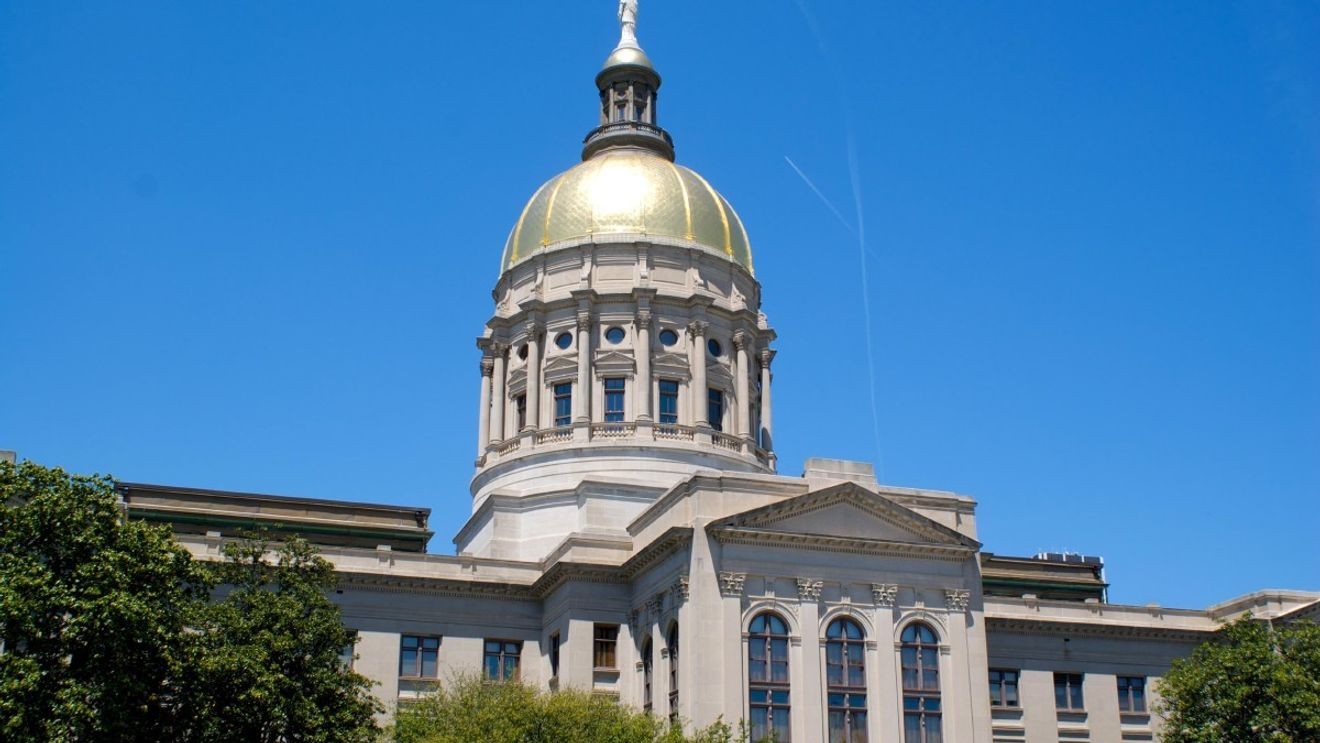
Georgia Legislature Approves Bill on Property Claims Against Local Governments
ATLANTA (AP) — Georgia’s state legislature passed a significant bill early Friday, enabling property owners to file claims against local governments. This legislation arises from concerns that local authorities are failing to enforce policies that restrict outdoor sleeping and ensure law enforcement cooperates with federal immigration agencies.
Implications of Governor’s Signature on the Bill
If signed into law by Republican Governor Brian Kemp, the bill would empower individuals to sue local governments for damages related to alleged declines in property value and expenses stemming from inaction against public camping, loitering, and panhandling, as well as restrictions on sanctuary policies that limit collaboration with federal immigration enforcement.
Accountability and Enforcement
Rep. Houston Gaines, R-Athens, who sponsored the bill and is a candidate for the U.S. House, emphasized the need for accountability. He argued that business owners and homeowners should not bear financial burdens simply because their communities fail to address encampments adequately. “It is not kind to allow illegal encampments, theft, and disorder to flourish,” Gaines asserted, advocating for greater law enforcement action.
Critics Highlight Humanitarian Concerns
In contrast, Democrats and advocates for the homeless argue that the bill would compel law enforcement to arrest individuals without housing, potentially resulting in frivolous lawsuits funded by taxpayers. They contend that instead of pushing unhoused individuals into prisons, investment in housing and supportive resources would be more effective. Jesse Rabinowitz, campaign communications director at the National Homeless Law Center, criticized the legislation as “ineffective and cruel,” suggesting that it exploits immigrant communities for political gain.
Amendments and Legislative Debate
Lawmakers introduced a last-minute amendment allowing the public to petition courts to ensure local compliance with laws prohibiting sanctuary policies. Georgia Sen. Josh McLaughlin (D) condemned the bill as “bad nuclear policy,” highlighting the complexities of proving property devaluation due to homelessness or immigration issues.
Concerns About Lawsuits and Governance
McLaughlin voiced concerns about the potential for a surge of lawsuits, where aggrieved homeowners could make exaggerated claims, creating a spectacle in the courts. Critics also pointed out that local governments cannot be held accountable for individuals sleeping outdoors on any given night. Justin Kernon, working for the City of Atlanta, noted the city’s progress in addressing homelessness but reiterated that simple crackdowns aren’t a viable solution. “A lot needs to be done, but this is not the right approach,” he insisted.
Context of the Current Legislation
Georgia’s 2024 law mandates local law enforcement to collaborate with federal authorities to identify and detain undocumented immigrants, under threat of losing state funding. This legislative move has garnered attention as lawmakers explore additional proposals targeting the same population. Republican state Sen. Clint Dixon argued that prioritizing ideology over law enforcement undermines public safety, reinforcing the necessity for compliance with existing laws.
Previous Efforts and Continued Advocacy
Last year, Republicans attempted to pass a similar bill shortly after a tragic incident involving a man who died in a tent during a homeless encampment cleanup in Atlanta. Although the bill did not pass at that time, its provisions related to homelessness are derived from recommendations by the Cicero Institute, a Texas-based conservative think tank advocating for camping bans nationwide.
