


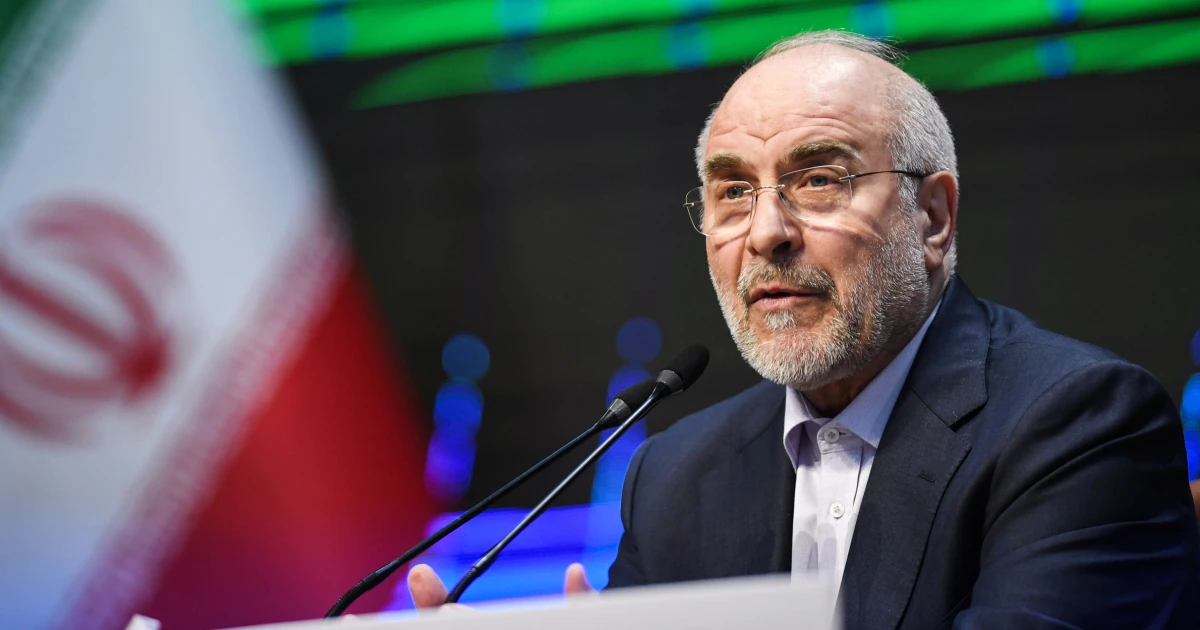
Early Life and Military Career of Ghalibaf
Instead of pursuing higher education or working in his father’s store, Ghalibaf chose to enlist in the Revolutionary Guards at 18, participating in the Iran-Iraq War. In his autobiography, he reflects on how he matured amidst the brutal eight-year conflict, which claimed hundreds of thousands of lives, as he rapidly ascended through the ranks to become a commander. Tragically, his younger brother, Hassan, was also a casualty of the war.
Rise to Prominence
Following the war, Brigadier General Ghalibaf was appointed commander of the Revolutionary Guards Air Force by then-Iranian Supreme Leader Ayatollah Khamenei. His autobiography reveals that in 1997, he traveled to France to obtain his pilot qualification for Airbus planes, leading to a career with Iran Air, the national airline.
Leadership Roles and Controversies
In addition to his military career, Ghalibaf served as the chief of police, where he managed protests and enforced government crackdowns on dissent. His 12-year tenure as mayor of Tehran was marked by allegations of corruption, accusations he has consistently denied.
Political Ambitions
Ghalibaf has made four presidential bids during his political career. Notably, in 2005, he adopted a white suit at certain campaign events, a strategy aimed at presenting a more moderate image compared to the traditionally austere fashions of other politicians. This bold choice attracted both attention and criticism.
Influence on Khamenei’s Succession
Ali Akbar Mousavi Khoeini, a former Iranian parliamentarian who collaborated with Ghalibaf, states that Ghalibaf harbors ambitions to lead the executive branch and has long lobbied for Mojtaba Khamenei to ascend to the position of supreme leader. Following the recent appointment of Khamenei, after his father’s assassination on February 28, these ambitions are expected to become more pronounced. Since his accession, Khamenei has not issued any public statements.
Power Dynamics within the Revolutionary Guards
A 2008 U.S. diplomatic cable released by WikiLeaks highlights Mojtaba Khamenei’s strong ties with Ghalibaf, referring to him as a critical supporter in electoral campaigns. This connection has solidified Ghalibaf’s role as a trusted advisor and financier within the political landscape.
Emergence of Hardline Figures
The power structure in Iran is evolving, as witnessed by the recent deaths and replacements of key figures. Ali Larijani, once viewed as the de facto leader, was killed in a military strike, making way for the hardliner Mohammad Bagher Zolgadol, a former Revolutionary Guards commander, to take his place. Ahmad Vahidi has also stepped into the spotlight as the new head of the Revolutionary Guards, despite being sanctioned by the U.S. Treasury in 2022 for his involvement in a violent crackdown on protests.
Implications for Iran’s Governance
Mojtaba Khamenei’s absence, combined with the presence of Ghalibaf, Zolgadol, and Vahidi in pivotal positions, indicates a shift towards hardline governance within the Revolutionary Guards, which effectively control the country. Mousavi Khoeini underscores that leadership is consolidating among the most radical factions, suggesting that Vahidi will take precedence over Ghalibaf in decision-making.
Future Trajectory of Iranian Leadership
Authorities including current and former Revolutionary Guards commanders are postured to remain staunchly against any agreements with the United States aimed at ending ongoing conflicts. Analysts warn of a potential escalation in domestic repression as hardline leaders solidify their grips. Alfone from the Arab Gulf States Institute describes these developments as indicative of the Islamic Republic’s gradual transformation into a military dictatorship, despite the continued presence of Mojtaba Khamenei as a ceremonial leader.
