


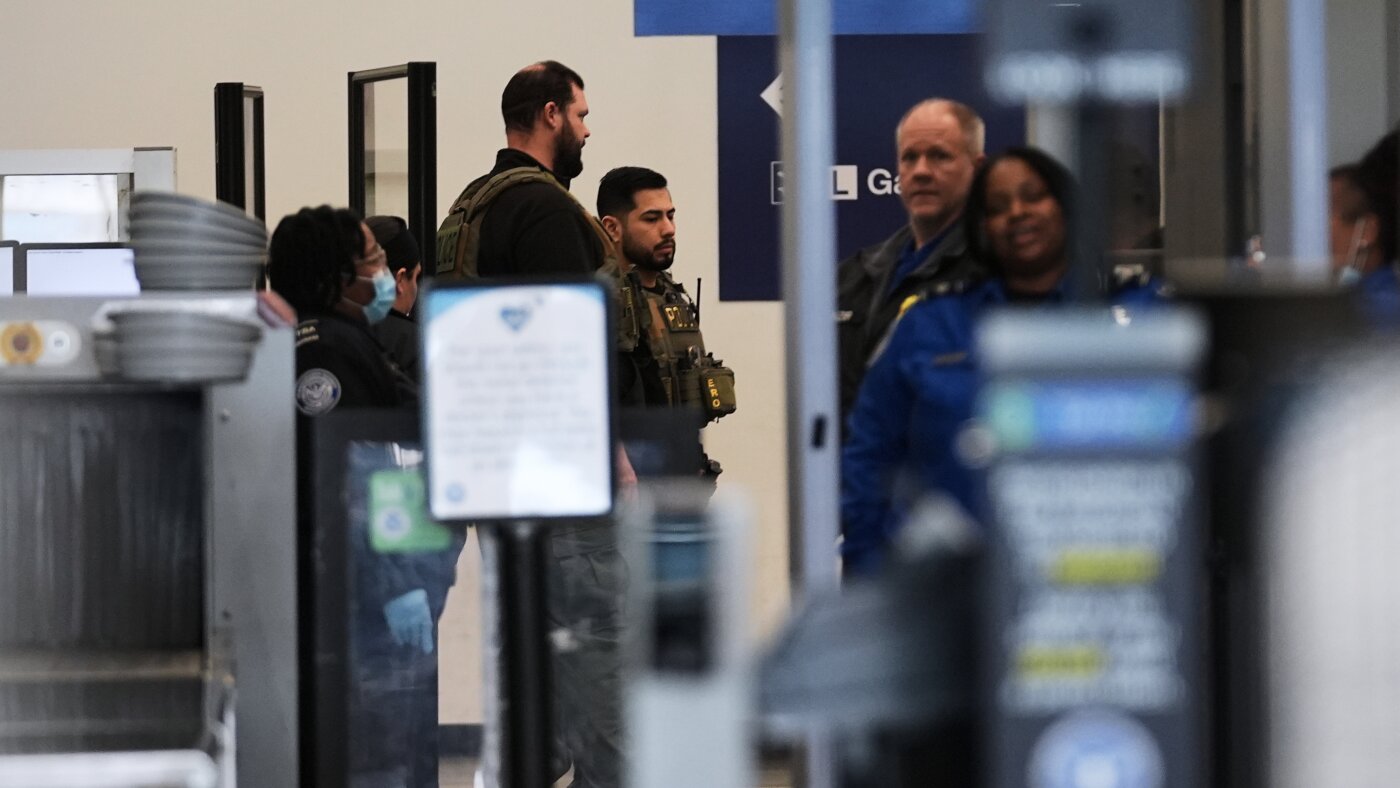
ICE Agents Deployed to Major Airports Amid Government Shutdown
In response to staffing shortages caused by the partial government shutdown, President Trump has dispatched Immigration and Customs Enforcement (ICE) agents to key airports across the United States. This move aims to bolster security operations at airport facilities where Transportation Security Administration (TSA) personnel have been working without pay since mid-February.
The expiration of funding for the Department of Homeland Security has led to significant attrition within the TSA, with over 480 employees retiring and thousands more leaving their positions. In contrast, ICE remains unaffected by the shutdown, as Congress approved $75 billion in separate funding for the agency last summer, allowing it to continue its operations.
Understanding the Authority of ICE Agents
Since its establishment within the Department of Homeland Security in 2003, ICE has been granted extensive powers to interrogate, search, and arrest individuals suspected of being undocumented immigrants, all without needing a warrant. Teresa Brown, a nonresident fellow in immigration law and policy at Cornell Law School, notes that the agency’s early focus was primarily on undocumented immigrants who had already encountered law enforcement.
According to Brown, ICE agents wield significant authority. They can issue arrest warrants, question individuals based on “reasonable suspicion” of illegal presence in the U.S., and detain, prosecute, and deport those found to be undocumented. Furthermore, as federal law enforcement officers, they can act on existing criminal laws if they witness a crime.
Expansion of ICE Powers Under the Trump Administration
Notable changes affecting ICE’s operational framework occurred during the Trump administration, according to Hiroshi Motomura, co-director of the UCLA Center on Immigration Law and Policy. He pointed out that the agency began implementing more aggressive and controversial tactics, including the deployment of masked officers to arrest individuals suspected of illegal residency. Additionally, ICE’s distinct and generous funding has insulated it from the adverse effects of the government shutdown.
Motomura cautions that these developments may lead to ICE evolving into a de facto police force, traditionally tasked with border enforcement, yet operating extensively across U.S. soil with unrestricted funding and aggressive policing regulations. Such a transformation poses significant implications for civil liberties and community relations.
ICE’s Role at Airports: Security or Surveillance?
When questioned about ICE’s operational boundaries, Acting Assistant Secretary Lauren Biss emphasized that the agency’s role is to assist the TSA with entry-exit security, logistics, crowd control, and identity verification. The overarching goal, as outlined by Biss, is to support TSA’s specialized screening function, ensuring more efficient passenger movement through security checkpoints.
However, the leadership of former Border Patrol official Tom Homan in this initiative raises concerns regarding whether ICE’s presence serves merely to enhance TSA operations or continues to reflect the administration’s broader strategy to curb illegal immigration. Paul Ong, director of UCLA’s Center for Neighborhood Knowledge, noted that while ICE aims to facilitate airport security functions, its core mission remains intact: identifying potential undocumented immigrants.
In remarks made to Fox News, Homan reiterated ICE’s commitment to targeting criminal activities, asserting, “We will arrest criminals who pass through this airport,” indicating that the agency will actively investigate human trafficking, sex trafficking, and money smuggling while at airport facilities. As travelers continue to experience historically long TSA wait times, the deployment of ICE may introduce further complexities into the nation’s airport security ecosystem.
