


Reorganization of Immigration Policy Under the Trump Administration
The Trump administration made significant alterations to a lesser-known division of the Justice Department, aiming to reshape immigration policy while intensifying mass detentions and deportations. This shift was primarily marked by the transformation of the Board of Immigration Appeals (BIA), an administrative court that now plays a crucial role in determining the legal rights of immigrants.
Recent analysis by NPR underscores how the BIA has issued a series of precedents that considerably restrict due process and the remedial options available to immigrants facing deportation. By reducing the board’s size from 28 judges to a mere 15—a shift accomplished within weeks of Trump’s inauguration—the administration filled the vacancies with judges it had appointed. In a striking trend, these judges sided with Homeland Security attorneys in an overwhelming 97% of published cases last year, representing a sharp increase of at least 30 percentage points compared to the average of the previous 16 years.
The board’s alterations have made it increasingly difficult for immigration courts to grant bonds to detainees in lieu of detention. Moreover, recent decisions facilitate deportations to countries that are not the immigrants’ place of origin, and proposed regulations may hinder individuals from effectively challenging immigration decisions. Notably, the BIA published a record 70 precedent-setting decisions last year, further tightening the landscape for immigrants.
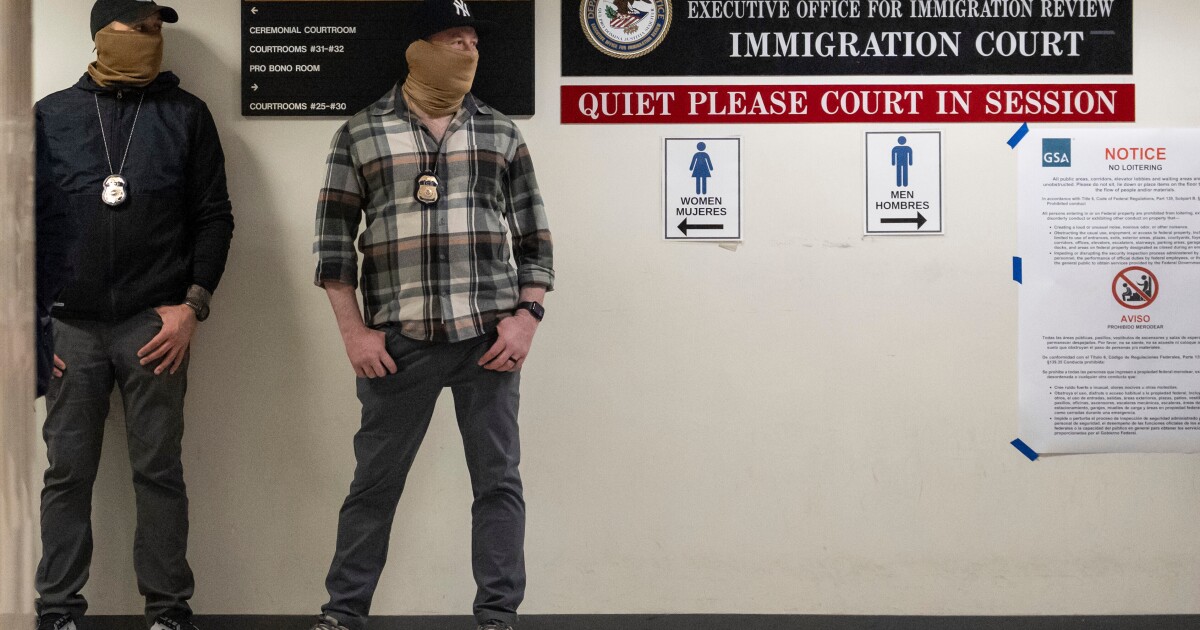
As Andrea Saenz, a former BIA judge, pointed out, the board’s influence over immigration law extends far beyond its diminished membership. “The ability to set immigration precedents has a nationwide impact,” she remarked. The immigration court system functions under the purview of the Department of Justice’s Executive Office for Immigration Review (EOIR), which lacks the independence characteristic of other judicial bodies. In these courts, attorneys from Immigration and Customs Enforcement (ICE) argue for deportations, while immigrants make their case to remain in the United States.
The primary purpose of the BIA is to identify and rectify errors made by immigration judges, a gesture that serves the interests of justice. After an immigration judge renders a decision, both sides—the immigrant and ICE—are afforded the right to appeal. Victoria Nielson of the National Immigration Project highlighted the complexities of immigration law, asserting that even well-intentioned judges can issue incorrect rulings due to the fluid nature of the legal landscape.
Former BIA judge Katherine Clark, who joined the board in 2023, highlighted the importance of the board in uncovering overlooked details that could sway a deportation order. Nonetheless, Clark expressed concern that the administration’s actions have severely undermined a vital mechanism for detecting judicial mistakes in an overloaded immigration court system.
Impact of Composition Changes on Immigration Courts
The reshaping of the BIA reflects broader shifts within federal immigration courts, where last year alone saw the departure of at least 100 judges. This trend is evident as the number of immigration judges dwindled to a quarter of its 2025 levels, casting doubts on the courts’ ability to handle the growing backlog of cases. The Department of Justice has issued directives urging judges to expedite asylum and bail denial processes, further amplifying the challenges faced by immigrants seeking justice.
The BIA’s recent decisions have set the stage for how immigration judges nationwide interpret and apply immigration laws. Data shows that in 2025, the board published a total of 70 decisions, matching the Biden administration’s output and reflecting the highest annual total since 2009. Although the BIA reviews tens of thousands of cases annually, most remain unpublished, leading to limited visibility on the precedents that govern the immigration landscape.
Transformations in Immigration Policy and Processes
Under this new paradigm, the BIA’s public decisions have far-reaching consequences, influencing judicial interpretations and public understanding of immigration law. NPR’s examination of BIA rulings across four presidential administrations highlights an alarming trend: in 2025, the government secured favorable outcomes in 97% of public cases—a record high. This lack of balance is evident, as historical data indicates that immigrants only outperformed the administration in the BIA in 2015.
This trajectory continued into 2026, where, according to preliminary data, DHS achieved victories in all but one of the cases reviewed by the BIA. Among these was an instance involving a person who withdrew their asylum claim; however, they were already protected from deportation through alternative legal mechanisms.
Consequences for Due Process and Immigrants’ Rights
The recent changes instituted by the administration have had a significant impact on countless individuals. Homero López, a former BIA judge, emphasized that the current framework seems to prioritize policy implementation over judicial oversight. “The board’s role has transformed into one of policy-making rather than adjudicating individual cases,” he explained.
Attorneys like Nielson have observed the tangible effects of these rulings, noting that recent decisions have created substantial barriers for individuals attempting to secure bail while their immigration cases proceed. The BIA has limited the scope of eligibility for bond releases, significantly affecting many immigrants’ ability to remain free during lengthy court proceedings.
Proposed Regulations to Limit Appeal Processes
The administration has further introduced proposed regulations aimed at expediting immigration processes. One such measure reduces the period for immigrants to appeal to the BIA from 30 days to just 10, thereby increasing the likelihood that appeals will be dismissed before reaching a hearing. This initiative is intended to address the severe backlog—over 200,000 cases—stalled within the EOIR.
Nonetheless, five immigrant rights organizations have successfully challenged these regulations in court, asserting that the new rules undermine due process by complicating access to legal resources. A federal judge recently ruled against the administration, labeling the new measures illegal and unenforceable. Judge Randolph Moss criticized the government’s reasoning, asserting that the proposed changes would only serve to worsen the plight of immigrants.
The ongoing litigation reflects broader concerns among legal advocates regarding the fairness and integrity of the immigration system. As Nielson pointed out, if individuals abide by legal requirements only to find those very rules altered or nullified, it raises profound questions about the fairness of the process.
This article draws on an AI analysis of 634 cases decided by the Board of Immigration Appeals from January 1, 2009, to March 18, 2026. The findings have been independently verified by legal professionals to ensure the accuracy and validity of the results.
