


Understanding VAR Controversies in Major Football Tournaments
The use of Video Assistant Referees (VAR) consistently sparks debate in high-profile leagues like the Premier League, Champions League, and FA Cup. This season, we aim to analyze significant incidents and clarify the decision-making process from both VAR protocol and competitive rules perspectives.
Expert Insights from a Veteran Referee
Andy Davies, a former Select Group referee, offers valuable insights into this complex issue. With over 12 seasons on the elite list, he has officiated matches in both the Premier League and Championship. Now working within the VAR framework, Davies sheds light on the processes, rationale, and protocols that inform decisions on Premier League matchdays.
Match Overview: Barcelona vs. Atlético Madrid
In an intense Champions League quarter-final clash, Barcelona faced Atlético Madrid. The match, officiated by Istvan Kovac with VAR assistance from Christian Dingert, took a pivotal turn in the first half. The two teams entered the 44th minute scoreless, but the game shifted dramatically when Atlético took the lead just before halftime.
Key Incident: Kvarsi’s Red Card
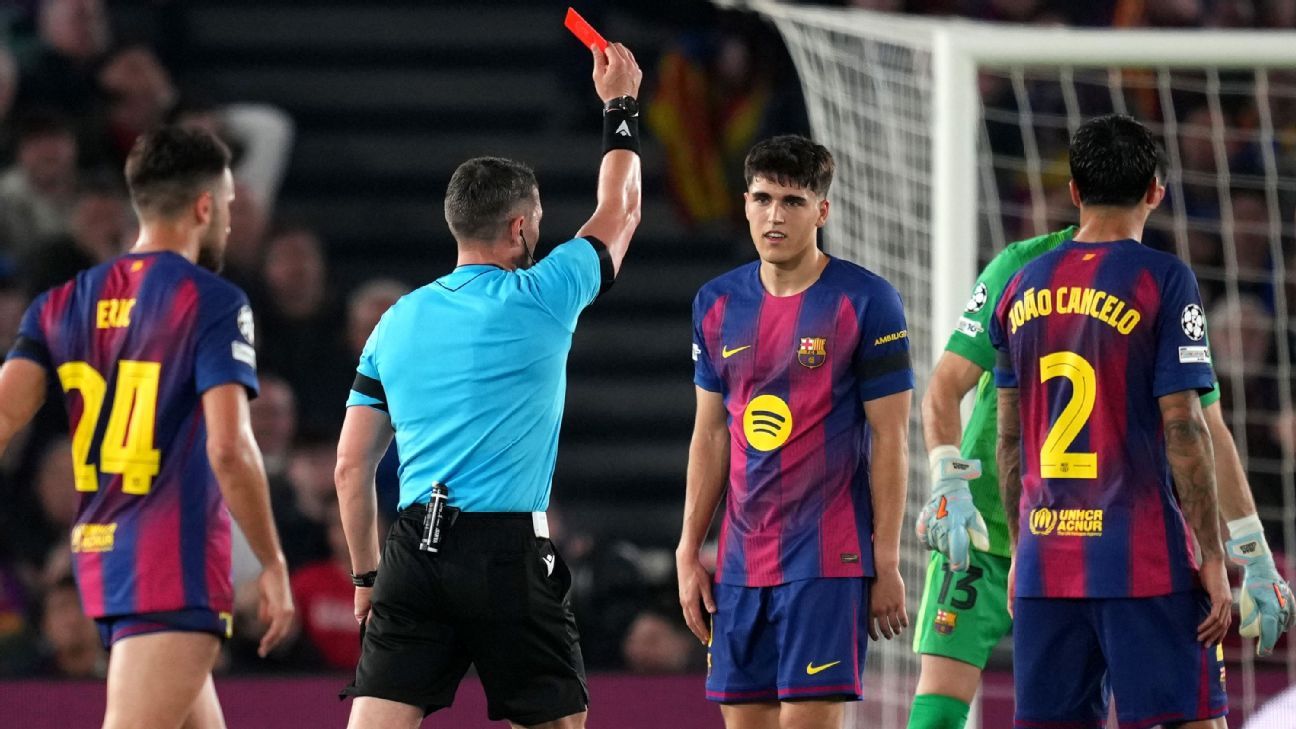
The match saw a critical incident unfold just before the break. After a foul committed by Barcelona’s Pau Kvarsi on Atlético’s Giuliano Simeone, the on-field referee initially issued a yellow card. However, the dynamics changed dramatically when Julián Álvarez scored from the subsequent free kick, giving Atlético Madrid a crucial 1-0 lead.
VAR’s Intervention
At this point, VAR recommended a review of Kvarsi’s yellow card for a potential red. The core consideration was whether Kvarsi had denied a clear goal-scoring opportunity with his foul. Upon review, VAR deemed that if Kvarsi had not stumbled, the ball would have progressed into a favorable position for Atlético’s attackers, warranting a stronger disciplinary action.
Referee’s Decision-Making Process
The initial ruling by the referee considered that the ball was technically behind Simeone when the trip occurred, leading him to issue a yellow rather than a red card. However, following a thorough review and a reassessment of the situation from various angles, the referee changed his decision, ultimately sending Kvarsi off the pitch.
Evaluating the Outcome
From an analytical perspective, this intervention by VAR was justified. The initial yellow card appeared insufficient given the circumstances of the foul. While had the ball been airborne at the time, determining the breach would have been more challenging, the evidence available strongly supported the red card decision. Therefore, the VAR’s influence led to a correct and necessary outcome that enhanced the integrity of officiating in the match.
