


Chesapeake Multicultural Resource Center Aids Diverse Clientele
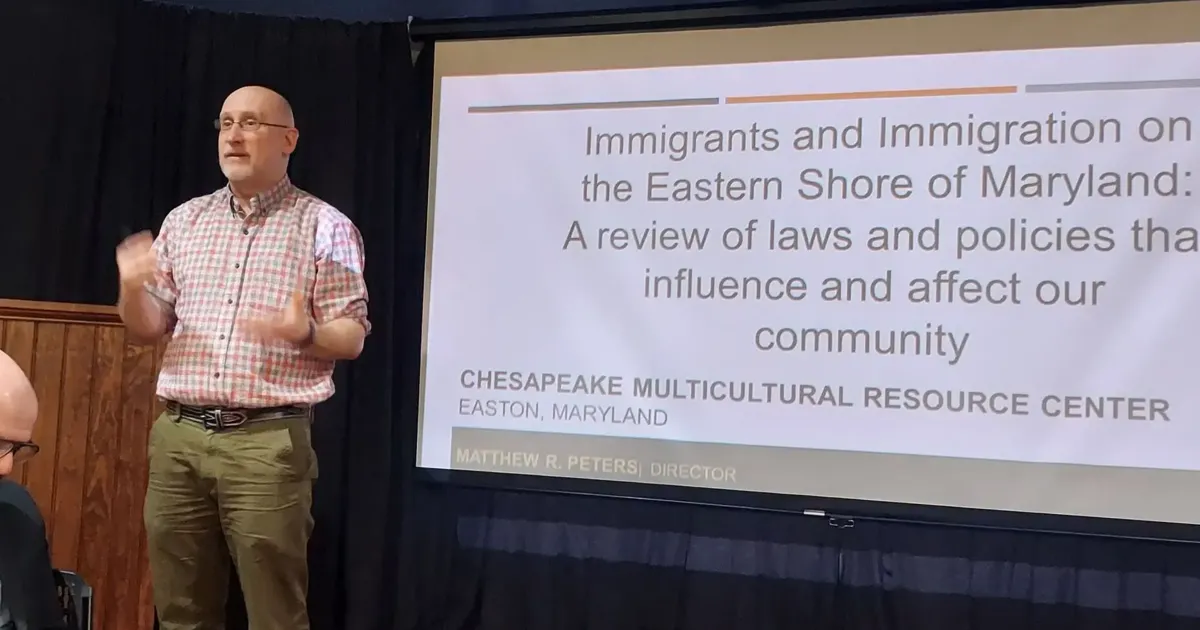
CHESTERTOWN — Since its inception in 2013, the Chesapeake Multicultural Resource Center has provided support to over 9,500 clients from 70 different nationalities, according to Executive Director Matthew Peters. Speaking at a Kent County Democratic Club meeting at Sumner Hall, he emphasized the center’s role in assisting individuals in Talbot and surrounding counties.
Immigration Legal Services Certified by the DOJ
In 2016, the center received certification from the U.S. Department of Justice to deliver immigration legal services, a milestone that has significantly expanded its capabilities. Peters addressed club members on March 19, discussing the complex history of immigration policy and its profound implications for families on Maryland’s Eastern Shore.
Federal Policies Shape Local Communities
Peters, who has experience working along the coast for the past 13 years, noted that federal immigration authorities continue to apprehend individuals monthly. His insights shed light on the local immigrant population, shaped by past and present federal policies that contribute to legal hurdles, economic challenges, and family disruptions.
Historic Legislative Framework
Highlighting the Immigration and Nationality Act of 1965, Peters explained how this landmark legislation eliminated nationality quotas favoring European immigrants. Since then, the demographic landscape has shifted to include a majority of immigrants from Central America and Asia. He also mentioned the Immigration Reform and Control Act of 1986, often dubbed the “amnesty” law, which granted legal status to millions of undocumented immigrants under specific provisions.
Temporary Protective Programs and Their Evolution
Peters elaborated on key initiatives such as the Refugee Act of 1980, which was later amended in 1996 through the Illegal Immigration Reform and Immigrant Responsibility Act. He pointed to Temporary Protected Status (TPS) as a crucial safety net for individuals from countries facing crises, such as Haiti after the 2010 earthquake, as well as recent TPS designations for nationals from Venezuela and Afghanistan.
Barriers to Work Authorization Persist
Despite the establishment of programs like the Deferred Action for Childhood Arrivals (DACA) in 2012, which allows certain immigrants to stay temporarily, Peters noted that these do not provide legal residency. Recent changes under the Biden administration, including humanitarian parole for various nationalities, still fall short of conferring permanent legal status, complicating the path to security for many families.
Challenges Faced by Immigrant Families
Peters discussed the latest regulatory hurdles impacting work permit applications, which have become costlier and more cumbersome. With recent bond costs tripling, many families face tough decisions about posting bail for detained loved ones. As immigration enforcement operations continue to intensify, the urgency for supportive services at the Chesapeake Multicultural Resource Center has never been greater.
Growing Community Needs Drive Service Expansion
The center caters to a growing and diverse clientele, with Guatemalan clients making up 38% of those served, followed by Haitians (28%), Mexicans (11%), and others from Honduras and Venezuela. As immigrant families increasingly enroll in local schools, the demand for free legal assistance and guidance through the immigration system is paramount. The Chesapeake Multicultural Resource Center remains committed to helping these individuals integrate into their communities.
