


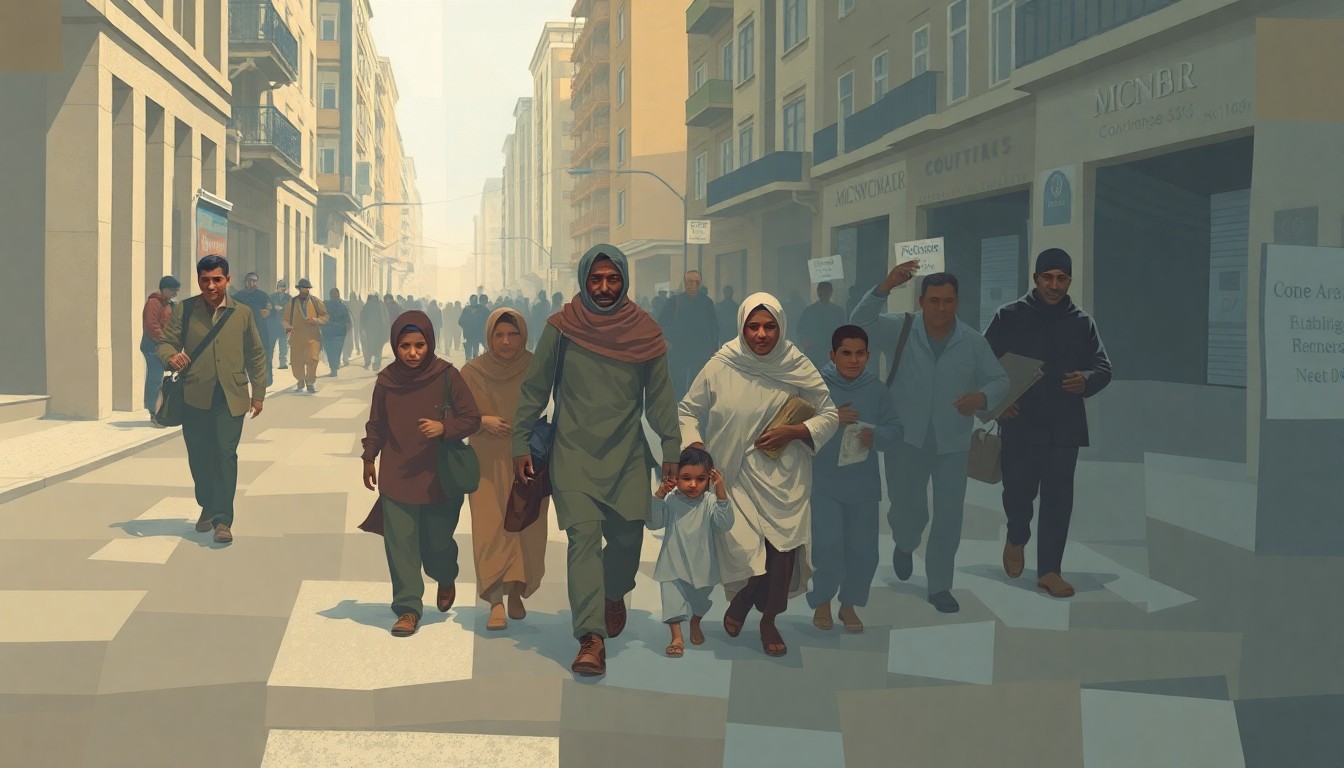
Millions of immigrants who entered the United States during the immigration surge that began in 2021 and peaked in 2023 now face increasing pressures, with many at risk of arrest and detention even when they fulfill court obligations. While these individuals can legally work after a six-month wait, the Trump administration is proposing to extend that period to one year. Recent analysis shows that states like New York, Florida, Massachusetts, New Jersey, and Utah have experienced the highest influx of asylum seekers, each seeing at least a 1% increase in population since 2020 due to new immigration patterns.
Political Ramifications of Influx
The surge in migration, which began following President Joe Biden’s relaxation of immigration restrictions in January 2021, has led to significant political backlash and financial strain on state resources. Republican governors have begun transporting border migrants to Democratic-led cities, intensifying tensions. Established immigrant communities have expressed resentment, feeling that the newcomers are receiving preferential treatment.
Asylum Processes Under Scrutiny
Many immigrants initially turning themselves in to authorities upon entering the U.S. have claimed a “credible fear” of persecution or torture upon return to their homeland, allowing them to apply for asylum. The process can take years for a hearing, complicated further by the ongoing crackdown on immigration. Some individuals have navigated asylum applications through government apps or parole programs while seeking legal status. However, increased pressure and threats of detention have now cast a shadow over these proceedings.
Following President Biden’s relaxed immigration rules in January 2021, New York City witnessed the arrival of over 223,000 asylum seekers by fall 2024. The situation escalated in January 2026 when Venezuelan dictator Nicolás Maduro was arrested and sent to the U.S. for trial, leaving a wake of chaos, including fatalities among Venezuelans. Many asylum seekers are now advised to remain in their home countries to avoid risking arrest at public events.
Key Figures Influencing Policy
Joe Biden
The U.S. president’s easing of immigration regulations in January 2021 has contributed to increased immigration.
Ron DeSantis
The Republican governor of Florida has played a pivotal role in relocating immigrants out of his state.
Greg Abbott
The Republican governor of Texas has also led efforts to transport immigrants out of Texas.
Nicolás Maduro
The Venezuelan dictator’s arrest in January 2026 has had profound implications for Venezuelan immigrants.
Hector Arguinçones
The organizer of a Venezuelan immigrant group in New York City advocates for support and understanding for newcomers.
Voices from the Ground
“All we can do is try and hope for the best,” shared Rosa, an immigrant from Ecuador.
“It’s tough here, but it’s even worse in Ecuador. Gangs are threatening you,” an anonymous store worker in Queens remarked.
Hector Arguinçones, organizer of a Venezuelan immigrant group, voiced, “Many of us fled Venezuela because our neighboring countries were persecutors… What we really need is humanitarian treatment.”
Future Outlook for Asylum Seekers
The Trump administration’s current proposal to extend the waiting period for asylum seekers from six months to one year before being eligible to work legally reflects the challenges at hand. This situation underscores the ongoing barriers many face in navigating the complex U.S. immigration system.
Tackling Complex Immigration Challenges
This evolving landscape illustrates the intricate challenges faced by asylum-seeking immigrants in the United States. These individuals are navigating immigration crackdowns amidst political backlash, striving to balance legal status, employment opportunities, and the looming fear of deportation. The circumstances call for a comprehensive review of immigration policies and a humanitarian approach for those fleeing violence and oppression in their home countries.
