


This article was first published on June 25, 2025, and has since been updated.
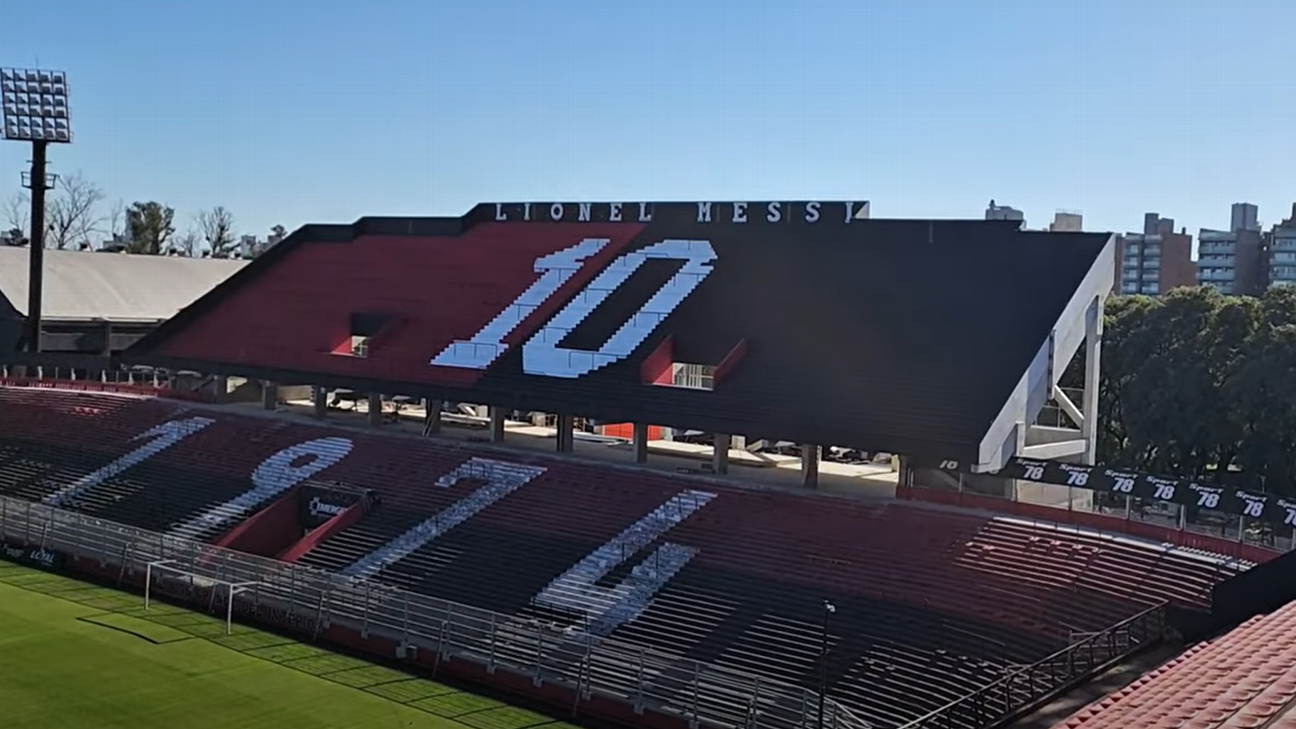
Lionel Messi’s ascension to the pantheon of football greats took on new significance this week as Inter Miami revealed a section of their new stadium will bear his name, honoring him with the Leo Messi Stand. This milestone adds to the narrative of Messi’s illustrious career, but it’s not the first time a club has commemorated him. His childhood club, Newell’s Old Boys, dedicated a stand to him last year, significantly marking their storied legacy by defeating the reigning MLS champions in the process.
On June 24 last year, coinciding with what would have been Messi’s 38th birthday, the Rosario-based Newell’s Old Boys announced this tribute, establishing a lasting memorial to one of Argentina’s most celebrated athletes. Now, a portion of their stadium forever honors Messi, who stands as the country’s most illustrious footballer.
Legacy of Tributes at Newell’s Old Boys
Known as El Coloso, nearly every inch of Newell’s stadium resonates with homage to the club’s legends. The venue was renamed Estadio Marcelo Bielsa in 2009 to pay tribute to the unconventional manager who led the team to a Primera División triumph in 1991. Gerardo “Tata” Martino, a former player and coach, lends his name to the stadium’s west concourse, while the west stand bears the name of midfielder Maxi Rodriguez, honored on the occasion of his 40th birthday in 2021 after a long tenure with the club.
Messi, alongside the late Diego Maradona, holds a unique status in this circle. Though Messi only spent a brief and modest season at Newell’s in the early 1990s, the South Stand is a testament to his enduring legacy in the footballing world.
In contrast, Cristiano Ronaldo, Messi’s longtime rival, currently has his name associated primarily with Sporting CP’s training ground and the CD Nacional academy while waiting for a comparable honor in a stadium setting.
To celebrate Messi’s recent recognition and his extensive list of accolades, we explore other noteworthy figures in football history who have been similarly honored with stadium dedications.
Historic Stadium Tributes in Football
Diego Maradona has two stadiums named in his honor. His professional debut took place at Estadio Diego Armando Maradona, home to Argentinos Juniors in 1976. Following his passing in 2020, Napoli renamed their iconic Stadio San Paolo to memorialize the legendary number 10.
Recognitions for Pelé and Ferenc Puskás
Brazilian soccer legend Pelé has a stadium named Estadio Rey Pelé, serving as home to lower league clubs in Maceió. Meanwhile, Ferenc Puskás is immortalized not only through FIFA’s annual award for the year’s best goal but also at the Puskás Arena, a 67,000-seat venue in Budapest that was completed in 2019.
Enduring Honors for Johan Cruyff and Arsène Wenger
Ajax’s stadium, formerly the Amsterdam Arena, was renamed the Johan Cruyff Arena to recognize the contributions of the club’s legendary player and manager. This decision came two years after Cruyff’s death and ahead of the 2018-19 season. At the grassroots level, USL Duppiheim in France honored former Arsenal manager Arsène Wenger by naming their newly established stadium after him in 2016, recognizing his football legacy in the region.
Tributes to Sir Alex Ferguson and Sir Kenny Dalglish
Manchester United’s Old Trafford continues to feature significant tributes to its icons; half of the stadium is named after Sir Alex Ferguson and Sir Bobby Charlton. The North Stand was renamed the Sir Alex Ferguson Stand in 2011, commemorating the legendary manager’s quarter-century at the club. Sir Bobby Charlton’s Stand was revealed in 2016, coinciding with the 60th anniversary of his professional debut.
Honoring Legends: Drogba, Torres, and York
Didier Drogba, who showcased his talent at French amateur club Levallois, saw his former club honor him with a stadium in 2010. Fernando Torres, a revered figure in Atlético Madrid’s youth system, had a stadium renamed to recognize his local impact in 2011. Similarly, Trinidad and Tobago honored its soccer export Dwight Yorke by naming a stadium after him, fulfilling the need for a new venue during the 2001 FIFA U-17 World Championship.
