


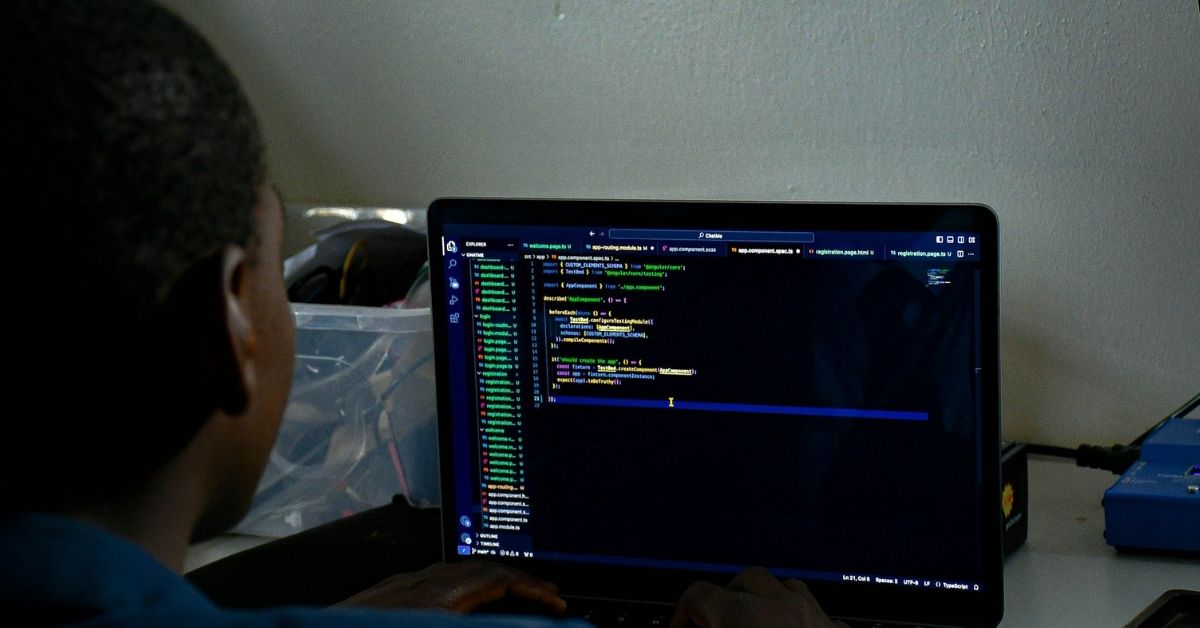
Vibe coding, an AI-powered model in which software developers (or anyone) use natural language prompts instead of writing code, is no longer a Silicon Valley meme. By late 2025, it was one of the fastest ways to build software, reducing costs and accelerating development.
Coined by former OpenAI researcher Andrej Karpathy in February 2025, the term refers to a high-level approach where AI generates entire applications from simple prompts. This has reduced burn rates for early startups by as much as 85-95%, enabled Micro-SaaS tools built in a weekend to reach paying customers within days, and made million-dollar solo founder ideas feel like a reality rather than a myth.
Its appeal is clear across Africa, where access to capital and engineering talent has historically constrained innovation. Ideas can now move from concept to product with unprecedented speed.
But speed comes at a price. And those costs are increasingly manifesting in vulnerable systems, data breaches, and broken trust.
This is a challenge that Nigerian AI startup Censori, which positions itself as the “Cloudflare for AI,” says it wants to solve.
From AI optimism to infrastructure reality
Censori started in June 2025 as a concern, not a business idea. Co-founder and CEO Bola Roy Banjo traces his origins back to his early work as a design manager at digital security platform FohnAI in 2024, working at the intersection of artificial intelligence (AI) and cybersecurity.
“AI is evolving rapidly and we cannot blindly trust its decisions,” Banjo says. “I was looking to build cybersecurity directly into AI systems to protect the entire environment, and that led to Censori.”
The hypothesis that emerged was that as AI products proliferated, there would be a need for an infrastructure layer like Amazon Web Services or Cloudflare, which is necessary for the internet.
In Banjo’s view, future AI applications should ship with ethics, security, and reliability built in by default, rather than being added on after something is broken.
“AI products will also come with other issues, such as ethics, security, and data breaches,” he explains. “With Cencori, we have these capabilities built in. You don’t have to worry about the AI leaking sensitive data or leaking user information.”
Get the best African tech newsletters in your inbox
Hidden risks of vibe coding
Banjo claims that Vibe coding is powerful but dangerous. Unlike no-code tools that rely on visual editors or constrained workflows, Vibe Coding allows AI to generate an entire codebase from a prompt. Developers often accept output at scale and push directly to production.
That speed has consequences.
“There are a lot of AI products built this way right now,” Banjo says. “And we have already seen cases where vibe-encoded apps expose locations, phone numbers, and addresses to the public internet.”
These are not theoretical risks. Data breaches involving large-scale language models occur all the time because the models inadvertently surface private or sensitive information embedded in prompts, logs, or training data. Notable examples are the DeepSeek database exposure (January 2025), which leaked over 1 million lines of log data, and the EchoLeak 0-Click attack (December 2025), which allowed attackers to send specially crafted emails containing “hidden prompts.” Even OpenAI acknowledges that large-scale language models (LLMs) can leak data and warns users not to share personal information.
Cenkoli’s approach is more practical than philosophical. The platform focuses on known failure modes rather than attempting to “solve AI ethics” in the abstract. Developers configure the data they need to protect, such as emails, phone numbers, and internal records, and Cenkori enforces these constraints at the infrastructure level.
“We already know the type of data that LLM leaks,” Banjo said. “So we built a tool to stop that, based on real-world use cases.”
Cloudflare for AI creation
If Banjo provides the technical vision, co-founder and chief operating officer Oreofe Ojurele-Oluwa Daniel provides the framework. He describes Cecori as “Cloudflare for AI production.”
Just as Cloudflare sits between websites and the internet, handling security, reliability, and traffic routing, Cencori sits between AI applications and the models they rely on.
“Most AI builders are focused on making something work,” Daniel says. “But what happens when users start paying? How do you guarantee uptime, security, and reliability?”
Centori answers that by acting as a middleware layer. One of its core features is automatic failover between major AI providers. If OpenAI experiences downtime, requests are rerouted to Anthropic or Gemini without developer intervention.
“It’s like a power switch,” Daniel explains. “When the electricity from the grid stops, we switch to the generator. Our system does that automatically for the AI.”
This redundancy allows for what Cencori claims is a 99.9% uptime for applications built on the platform. This is an essential requirement as AI products move from experimentation to business.
Early traction, real stakes
Although Senkori still operates primarily by stealth, it is already gaining momentum.
Its platform is built into the codebases of three Y Combinator-backed startups. Sonarly is an AI-powered bug detection platform. 1uI, a generative UI platform for building AI native interfaces. And Lawrence is the “digital brain” of AI for advertising, which uses quantitative models to automate Amazon’s ad spend.
Daniel claims that these deployments will process over 20,000 requests each week. Additionally, about 10 individual developers are using Censori for side projects, and the founders hope some of them will grow into full-fledged companies.
The stakes are high. As Daniel points out, a poorly secured AI platform can cause irreparable damage. He cited cases where private images and personal data were leaked to mainstream media, citing situations that could have been prevented with proper infrastructure management.
“With vibe coding, these incidents will only increase,” he says. “We built Cenkori to plug these holes before they become catastrophic.”
Build for Africa, compete globally
“We understand the African landscape,” says Daniel. “Cost is important. Complexity is also important. We built Censori with that in mind.”
Censori aims to reduce both financial and cognitive overhead for construction contractors by integrating security, observability, reliability, and cost management into a single platform.
According to the co-founders, the integration takes less than 20 minutes. This is important in a world where speed dictates adoption.
The company is currently self-operated, funded through personal savings and support from friends and family, but is in talks with investors to expand its infrastructure roadmap.
Cenkoli is betting that the next stage of AI innovation will not only be won by those who act fastest, but those who make speed safe. In a world full of AI-generated code, the companies that survive may be the ones that have a solid foundation behind them, not just the vibe.
