


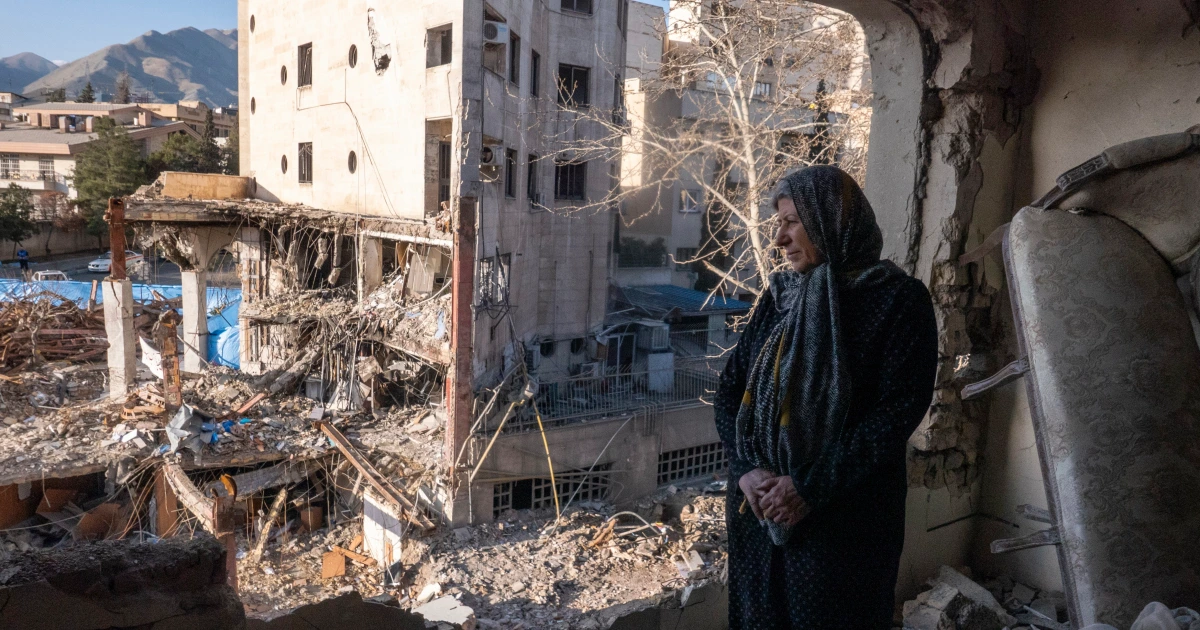
Iran’s government is preparing to intensify strikes against its energy infrastructure and desalination facilities if President Donald Trump follows through on his threat to “destroy” the country’s power plants unless it reopens the Strait of Hormuz. This critical maritime route is crucial for global oil transportation, facilitating nearly 20% of the world’s crude oil trade.
On Saturday evening, President Trump issued a 48-hour ultimatum to Iran demanding the reopening of the vital trade passage. He subsequently warned on Truth Social that military action against Iran’s energy infrastructure was imminent should his demands go unmet.
The situation escalated after Iran effectively closed the strait following attacks by the United States and Israel on February 28. This block prompted the Islamic Republic to retaliate, raising concerns about broader conflict in the region.
Heightened Risks of Retaliation
Treasury Secretary Scott Bessent indicated on NBC News’ “Meet the Press” on Sunday that the Trump administration is considering all potential options regarding the reopening of the Strait of Hormuz. Responding to questions about whether the U.S. is de-escalating or intensifying its conflict with Iran, he noted that the two strategies can coexist.
Iran demonstrated its unwavering stance on Sunday by pledging to attack U.S. and Israeli infrastructure if its power plants are targeted. Colonel Ebrahim Zolfakari, spokesperson for Iran’s Khatam al-Anbiya military command, warned that an assault on Iran’s energy resources would prompt reciprocal attacks on critical systems utilized by both the U.S. and its regional allies.
Desalination plants, essential for converting seawater into drinkable water, are vital not only for Israel but also for numerous Gulf countries. Iranian Parliament Speaker Mohammad Bagher Ghalibaf echoed these threats, asserting that a strike on Iranian power infrastructure would lead to catastrophic damage across the region, significantly impacting energy and oil prices.
President Trump’s ultimatum comes as conflicts in the Middle East enter their fourth week, with Iran targeting a joint British-American base in the Indian Ocean and nuclear facilities in both Iran and Israel. Reports from the Iranian judiciary’s state-affiliated news agency, Mizan, confirmed no leaks occurred following attacks at the Natanz nuclear facility, while the International Atomic Energy Agency indicated that no unusual radiation levels were detected at these sites.
Constrained Choices Ahead
Ross Harrison, a senior fellow at the Middle East Institute, remarked that Trump’s threats suggest the president realizes his options for reopening the straits are increasingly limited. He expressed skepticism regarding the efficacy of military action alone in addressing the complexities of the situation.
Harrison emphasized that ongoing warfare effectively halted maritime traffic, as shipping insurance rates skyrocket. As a result, global oil prices have surged, with retail gasoline rising by 93 cents per gallon and U.S. crude prices climbing more than 70% since the previous year.
While Iran continues to allow select vessels passage through the strait, Ali Mousavi, the country’s representative to the United Nations Maritime Organization, reported that Iran has engaged in attacks on non-U.S. and non-Israeli ships but permits those not considered “enemies” to apply for transit. Recent measures, including the lifting of certain sanctions to facilitate Iranian crude oil sales, have been part of the Trump administration’s strategy to control soaring energy costs.
Resilience Amid Pressure
Anise Basili Tabrizi from Chatham House expressed doubt that the Iranian government would yield to Trump’s escalating demands. She attributed the current predicament to insufficient strategic foresight on the part of the Trump administration and suggested that Iran would likely ramp up its resistance to deter further U.S. actions following the war.
Harrison underscored the urgency for the Trump administration to seek a viable exit strategy from the conflict with Iran rather than persisting in escalating hostilities. However, the will of the Iranian government to de-escalate remains uncertain, especially as Ali Abdullahi Aliabadi, commander of Iran’s Khatam al-Anbiya Central Command, pronounced that Iran’s military strategy has shifted towards a more offensive posture.
He emphasized that the war’s outcome hinges on the resolve of both parties, asserting Iran’s collective determination to persist until it achieves both retribution against aggressors and a stable deterrent posture for the future.
