


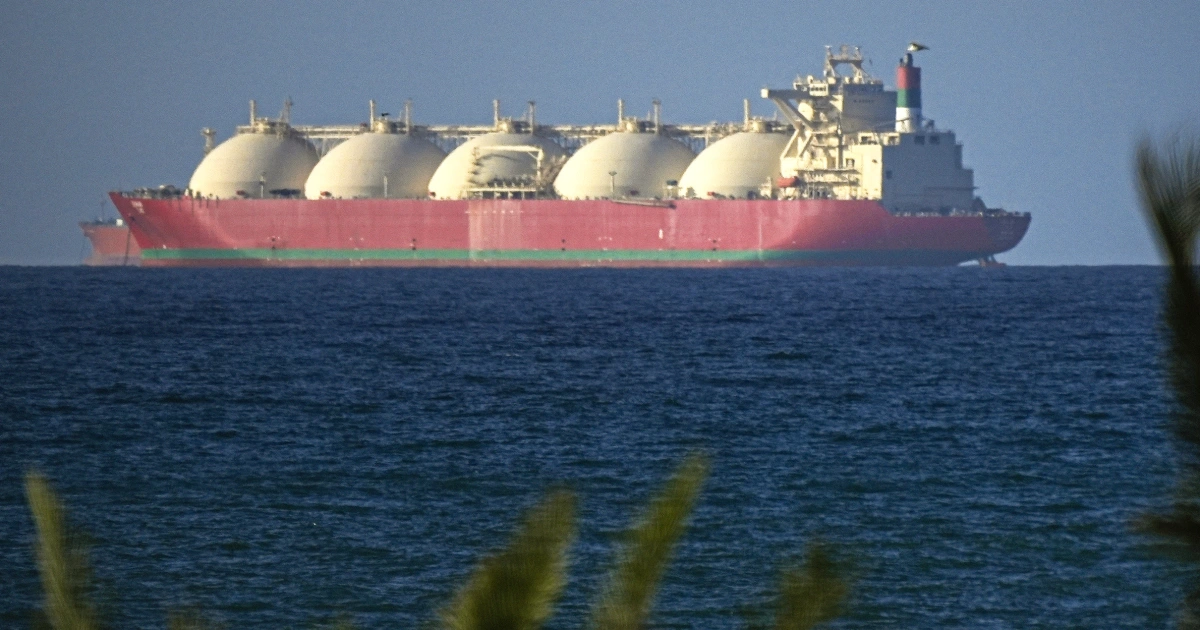
Vessels stranded in the Persian Gulf are eager to depart as soon as it is safe, according to Jacob Larsen, chief safety and security officer at BIMCO, a prominent association representing shipowners, charterers, brokers, and agents. However, the industry is awaiting essential technical details from both the U.S. and Iran regarding safe transit through the strategically significant Strait of Hormuz.
Is the Strait of Hormuz Open for Transit?
Iran has made it clear that vessels aspiring to navigate the strait must obtain permits and may be subject to transit fees.
On Wednesday, Iran’s navy released a map indicating potential mines in the strait and outlining designated transit routes for safe navigation. Outbound ships leaving the Persian Gulf are directed to travel just south of Larak Island, while inbound vessels are instructed to use the northern route. Both paths maintain proximity to the Iranian mainland, differing significantly from conventional routes used prior to the conflict.
A substantial portion of the strait has been marked as “dangerous” on the map, including areas that overlap with Oman’s territorial waters.
Saeed Khatibzadeh, Iran’s deputy foreign minister, emphasized the need for heightened vigilance concerning the safety of tankers and ships. His comments came just as contradictions surfaced from U.S. officials, who previously indicated that the strait had reopened.
The economy of the Gulf region heavily relies on its waterways and energy exports, leading to palpable frustration among industry stakeholders. Sultan Al Jaber, CEO of the Abu Dhabi National Oil Company and a member of the UAE cabinet, underscored this sentiment on LinkedIn, stating that clarity is urgently needed and affirming that “The Strait of Hormuz is not open. Access is restricted, conditioned, and controlled.”
In response to the rising tensions, French Foreign Minister Jean-Noël Barrault revealed plans being finalized by the European Union and its allies to establish a mission aimed at escorting ships through the strait. Barrault acknowledged that preparations are “well advanced” but noted uncertainty regarding how this initiative may influence Iran’s stances.
The global shipping industry remains mired in anxiety and confusion as the ceasefire enters its second day. Analyst Muyu Xu, located in Singapore at Kpler, reported a backlog of ships, including a Chinese vessel, awaiting transit permissions. She indicated that contradictory announcements from Iran, which initially included accepting payments in Chinese yuan but later switched to cryptocurrencies, have only compounded the uncertainty for maritime operators.
Iran’s Proposed Transit Fee System
Iran’s proposed “toll plaza” system for ships in the strait has raised concerns among maritime law experts regarding its legality.
John Staupert, maritime director at the International Chamber of Shipping, identified the imposition of tolls as an aberration that could set a troubling precedent. He stressed that the reopening of the Strait of Hormuz should honor international maritime law without restricting the freedom of navigation.
The complexity of these legal challenges is exacerbated by Iran’s non-ratification of the United Nations Convention on the Law of the Sea (UNCLOS), which safeguards the right to transit.
Mark Chadwick, a senior lecturer in law at Nottingham Trent University, noted that while Iran claims the right to restrict waterways in service of its interests, the fragmented nature of international law complicates the regulatory framework governing such actions.
Chadwick referenced the Bosphorus Strait’s toll system as a precedent, stating that any similar imposition in Hormuz would likely require extensive international consensus, which seems improbable at this juncture.
Oman’s Role and Regional Dynamics
Analysts contend that an arrangement allowing Iran to share toll revenue with Oman is highly unlikely, given Oman’s keen interest in restoring the strait to its pre-war conditions in cooperation with Gulf states.
Mehran Hagirian, head of research and programs at the Stock Exchange and Bazaar Foundation, stated that Oman is unwilling to jeopardize its strategic alliances within the Gulf Cooperation Council by entering into an unsanctioned agreement with Iran.
This tense situation leaves significant uncertainty for markets, businesses, and the multitude of seafarers who play a critical role in global trade.
After enduring weeks of negotiation with authorities, oil tanker worker Rex Pereira finally obtained three emergency visas to leave a ship stranded for over a month. Scheduled to start a lengthy journey from Iraq to Saudi Arabia and Kuwait, Pereira hopes to reunite with his family in Mumbai, his hometown.
“The vessels stuck near the Strait of Hormuz just want to get out,” Pereira expressed. “Most sailors had no intention of signing up for such a situation; they simply want to return home.”
Despite Pereira’s successful departure, many others remain trapped, awaiting a resolution that seems increasingly elusive.
