


Iranian Women’s Soccer Team Returns Amid Controversy
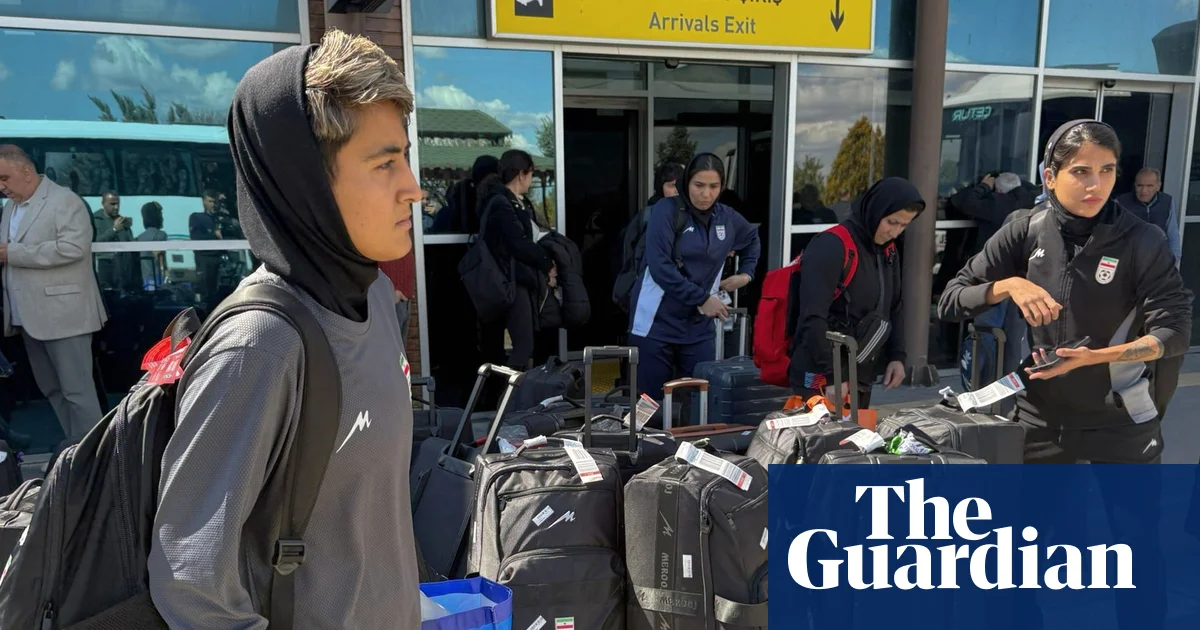
The Iranian women’s soccer team, recently caught up in the turmoil of regional conflict, has made its way back to Iran, where a welcome ceremony is planned in Tehran.
Last week, several members of the Australian delegation sought asylum after a decision was made not to sing the national anthem prior to the opening match of the Women’s Asian Cup. This request for protection has caused embarrassment for Iranian officials.
Among those who applied for asylum were five players, including team captain Zahra Ghanbari. However, after receiving praise from U.S. President Donald Trump, they chose to retract their asylum requests.
Human rights activists have suggested that the Iranian government may have pressured the families of these players, as Tehran countered by asserting that Australia was attempting to coerce the athletes into seeking asylum.
While two members of the delegation have remained in Australia, the rest of the team returned home on Wednesday, completing an extensive journey that included stops in Malaysia and Oman before crossing back into Iran via the Gulburak Bazargan land border with Turkey.
Mohammad Berger Ghalibaf, speaker of Iran’s parliament, praised the players and their support team on social media, stating that they are “children of the motherland” and that the Iranian people warmly welcome their return.
Highlighting their resilience, Ghalibaf remarked that their choice to return represented a significant departure from “deception and intimidation by anti-Iranian elements.”
Images shared by the Iranian news agency Mehr depicted a modest welcoming committee on the Iranian side of the border, waving flags, along with the team members seated on a red-carpeted stage.
Mehdi Taj, president of the Iranian Football Federation, expressed gratitude to the team, emphasizing that despite being women, they displayed a level of courage that he categorized as heroic.
The symbolic significance of their return was underscored by a large welcoming ceremony held in Valiasr Square, a customary venue for pro-government demonstrations, as reported by Iranian media.
International human rights organizations have long accused the Iranian government of exerting pressure on foreign athletes, with threats to confiscate their property should they choose to defect or voice dissent against the Islamic Republic.
During their match in Australia, the Iranian women’s team chose to remain silent while the national anthem played, an act interpreted as a protest against the current regime. In the following game, the team did sing the anthem, which extolled the Islamic Republic’s virtues, yet activists noted that the damage may have already been done.
Concerns surrounding potential repercussions were heightened when an Iranian state television host labeled the players “wartime traitors,” further stoking fears of persecution upon their return.
On March 10, five players, including Captain Ghanbari, made a daring escape from their team hotel under the cover of darkness to seek asylum in Australia. Subsequently, two additional members of the delegation, comprising one player and a staff member, also received asylum.
Australian Home Affairs Minister Tony Burke confirmed that the government engaged in discreet negotiations with the players following their departure from the Gold Coast hotel. The players were subsequently relocated to a safe house.
In a parallel narrative, Iranian authorities accused Australia of coercing these athletes to remain in the country, highlighting the intense geopolitical dynamics at play in this unfolding situation.
