


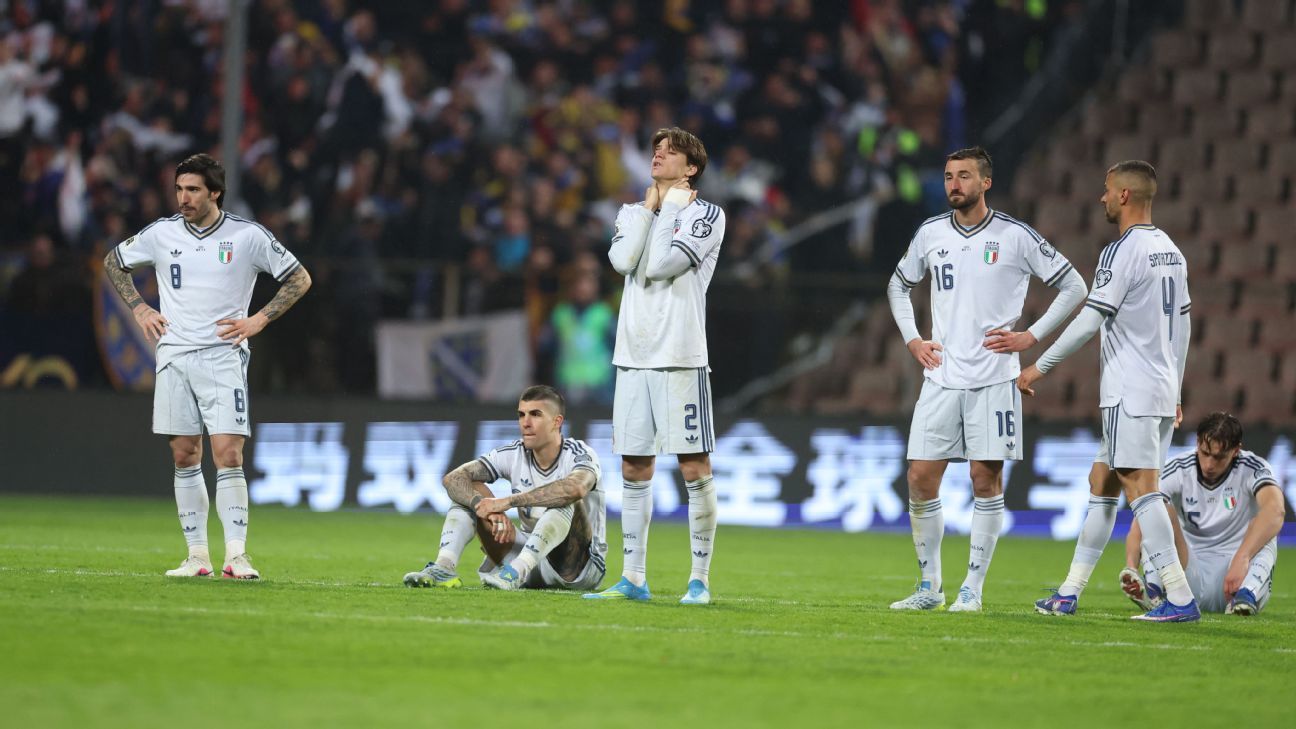
Italy Faces Consequences of World Cup Absence
It seems the jokes have run their course. As I reflected on Italy’s prior assertion about not being greedy with World Cup opportunities—citing their four previous titles alongside England, Spain, and France—I couldn’t help but feel the weight of their ongoing struggles. Following their recent elimination, this marks the first time a World Cup-winning nation has missed three consecutive tournaments, a reality that stings even more given the expansion of the tournament from 32 to 48 teams.
The Pain of Elimination
Following a heartbreaking penalty shootout loss to Bosnia and Herzegovina, Italy finds itself at a crossroads. The numerous teams entering the World Cup for the first time, including Curacao, Uzbekistan, Cape Verde, and Jordan, serve as a reminder of the shifting landscape in global football. Yet, amidst this expansion, Italy’s absence raises significant questions about their future.
No Need for Radical Changes
While some may call for a complete overhaul of Italian football, such drastic measures are unwarranted. The decline of Serie A, while notable, is not the sole reason for Italy’s failure to qualify. This is underscored by their impressive performances in the Euro finals in 2012 and 2021, where they claimed the title despite the league’s comparative limitations.
The Heart of the Game
Manager Gennaro Gattuso should not waste time lamenting missed opportunities or questionable decisions. While it’s true Italy struggled with consistency, Bosnia demonstrated remarkable resolve, especially considering their taxing journey through qualifying. The match showcased legendary forward Edin Dzeko’s grit, proving that heart and effort can overshadow mere statistics.
Strategic Blunders and Missed Chances
The path to qualification was fraught with challenges, particularly following a disappointing defeat to Norway that shaped their tournament trajectory. Early setbacks rendered their playoff ambitions precarious. Alessandro Bastoni’s reckless red card during a crucial match significantly impacted Italy’s chances, shifting the game into a defensive posture that ultimately led to their undoing.
The Need for Tactical Innovation
Tactically, Italy appeared to lose their edge once they adapted a containment strategy against Bosnia, ceding control and inviting pressure. Gattuso’s management style, characterized more by sideline fervor than decisive strategy, left much to be desired. Limited time with the players further complicated his ability to instill a winning mentality and cohesive game plan.
Addressing Structural Challenges
Looking ahead, it’s clear that structural issues in Italian football must be addressed. The focus on results over player development stifles potential growth in young talent. Moreover, there is a reluctance among Serie A clubs to promote homegrown players, resulting in a bottleneck that hampers national team success. Although these elements contribute to the larger picture, they do not fully encapsulate the reasons behind Italy’s current predicament.
Ultimately, the missed opportunities during qualifying were exacerbated by tactical missteps and strategic failures. While the heartbreak of failing to reach the World Cup is undeniably painful, especially for a nation that has celebrated four championships, there remain urgent calls for introspection and revitalization within Italian football.
