


Updated April 4, 2026, 8:43 a.m. Central Time
Federal Judge Orders Deportation of Truck Driver Following Immigration Raid
A federal judge has mandated the detention and deportation of Suraj Basal, a truck driver apprehended during a collaborative immigration operation involving Immigration and Customs Enforcement (ICE) and the Iowa State Patrol.
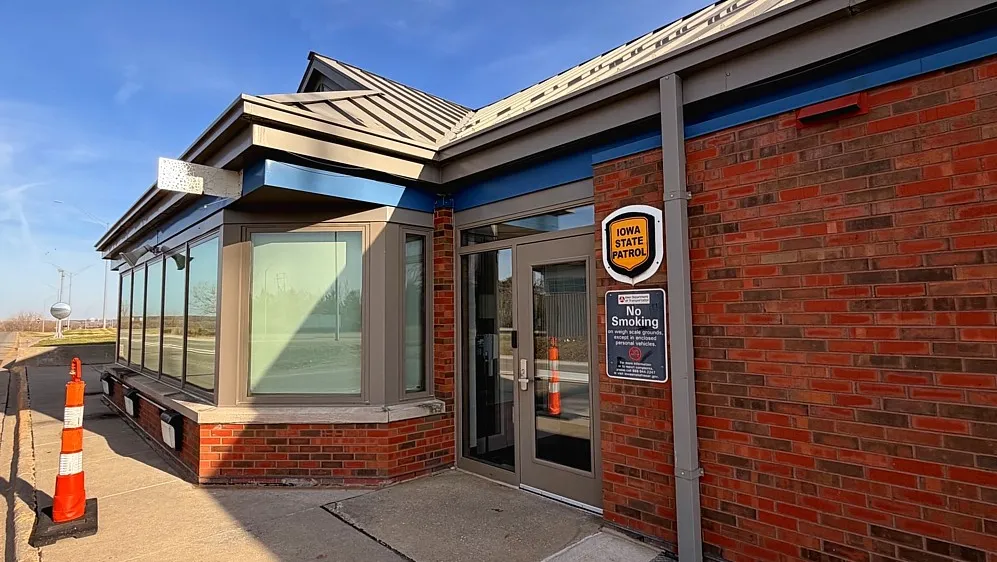
Basal, who emigrated from India four years ago to seek asylum, was initially released on his own recognizance. On February 11, 2026, while driving a commercial semi-truck along Interstate 80 in Iowa, he did not stop at a weigh station. Following this incident, he was ticketed by Iowa State Patrol Trooper Nathaniel Rippey, after which ICE officers took him into custody and transported him to Polk County Jail.
Court records reveal that ICE and the Iowa State Patrol are engaged in immigration enforcement actions under the operation titled “Operation ICE Wall,” which targets commercial truck drivers at weigh stations across Iowa.
Vasal’s attorney, Alexander Smith, has filed a lawsuit against ICE, the Department of Homeland Security, and Polk County Jail Administrator Corey Williams over the handling of his case. The U.S. Attorney’s Office stated that there is an active warrant for Vasal’s arrest stemming from his failure to stop at a weigh station.
Initially, Vasal was denied a bail hearing, with Omaha immigration court adhering to the Trump administration’s stance that individuals who have resided in the U.S. for extended periods are subject to “mandatory detention,” similar to individuals apprehended at the border. However, on February 24, 2026, U.S. District Judge Stephen H. Locher granted Vasal seven days to request a bond while his deportation proceedings were ongoing.
On February 27, Vasal was summoned by ICE agents in his cell for a Zoom hearing scheduled just 30 minutes later. This hearing was meant to be a court-ordered bail hearing, which he had previously been denied. During the hearing, Vasal requested additional time to secure legal representation, but the court denied this request. ICE officials argued that his failure to stop at the weigh station indicated both a flight risk and a potential danger to the community, leading the immigration judge to conclude that he was indeed a flight risk and deny bail.
Judge Voices Concerns Over Government Actions
In a strong March 24 ruling, Judge Locher dismissed the Justice Department’s defenses, asserting that Vasal’s rights had been violated by both the Department of Homeland Security and the immigration court. He expressed that the government’s conduct “tests the boundaries of malice,” arguing it is unacceptable to compel an individual to attend a hearing that could jeopardize their freedom with minimal notice.
Locher articulated that this rushed timeline made it nearly impossible for Vasal to gather evidence to adequately defend himself, which includes securing testimony and support from friends, family, and his employer. He emphasized that this situation represents a denial of fundamental due process rights.
The judge criticized the immigration judge for allegedly denying Vasal’s right to legal counsel by refusing to postpone the hearing, and he dismissed the government’s argument that immigration judges face caseload pressures that necessitate immediate hearings as “frivolous.” Locher insisted that the lack of resources should not come at the expense of individuals’ rights, holding the government accountable for aggressive immigration enforcement without the required infrastructure to ensure due process.
Locher did acknowledge the implications of the Eighth Circuit Court of Appeals ruling, which stated that not all ICE detainees with a long-term U.S. presence automatically qualify for a bail hearing. Following this, he withdrew the order for a new bail hearing but allowed Smith the opportunity to present arguments for why a hearing should be granted in Vasal’s case.
In response, Smith filed a motion seeking the immediate release of his client, asserting that individuals deserve due process before facing detention and that a mere traffic violation should not result in extended incarceration. Judge Locher has yet to provide a ruling on the case.
