


Federal Court Considers Immigration Enforcement Near Schools
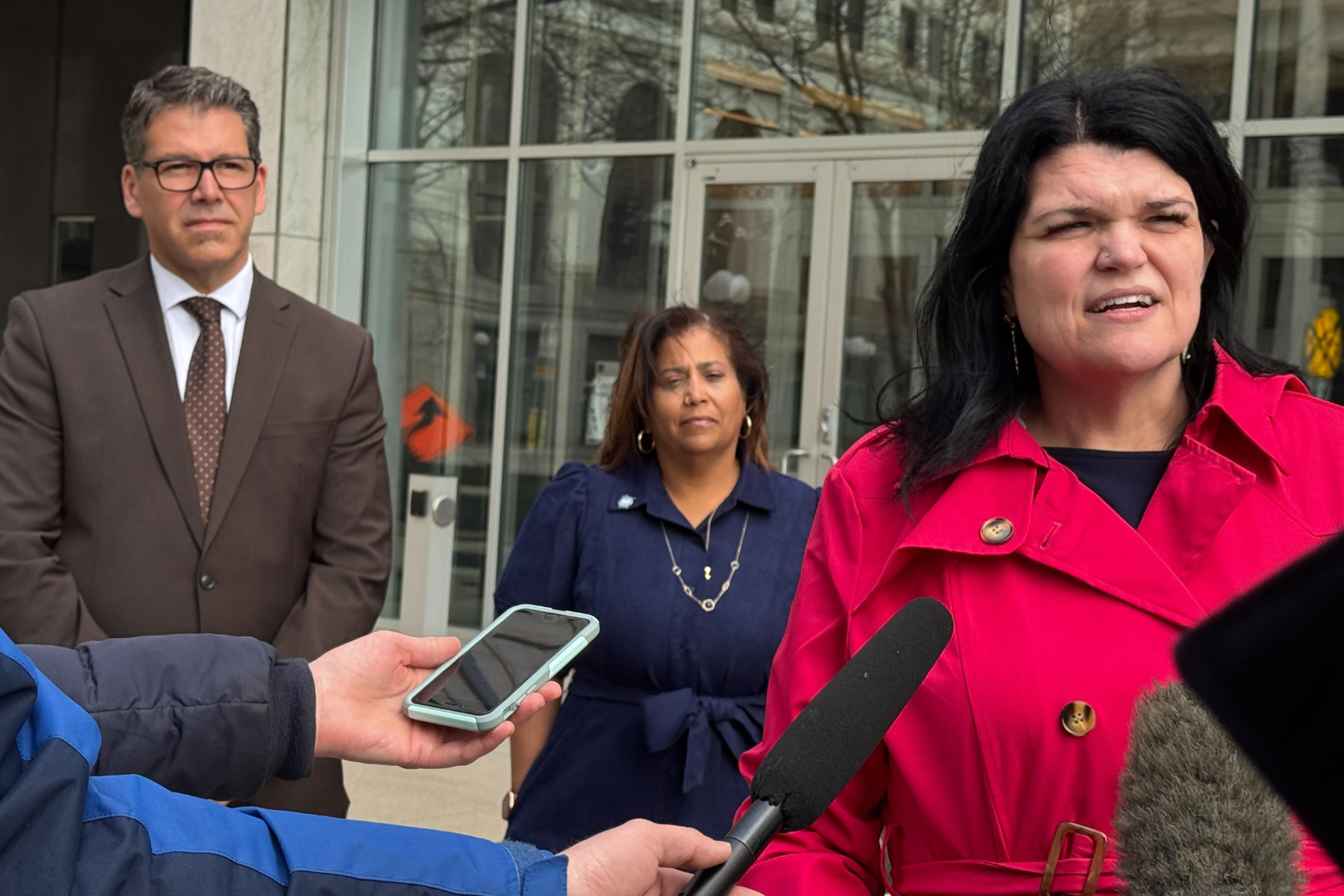
A federal judge in St. Paul heard arguments on Wednesday regarding a lawsuit that questions whether the Department of Homeland Security (DHS) should restrict immigration enforcement activities near schools.
The lawsuit, filed in February by Fridley Public Schools, Duluth Public Schools, and other educational institutions, challenges the DHS’s 2025 decision to rescind a long-standing federal policy that designated schools, hospitals, and places of worship as sensitive locations where immigration enforcement should be minimized. This policy, which was originally introduced in 1993 and updated in 2021, was overturned on the first day of President Donald Trump’s second term.
Following the commencement of Operation Metro Surge, many schools across Minnesota reported a notable presence of U.S. Immigration and Customs Enforcement (ICE) and Border Patrol agents both near and on school premises. In one alarming incident, Border Patrol agents deployed chemical weapons on the grounds of Roosevelt High School in Minneapolis, resulting in injuries to faculty and students. Other reports indicated ICE conducting raids in parking lots, detaining parents at school bus stops, and holding teachers at gunpoint. These events led to a significant decline in school attendance as students and parents opted to stay home, gripped by fear.
In her opening remarks, the plaintiffs’ attorney Amanda Sialkowski highlighted the challenges educators face in their mission to provide a safe learning environment. “The job has become exponentially more difficult with the reversal of the Sensitive Places Policy and subsequent immigration measures,” she stated.
Judge Laura Probingino raised questions about whether the enforcement activities near schools were a direct consequence of the changed policy or a result of increased immigration enforcement during Operation Metro Surge. She also inquired whether the plaintiffs still qualified for relief now that federal officials have announced the program has ended.
Plaintiffs’ attorney Czajkowski argued that the real harm stemmed from the alterations to the sensitive locations policy, rather than Operation Metro Surge itself. She noted that reports from parents indicated ICE continued to operate near schools even after Metro Surge concluded.
“Metro Surge was a megaphone for policy change,” Czajkowski asserted, emphasizing that the true danger lay in the policy shifts rather than the enforcement operations alone.
Policy Changes and Their Implications
Judge Probingino acknowledged that prior DHS policy allowed for immigration enforcement in schools under extreme circumstances or with supervisory approval. “Legally, I don’t know if reverting to the 2021 policy will yield any significant changes unless immigration enforcement itself is curtailed,” she remarked.
Czajkowski responded to this by asserting that immigration authorities can effectively pursue their enforcement goals outside of school premises. She pointed out that for the past three decades, there have been no recorded incidents of enforcement operations occurring in or near schools.
“The historical absence of such activities demonstrates that the government adhered to previous policy,” she explained. “When possible, they chose to maintain a safe environment for students.”
During the hearing, the district’s attorneys stressed the importance of being able to assure students of their safety at school. “They can’t say yes anymore, and that’s directly linked to the policy change,” Czajkowski said.
Sean Ouellette, another attorney representing the educators, focused on procedural violations concerning the Administrative Procedure Act. He contended that the government failed to adhere to proper protocols when altering the sensitive locations policy. “For these reasons, this action is arbitrary and capricious,” he added.
Government’s Counterarguments and Future Prospects
Justice Department attorney Jessica Lundberg challenged the positions held by the school district and the union, stating, “None of the plaintiffs have experienced legally recognized injuries. What we’re discussing is a chilling effect on third parties.” She noted that any potential future damages seem unlikely given the recent reduction in federal personnel due to Operation Metro Surge.
Judge Probingino acknowledged submitted statements regarding a reduction in police officers but pointed out that there were no assurances that enforcement activities near these protected locations would cease. “However, we have not seen any statement that the government is choosing to refrain from enforcement activities near these protected locations,” she stated.
Moreover, Lundberg highlighted that the government had not promised to prevent future enforcement actions near schools. “Even with the previous memorandum, there was always a possibility of immigration enforcement occurring in and around schools,” she remarked.
As the proceedings drew to a close, Czajkowski challenged the government’s assertions, arguing that recent enforcement actions, including ICE agents waiting near schools, would not have been permissible under prior policies.
In closing, Judge Probingino expressed her personal connection to the case, noting her family’s background in education and emphasizing the importance of carefully considering her ruling.
Educators Express Concerns Over Student Safety
After the hearing, Czajkowski commended Judge Probingino’s preparation but opted not to speculate on her potential ruling. Fridley Public Schools Superintendent Brenda Lewis conveyed optimism that the judge would reinstate the sensitive locations policy. “For our district, this will help restore the notion of safety,” she remarked, highlighting that 72 students remain fearful and have yet to return to school.
Duluth Public Schools Superintendent John Magas discussed ongoing conversations about the potential for immigration enforcement in schools, which began well before Operation Metro Surge. He acknowledged that although concerns have eased due to federal workforce reductions, the threat persists. “The change in guidelines is intended to create confusion, fear, and panic,” he explained. “We need to remain prepared until these measures are clarified.”
