


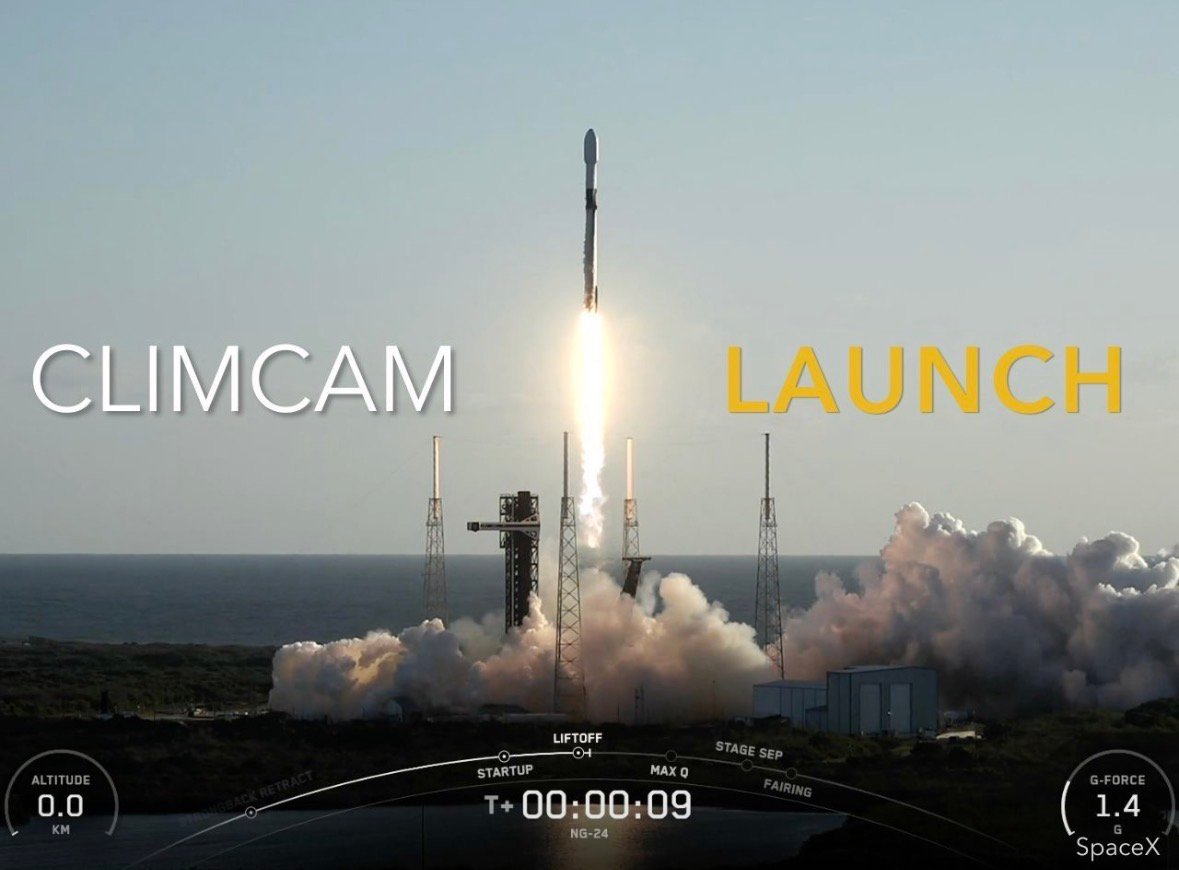
The Kenya Space Agency (KSA) has successfully launched the Climate Camera (ClimCam), an AI-powered payload en route to the International Space Station (ISS). This milestone occurred on Saturday, April 11, 2026, at 1:41 p.m. East African Time, aboard a SpaceX Falcon 9 rocket from Cape Canaveral Space Force Station in Florida.
ClimCam is part of Northrop Grumman’s Cygnus XL NG-24 commercial resupply mission, which is delivering over 11,000 pounds of supplies, experiments, and equipment to the ISS. Following a successful liftoff, the Cygnus XL spacecraft, named SS Steven R. Nagel, separated from the Falcon 9 booster around seven minutes post-launch. The astronaut-operated Canadarm2 aboard the ISS is scheduled to capture the Cygnus spacecraft today, Monday, April 13, at approximately 12:50 PM EDT (7:50 PM ET).
Understanding ClimCam’s Features and Functionality
ClimCam, weighing just 3.5 kilograms, is engineered to capture high-resolution images of Earth while utilizing machine learning algorithms to process climate data almost instantaneously. Once installed on the Airbus Bartolomeo platform attached to the ISS’s European Columbus module, it will remain in orbit for roughly one year.
The mission aims to capture daily color images over at least 20 square kilometers of East Africa from an altitude of about 400 kilometers, with a ground sampling distance of 10 meters. According to Space in Africa, ClimCam is expected to commence commissioning around August 2026 and start transmitting data shortly thereafter.
The data obtained will play a crucial role in flood detection, agricultural monitoring, weather forecasting, disaster management, and tracking natural resources across East Africa. As the region faces increasing threats from extreme weather, droughts, and food insecurity, the deployment of technology developed in Africa is vital for providing local climate information.
Collaboration Across the Continent
ClimCam is the result of a collaborative effort among three African organizations: the KSA, the Egyptian Space Agency (EgSA), and the Uganda National Space Program. Working in partnership with Airbus Defense and Space under the ‘Access to Space for All’ initiative, this consortium was awarded a Competitive Opportunity Announcement by the United Nations Office for Outer Space Affairs (UNOOSA). This program aims to empower developing nations to build payloads for operation on the ISS.
The EgSA acted as the technical lead for ClimCam, overseeing its assembly, integration, and testing processes at their Cairo facility. Before final approval for spaceflight, the payload also underwent comprehensive validation at Airbus’s Houston facility.
Significance for Kenya and the African Continent
This launch is not Kenya’s initial foray into space technology. In 2018, Kenyan engineers collaborated on the 1KUNS-PF microsatellite, a 1U CubeSat developed with Rome’s Sapienza University and launched from the ISS. More recently, in 2023, Kenya tracked its first operational Earth observation satellite, Taifa-1, developed by local engineers and completed with Bulgarian aerospace company EnduroSat.
While Taifa-1 signifies a move toward building internal capabilities, ClimCam represents a significant shift towards regional collaboration focused on generating actionable climate data. This initiative is notable as it marks the first partnership among three African space agencies to launch a single payload to the ISS.
As highlighted by Space in Africa, this mission signifies the continent’s evolution from mere consumers of space data to active co-producers and co-owners of space technologies. This momentum could foster more ambitious projects, including the proposed African Development Satellite (AfDevSat).
The Broader Context
The ClimCam launch coincides with the upcoming Global Data Festival and Kenya Space Expo and Conference, set to take place in Nairobi from June 2 to 5. This event will bring together experts, policymakers, and industry leaders focused on data, space, and emerging technologies, showcasing the potential of African-led initiatives in space exploration.
The launch also aligns with the growing momentum within the continent. In April 2025, the African Union inaugurated the African Space Agency, while nations like Nigeria, Ethiopia, Egypt, South Africa, and Angola have signed various agreements to develop and launch satellites. The aerospace sector across Africa is rapidly evolving, emerging as a vital strategic component in policymaking.
The KSA has announced that it will provide further updates following the successful docking and installation of the ClimCam payload to the ISS.
