


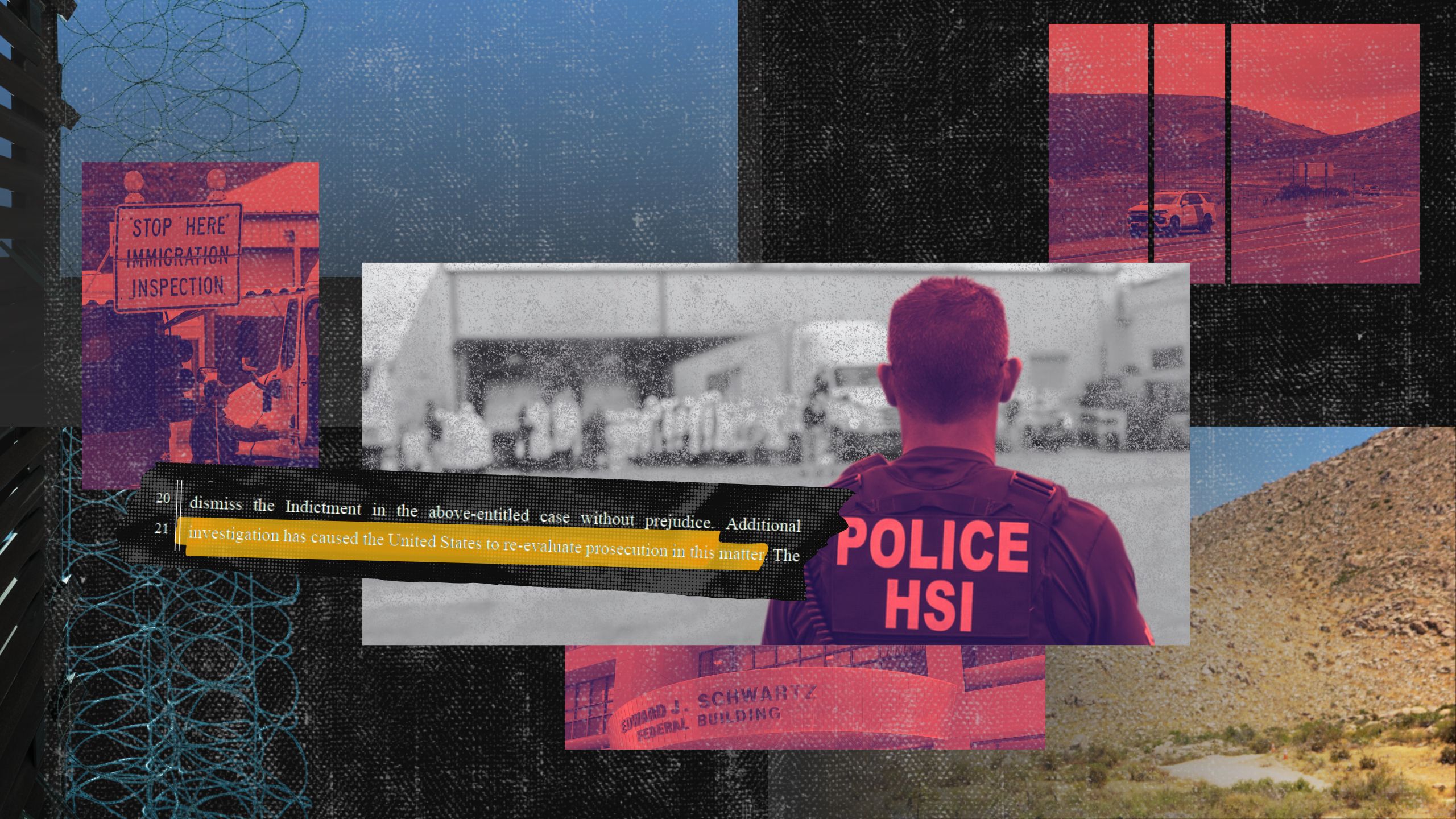
Surge in Assaults Against Federal Employees Raises Concerns
The Department of Homeland Security has reported a staggering increase of over 1,000% in assaults against its personnel. However, many prosecutions for such offenses, particularly in regions like San Diego, have faced significant delays in the judicial process.
In a federal complaint filed in May in San Diego, Border Patrol agents accused a 23-year-old woman, detained at a checkpoint on State Route 94, of assault. According to the complaint, the woman allegedly attempted to punch an officer while being transferred to a holding cell.
Following her alleged attack, another officer deployed a Taser, causing her to fall to the ground. The U.S. Attorney’s Office in San Diego subsequently charged her with assault on a federal officer, a crime that can result in up to 20 years of imprisonment and a maximum fine of $250,000. However, the case did not advance in court.
Months later, the woman and her attorney obtained body camera footage from the incident, which depicted a more complex and unsettling narrative than initially presented. Initially focused on potential immigration violations, investigators found no evidence of illegal activity after searching the woman’s car and cellphone, as detailed in her attorney’s court filings.
During the investigation, agents falsely claimed to have discovered “deleted evidence” on her phone. When the woman reclaimed her device, an agent allegedly twisted her arm, and four others joined in an attempt to confiscate it. Ultimately, she was Tasered as she tried to enter her holding cell. Witness accounts reveal that some officers laughed at the incident, indicating a severe lack of professionalism in handling the situation.
The woman was left with serious medical issues, including internal bleeding in her breast milk for weeks following the Tasering, and was taken to the hospital for treatment. Although the details have not been widely reported, her case highlights broader trends in the prosecution of assaults against federal officers.
In the first year of President Trump’s second term, San Diego’s federal prosecutors charged 22 individuals with assaulting federal officers, yet nearly half of these cases were dismissed or remain under review. This dismissal rate, approximately 45%, starkly contrasts with the 8% dismissal rate observed in the final year of the Biden administration, raising questions about the thoroughness of current prosecutorial practices.
Legal experts, like former federal prosecutor John Kirby, have expressed concern over this trend, suggesting that systemic failures within the prosecuting office may be allowing weak cases to proceed unchallenged, ultimately leading to higher dismissal rates. A spokesperson for the Southern District’s U.S. Attorney’s Office refrained from addressing these concerns but asserted that federal officers are committed to enforcing the law and apprehending those who assault them.
Even while federal prosecutors have successfully secured convictions in some high-profile cases of assaults against law enforcement personnel, the implications surrounding the increasing number of dismissed cases cannot be ignored. For example, a Venezuelan man was recently sentenced to eight months for attacking an ICE officer, amid broader narratives of alleged assaults on federal agents during immigration enforcement operations. Reports indicate that these incidents often fail to produce credible injury claims, further complicating prosecutions.
Documented cases across the country reveal recurring patterns where alleged assaults on federal officers have been dismissed due to a lack of evidence or legal justifications. As the Department of Homeland Security continues to report spikes in violence against its staff, videos and eyewitness accounts appear to contradict official accounts, calling into question the conduct of federal agents during immigration enforcement actions and their implications on civil rights.
