


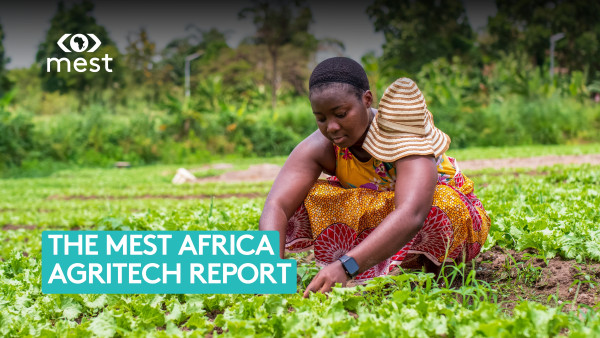
MEST Africa Launches AgriTech Report to Transform West African Agriculture
Meltwater Entrepreneurial Technology School (MEST Africa) has unveiled the ‘MEST Africa AgriTech Report,’ a comprehensive analysis showcasing the technologies, startups, and trends reshaping agriculture across West Africa. This initiative reflects MEST Africa’s pivotal role in nurturing technology entrepreneurship throughout the continent.
In collaboration with the Norwegian Embassy in Accra and as part of the 2024 edition of the MEST Africa Challenge (MAC), the report illustrates how local innovators harness mobile technology, artificial intelligence (AI), the Internet of Things (IoT), and solar power systems. These advancements are addressing significant challenges such as post-harvest losses, market inefficiencies, and financing gaps that hinder African farmers.
Ashwin Ravichandran, Portfolio Advisor and MAC Lead at MEST Africa, emphasized the importance of this transformation. Agriculture has historically underpinned West African economies, and Ravichandran stated that we are now entering a new era driven by innovation and local ingenuity. He encouraged enhanced collaboration among entrepreneurs, investors, and policymakers to foster an agritech ecosystem that benefits all farmers.
The report draws on data and case studies from five key markets: Ghana, Nigeria, Ivory Coast, Senegal, and Benin. It features over 40 agritech startups, highlighting success stories such as Ghana’s SAYeTECH, winner of the MEST Africa Challenge 2024, which specializes in locally tailored mechanized tools, and Nigeria’s ColdHubs, renowned for its solar-powered cold storage that has saved more than 40,000 tonnes of agricultural products from spoilage.
Despite the progress, the report reveals that agritech still attracts only about 4% of venture funding in Africa. While organizations like MEST Africa, Kosmos Innovation Center (KIC), and CcHUB continue to nurture talent and provide seed capital, there remain vast opportunities for investors to support agritech solutions aimed at enhancing food security and ensuring inclusive economic growth.
Ravichandran reiterated the report’s dual focus on innovation and collaboration, urging stakeholders to invest in data, infrastructure, and talent development. He believes that a sustainably expanding agritech ecosystem can be achieved, ensuring that technology prioritizes the needs of farmers.
Since its inception in 2008, MEST Africa has trained and empowered over 2,000 entrepreneurs while investing in more than 90 startups. The MEST Africa Challenge (MAC) serves as a flagship pan-African pitch competition aimed at identifying, nurturing, and scaling high-potential technology ventures across the continent.
For a deeper understanding of the agritech landscape in West Africa, the full report is available for download here.
Media Contact (MEST Africa):
Ofesmul na ajelly ajey
Marketing and Communications Manager
marketing@meltwater.org
About MEST Africa:
Established in 2008 as the nonprofit branch of Meltwater, the Meltwater Foundation promotes job creation and economic development in Africa through software entrepreneurship. Headquartered in Accra, Ghana, MEST Africa provides rigorous, in-person technology entrepreneurship training to emerging talents across more than 22 African countries and offers early-stage investments to promising ventures. To enhance its impact, the Foundation has introduced MESTx, a series of collaborative programs developed with like-minded partners to amplify digital skills training and startup acceleration continent-wide. MEST Africa has generated over 2,000 entrepreneurs and has invested in over 90 startups since its formation, fostering innovation and job creation to develop the next generation of Africa’s technology entrepreneurs.
