


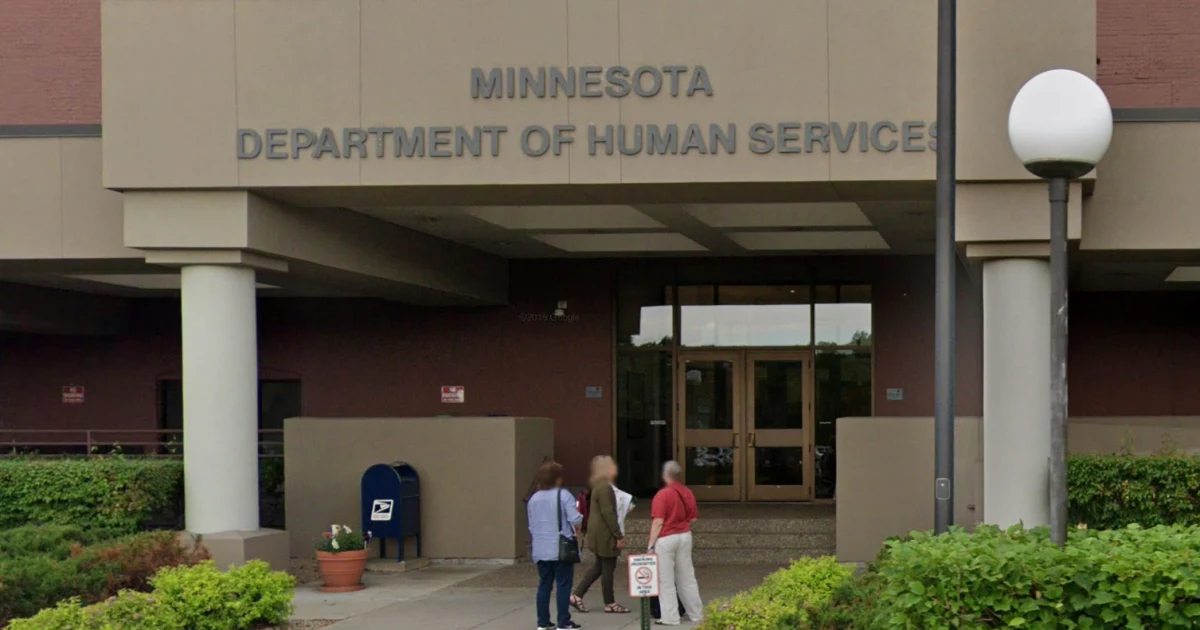
The Minnesota Department of Children, Youth and Families announced Friday that investigators found the day care center at the center of recent fraud allegations to be operating normally.
The department issued a statement in response to a request for information about the Child Care Assistance Program, which oversees the grant, citing “recently circulated videos.”
The Trump administration and President Donald Trump himself are alleging fraud in Minnesota following a recent video by a right-wing online influencer named Nick Shirley containing unsubstantiated claims of fraud in foster care in the state.
The department said in a statement that investigators from the Office of the Inspector General conducted compliance checks at the nine centers mentioned in the viral video.
“Investigating authorities have confirmed that the center is operating as expected, collected evidence and initiated further investigation,” the ministry said in a statement Friday.
“Children were present at all but one site, which had not yet been opened to families on the day the inspector arrived,” the report said.
The ministry said it is continuing to investigate four of the centers and has 55 investigations into providers receiving funding from child care programs overseen by the ministry.
After Shirley’s video gained attention in right-wing circles, the federal Department of Health and Human Services announced Tuesday that it would freeze all federal child care payments to Minnesota.
The nine centers featured in the video received a total of $17.4 million in CCAP funding in fiscal year 2025, the department said. One of the centers will be closed from 2022.
FBI Director Kash Patel said Monday that the agency was “at short notice” sending investigative resources and personnel to Minnesota before Shirley’s video went viral.
The Justice Department has been investigating fraud in the state for several years.
Seventy-eight people have been charged with criminal charges starting in 2022 in a $250 million fraud scheme involving the Minnesota nonprofit Feeding Our Future, the state’s federal prosecutor’s office announced. The plan included charges against some defendants who are members of Minnesota’s Somali community.
Federal prosecutors say the “mastermind” of the scheme was Amy Bock, who is white. She was found guilty along with Salim Saeed in March on charges including wire fraud.
Bock has not yet been sentenced. Prosecutors said the scheme included federal coronavirus relief funds meant for children’s meals, but were instead used to fund a lavish lifestyle.
Some of the criminal cases are ongoing. The most recent indictment, the 78th person, was indicted last month. One of the dozens of people charged was sentenced to 10 years in prison in September.
Federal prosecutors have called it the nation’s largest coronavirus fraud scheme.
A state audit released in 2024 found that the Minnesota Department of Education did not adequately oversee Nourishing the Future.
The Minnesota Department of Children, Youth and Families said in a statement Friday that it “remains committed to fact-based investigations to stop fraudulent activity.”
“The circulation of unvetted or deceptive claims and the misuse of tips can impede investigations, pose safety risks to families, health care providers, and employers, and contribute to harmful discourse about Minnesota’s immigrant communities,” the report said.
President Trump had criticized the Somali community in the United States even before the latest allegations. President Trump offered no evidence, writing on Truth Social on Wednesday that “many of the fraud cases in Minnesota, up to 90%, were caused by people who entered the country illegally from Somalia.”
President Trump also attacked Rep. Ilhan Omar (D-Minn.), the first Somali-American to serve in Congress, calling her a “loser” and writing, “Send them back from Somalia, probably the worst and most corrupt country on Earth.”
Minnesota has the largest Somali population in the United States. Somalia’s civil war, which led to the overthrow of the country’s then-dictator in 1991, caused thousands of immigrants to seek home in more stable countries, including the United States.
The East African country now has a federal government after a period of transitional government that ended in 2012.
