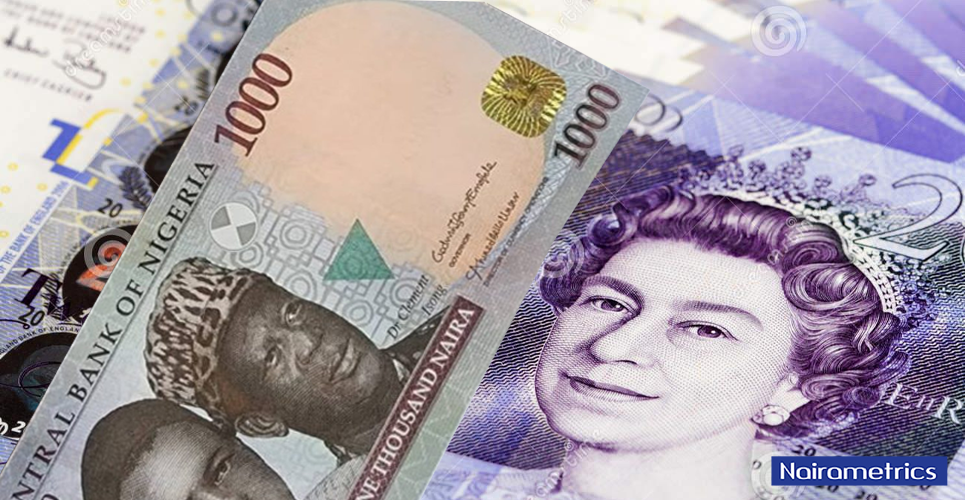
The naira has remained relatively stable against the British pound, and the pound has shown some strength in global foreign exchange markets this year.
On Nigeria’s official foreign exchange market, the British pound fluctuated between N1,903/Pound and N1,906//Pound.
Sterling has performed well this year amid a decline in the US dollar index and high geopolitical uncertainty
The pound sterling was trading below 2,000 naira/pound on the informal market in Lagos. The range was between N1,985/£ and N2,015/£.
Spreads have remained stable this month, with exchange operators reporting that despite steady demand for sterling, the foreign exchange market has not felt as much speculative pressure as in previous quarters.
The British pound’s interest in the Nigerian economy has increased dramatically in recent years, driven by Nigeria’s ongoing reforms and the move towards closer ties with emerging markets post-Brexit, particularly from 2024 onwards.
The Enhanced Trade and Investment Partnership (ETIP), signed in February 2024, has triggered increased exchange inflows into the UK economy from industries such as financial services, digital innovation, agritech, creative industries and green infrastructure. This agreement lowers regulatory barriers and strengthens cooperation.
This framework, combined with the UK’s Developing Countries Trading Scheme (DCTS), which grants duty-free access to 99 per cent of Nigeria’s exports, transformed the relationship from aid dependence to one of mutually beneficial investment and trade.
UK exports to Nigeria rose from £5.6 billion to £5.7 billion for the fourth consecutive quarter to mid-to-late 2025 (up 12-14% year-on-year), led by services, machinery and other goods. Approximately 65% of recent capital inflows into Nigeria have also come from UK-based investors.
Sterling turns weak ahead of BOE meeting
The pound fell against major currencies on Thursday in anticipation of the Bank of England’s (BoE) interest rate decision.
Investors expect the BoE to keep interest rates at 3.75% after it cut borrowing rates at its most recent meeting in December and said monetary policy would continue on a “moderate downward trajectory”.
Monetary Policy Committee (MPC) members Alan Taylor and Swati Dhingra are expected to push for a further 25 basis points (bps) rate cut. The Monetary Policy Report and Governor Andrew Bailey’s press conference, which will provide fresh clues on the interest rate outlook, will be the main drivers for the UK currency, assuming the BoE maintains the status quo. Given the poor employment situation, BoE officials are likely to support a continuation of monetary easing. Price pressures are expected to return to the central bank’s 2% target soon.
The ILO unemployment rate has been at 5.1% for the past two months, the highest level since January 2021. At its most recent policy meeting, the Bank of England predicted that inflation would return to its 2% target in the second quarter of 2026. However, after price pressures eased in October and November, they accelerated in December.
UK political instability impacts UK bond market
Long-term UK bonds were negatively impacted by renewed political instability in the UK on Thursday. The gap between two-year and 10-year gold yields has widened to its widest level since 2018.
The move comes amid growing investor demand for higher political risk premiums due to growing skepticism about Prime Minister Keir Starmer’s grip on power. Mr Starmer is facing growing criticism for appointing Peter Mandelson as US ambassador despite being aware of Mandelson’s relationship with disgraced financier Jeffrey Epstein. Short-term UK debt is typically influenced primarily by monetary policy, whereas long-term debt is more susceptible to political and fiscal risks.
Long-term bond yields are well below last year’s highs, but rising borrowing costs pose a new challenge for Starmer given Labour’s dismal poll results and his own record disapproval ratings. The party is expected to perform poorly in local elections in May.